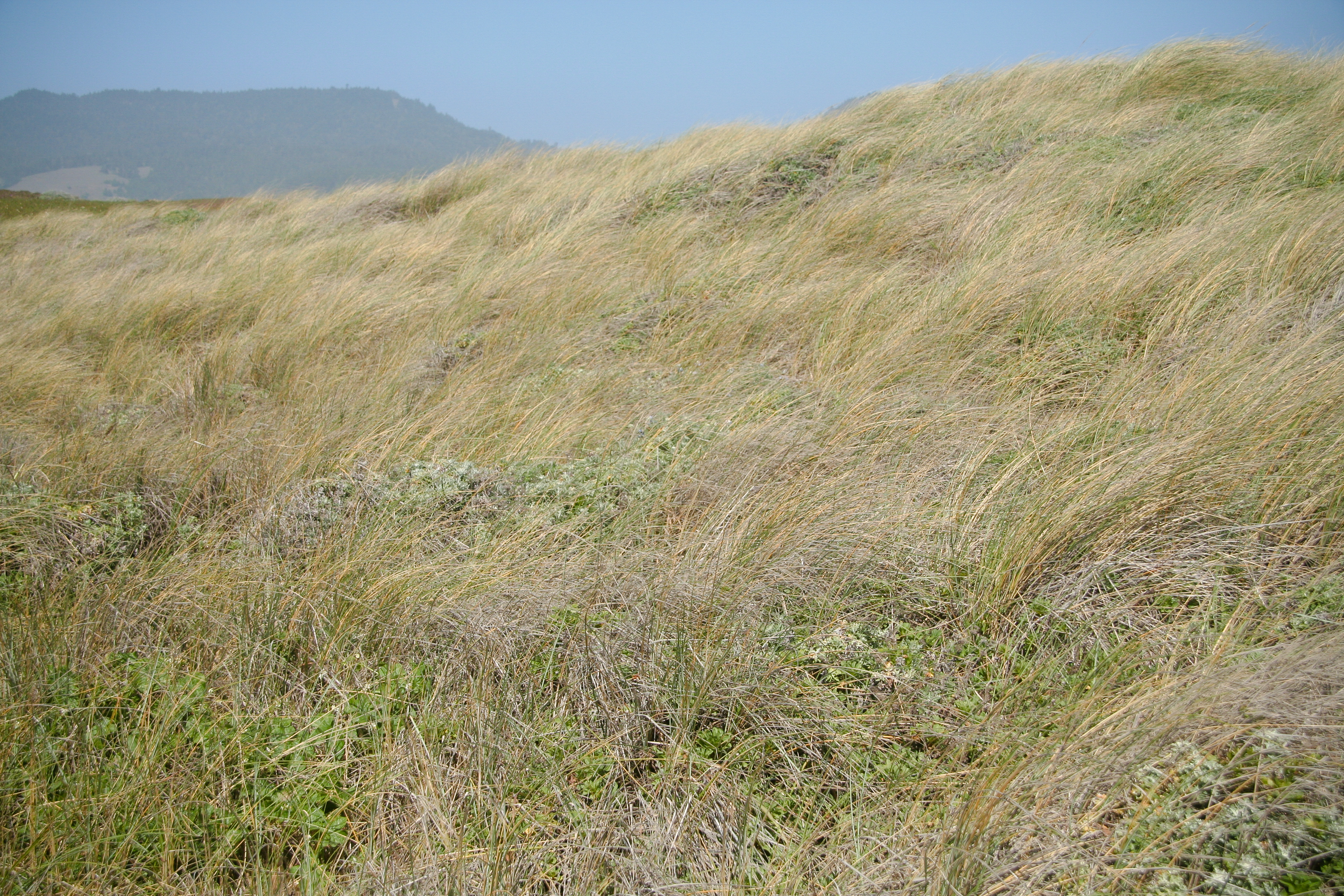
Manchester State Beach
The driftwood arrives in staggering quantities. Storm after storm deposits whole trees, stripped and bleached, onto five miles of gently curving beach in Mendocino County, until the catch basin created by the coastline's arc becomes a graveyard of pale wood. Visitors don't just walk past the piles -- they climb over them, through them, around them. Some people build elaborate wind shelters from the debris, creating temporary driftwood architecture that lines the bluffs like a village conjured by the tide. Manchester State Beach occupies 5,272 acres of Northern California coast where sand dunes meet flat grasslands, where Brush Creek and Alder Creek deliver steelhead and salmon to the sea, and where, just offshore, one of the planet's most famous geological fractures disappears beneath the waves.
Walking the Fault Line
The San Andreas Fault runs directly offshore here, threading through the waters off Manchester like an invisible seam between tectonic worlds. This is no abstraction -- the Pacific Plate grinds past the North American Plate at roughly the same speed your fingernails grow, and the evidence shows in the rugged coastal geology. Onshore, the park spreads across terrain shaped by millennia of seismic restlessness: sand dunes, grassy flats, and bluffs sculpted by wind and wave. From October through April, humpback and gray whales trace their annual migration route past these headlands, visible from the bluffs on clear days. Below the surface, kelp forests sway in protected waters within the Point Arena State Marine Reserve and Conservation Area, part of a network of underwater parks sheltering the coast's marine ecosystems.
Pomo Country
Before European settlers arrived, this stretch of Mendocino coast was Pomo territory. The Pomo people lived along these creeks and bluffs for thousands of years, fishing the same streams that still draw anglers today. Their relationship to this landscape was intimate and sustained -- the mild coastal climate, the reliable salmon runs, the abundance of shellfish and plant foods along the shore. European contact fractured that connection, and the Pomo were gradually displaced from the lands they had inhabited since long before the concept of a state park existed. Manchester itself takes its name from the small community seven miles north of Point Arena, a town whose own roots reach back to the ranching and logging economies that replaced the Pomo way of life along this coast.
The Trail to Alder Creek
The five-mile round trip to Alder Creek is the park's signature walk, and it rewards patience. The route threads along the beach, where strong winds rake sand against your legs, then turns inland through woods that muffle the ocean's roar. At Alder Creek itself, the mood shifts entirely: waterfowl gather in quiet pools, and during spawning season salmon fight their way upstream in a spectacle that has repeated itself here for millennia. Half a mile into the connector trail stands a condemned beach house, slowly losing its argument with the elements. The upland loop trails offer a different perspective, winding alongside ponds, through dark volcanic sand, and up over bluffs and dunes that provide sweeping views of the coast. Year-round, the wind is the constant companion -- hikers are advised to check the forecast before setting out.
Where Sheep Graze Above the Surf
Manchester State Beach defies the usual California beach fantasy. This is not a place for sunbathing. Temperatures peak around 72 degrees Fahrenheit, fog rolls in on summer evenings, and the wind rarely takes a day off. Instead, the park's interior is working rangeland -- flocks of sheep and herds of cattle graze the grasslands behind the dunes, lending the place a pastoral character that feels more like coastal Scotland than Southern California. In spring, the contrast sharpens: blue irises, baby blue eyes, lupines, poppies, and sea pinks carpet the fields in color while the beach remains austere and pale, dominated by its mountains of driftwood. Near the park's southern boundary, the Point Arena Lighthouse -- first lit in 1870, rebuilt in reinforced concrete after the 1906 earthquake, and one of the tallest on the Pacific coast -- offers tours and a tangible connection to the era when this remote stretch of coastline mattered most to the sailors trying to survive it.
From the Air
Located at 38.97N, 123.71W on the Mendocino County coast along Highway 1, seven miles north of Point Arena. The gently curved five-mile beach is distinctive from the air, with visible driftwood accumulation along the shore. Inland, flat grasslands and grazing land contrast with the coastal bluffs. The Point Arena Lighthouse is visible to the south. Nearest airports: Little River Airport (KLLR) approximately 30nm north; Ukiah Municipal Airport (KUKI) about 35nm east. Expect coastal fog in summer months and strong winds year-round. Best viewed at 1,500-2,500 feet AGL.