Manzanar: The Camp America Tried to Forget
The wind never stops at Manzanar. It blows down from the Sierra Nevada, across the Owens Valley, carrying dust that worked its way into every building, every meal, every memory. From 1942 to 1945, this patch of high desert housed approximately 10,000 Japanese Americans - two-thirds of them American citizens - imprisoned without charge, without trial, without crime. They came from Los Angeles, San Francisco, and farming communities throughout California, given days to dispose of lives they'd spent decades building. At Manzanar, they built a community from nothing: gardens, baseball teams, schools, a hospital, and an endurance that outlasted the injustice. The camp closed; the buildings were auctioned; the government tried to erase what it had done. Manzanar remained, wind-scoured and remembering.
The Order
On February 19, 1942, President Franklin Roosevelt signed Executive Order 9066, authorizing the military to exclude any persons from designated areas. The order never mentioned Japanese Americans, but everyone understood. Within months, 120,000 people of Japanese descent - including 70,000 American citizens - were removed from the West Coast and imprisoned in ten camps scattered across remote Western landscapes. The government called them 'relocation centers,' but barbed wire faced inward and guards manned towers. Manzanar was the first to open, receiving prisoners in March 1942. Families lost homes, businesses, farms, and lives built over generations. The Supreme Court, in decisions later acknowledged as among its worst, upheld the internment.
The Camp
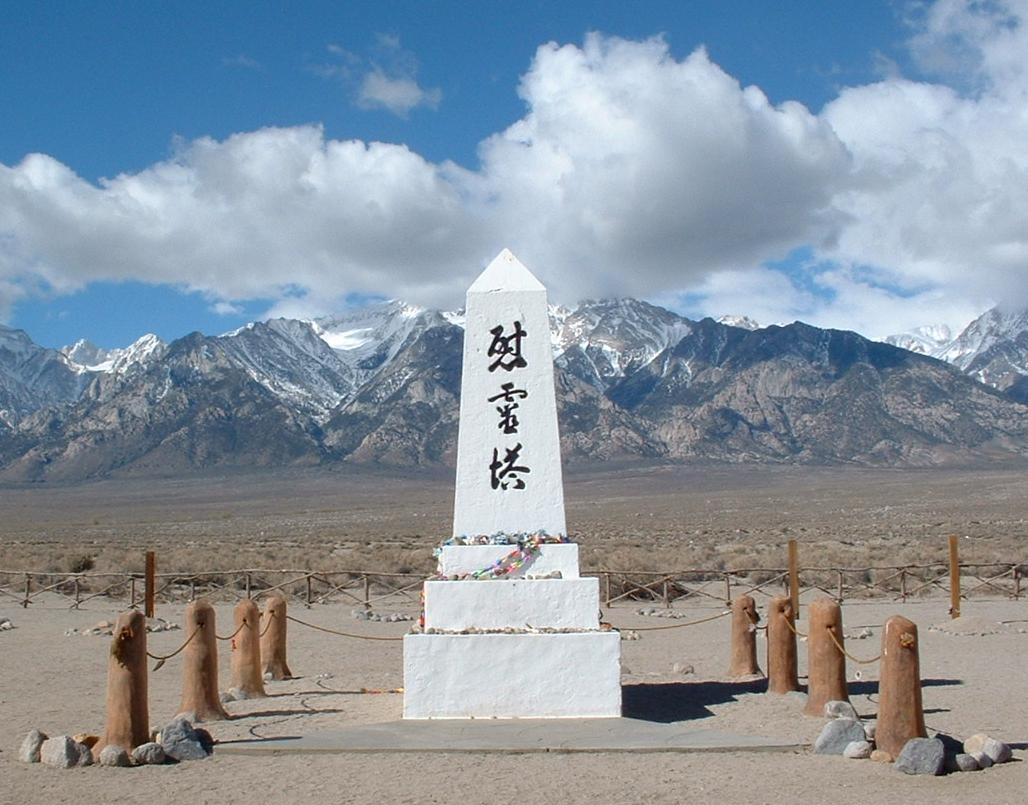
Manzanar sprawled across one square mile of desert floor, the Sierra Nevada rising dramatically to the west, barbed wire defining the perimeter. The barracks were hastily built - single-wall construction, no insulation, families in 20-by-25-foot rooms with no privacy. Dust sifted through cracks; temperatures ranged from over 100 degrees in summer to below zero in winter. Communal latrines offered no partitions initially. The food was institutional and often spoiled. Yet the prisoners created a functioning community: schools, churches, a newspaper, sports leagues, traditional gardens. The camp cemetery received the bodies of those who died during internment - and became the site of the memorial that would persist.
The Resistance
Not everyone accepted imprisonment quietly. Tensions within Manzanar reflected divisions within the Japanese American community: between Issei (immigrants) and Nisei (American-born), between those who counseled compliance and those who resisted. In December 1942, a riot erupted after an assault on a suspected informer; military police opened fire, killing two and wounding nine. The government responded with further restrictions. Some prisoners renounced their American citizenship in protest; others proved their loyalty by serving in the 442nd Regimental Combat Team, the most decorated unit in American military history. The contradictions were profound: citizens fighting for a country that imprisoned their families.
The Memory
After the war, Japanese Americans were released with $25 and a train ticket. Many found their property lost, their communities destroyed, their neighbors hostile. The government razed most camp structures; the buildings were sold at auction. Manzanar seemed destined for erasure. But survivors and their descendants wouldn't forget. Annual pilgrimages to the cemetery began in 1969. The site was designated a National Historic Site in 1992. The 2000s brought reconstruction of the guard tower and barracks, interpretation of what had happened, and acknowledgment of the injustice. The wind still blows, but now the stories are preserved.
Visiting Manzanar
Manzanar National Historic Site is located on Highway 395 in the Owens Valley, 230 miles north of Los Angeles. The interpretive center occupies the restored camp auditorium, providing historical context through exhibits, artifacts, and oral histories. The auto tour visits reconstructed barracks, the cemetery, and remaining foundations. The cemetery, with its stone obelisk monument, remains the emotional center. Rangers lead programs interpreting both history and landscape. The camp's isolation is palpable - the Sierra Nevada rises magnificently, the valley stretches emptily, and the remoteness that made Manzanar possible remains. The experience demands reflection on what democracy means when it fails, and what memory requires when forgetting would be easier.
From the Air
Located at 36.73°N, 118.15°W in the Owens Valley of eastern California, between the Sierra Nevada and the Inyo Mountains. From altitude, the Manzanar site appears as a geometric grid on the valley floor - the remnants of streets and blocks still visible from the air. The Sierra Nevada rises dramatically to the west, snow-capped peaks forming a wall of granite. The Owens Valley stretches flat and dry, the landscape that imprisoned thousands visible in its isolation. Highway 395 traces the valley's length. The cemetery monument is visible as a white marker. What appears from altitude as an unremarkable patch of high desert was one of ten American concentration camps - the place where the government imprisoned citizens whose only crime was ancestry, and where memory now insists on acknowledgment.