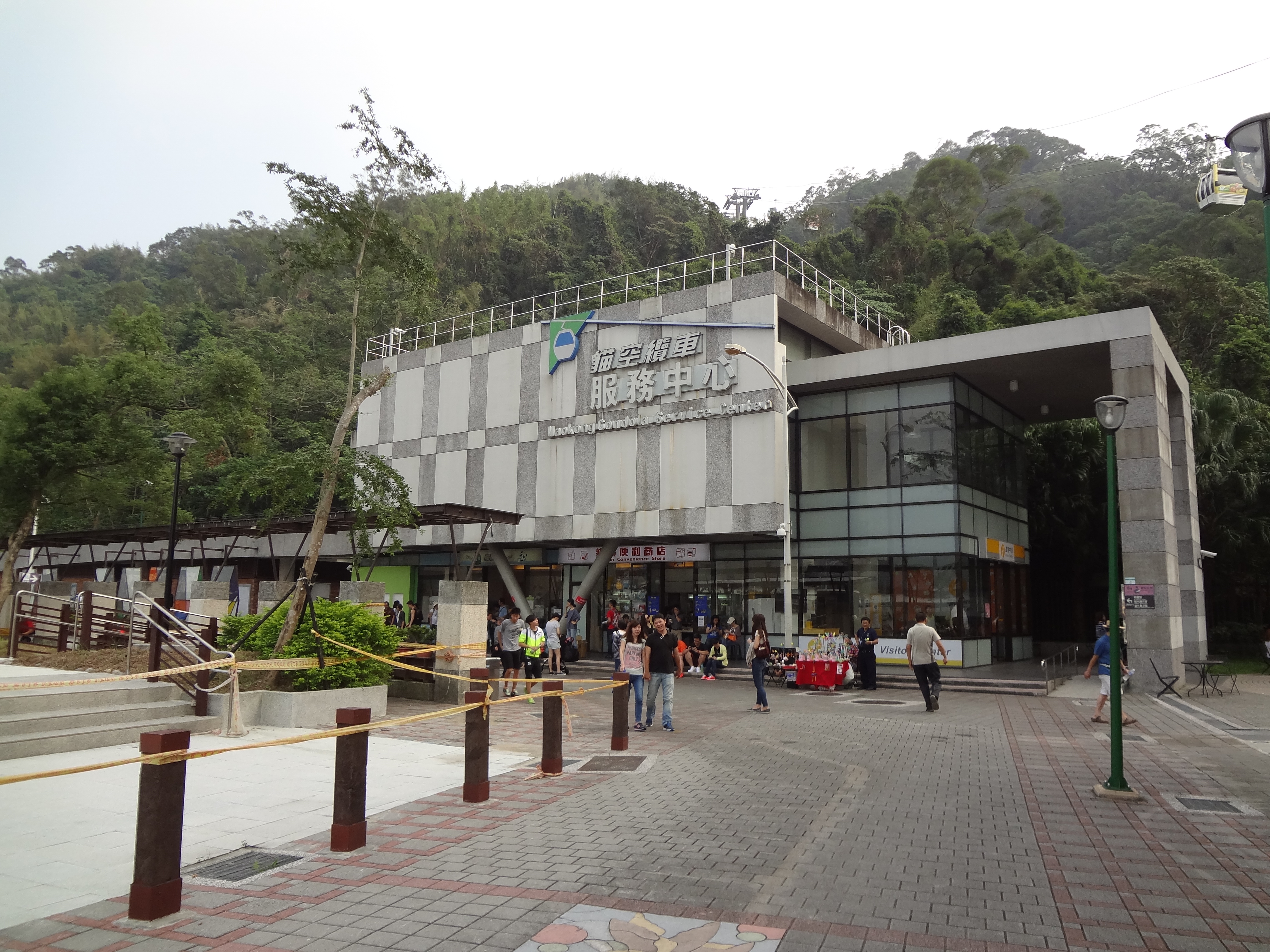
Maokong Gondola
On the very first day of service, July 4, 2007, a faulty door lock left Taipei Mayor Hau Lung-pin and former Mayor Ma Ying-jeou suspended ten minutes in mid-air. It was an inauspicious beginning. Within eleven days, the system had logged fifty-five malfunctions. By month's end, hundreds of passengers had been trapped in overheating cabins during a mechanical failure. The Maokong Gondola, a 4.03-kilometer cable car linking Taipei Zoo to the tea-growing hills of Maokong, entered the world the way some of Taipei's best stories do: spectacularly, chaotically, and with a crowd watching.
Tea Above the City
Maokong sits in the hills of southern Taipei, a neighborhood of tea plantations, hiking trails, and temple grounds that feels remote from the dense urban core despite being inside the city limits. For decades, reaching it meant navigating winding mountain roads by bus or car. The gondola, built by the French company Poma and operated by the Taipei Rapid Transit Corporation, was designed to change that. Four stations span the 4.03-kilometer route, with two angle stations where the cable changes direction. The full trip takes twelve minutes. From the cabin windows, passengers look out over the Taipei Zoo, the rooftops of Wenshan District, and -- on clear days -- the spike of Taipei 101 rising in the distance. The system was integrated with the city's metro fare structure: swipe an EasyCard, step into a cabin, and float above the canopy.
Fifty-Five Glitches in Eleven Days
The problems began immediately and did not stop. After the inaugural-day lockout, violent thunderstorms shut operations down the following day. On July 21, a mechanical glitch suspended service for two hours, strapping 323 passengers into cabins baking in the subtropical heat -- ventilation had been widely criticized as inadequate. Evacuation took over an hour. The transit corporation reimbursed each passenger with NT$1,058 and free tickets. Three days later, the system shut down twice more in a single afternoon. Taiwan's Consumers' Foundation recommended a complete shutdown for comprehensive evaluation. The local press ran a damning headline: "Mayor Ma's Proudest City Project Suffers 55 Glitches in 11 Days." Environmental groups piled on, with the Green Party Taiwan and the Homemakers' Union discouraging ridership and local residents complaining about noise, garbage, and mudslide risk.
The Pillar That Nearly Fell
The gondola's most serious crisis came not from mechanical failure but from the earth itself. On October 2, 2008, the system was closed after mudslides left a 2.5-meter gap beneath support pillar T16. Investigators determined that the rainfall from four successive typhoons had eroded the pillar's foundation beyond what it could withstand in a future earthquake. The recommended fix -- relocating pillar T16 and its neighbors -- took two years. During that time, the gondola sat silent, its cabins motionless on the cables, a very visible symbol of infrastructure ambition meeting geological reality. Environmental groups had warned from the beginning that building on the unstable hillside was risky. The gap beneath pillar T16 proved them right. The gondola finally resumed service on March 31, 2010, after the relocation was complete and safety inspections were passed.
Glass Floors and Financial Losses
When the gondola reopened, it came with an upgrade. Thirty cabins were retrofitted with 48-millimeter-thick glass bottoms, each adding 213 kilograms to the car's weight. These "Crystal Cabins" -- marketed as the "Eyes of Maokong Gondola" -- gave passengers a vertiginous view straight down to the treetops and hillside below, with a capacity limited to five people per cabin. They operate on a separate ticketing queue with a computer-managed system that assigns boarding times. The glass-bottom cabins became the system's signature draw, transforming a troubled transit line into a tourist attraction. But the financial picture has remained grim. Consistent losses have plagued the system since its opening, driven by the combination of weather-related shutdowns, maintenance costs, and the fundamental challenge of running an expensive aerial tramway as urban transit. The Maokong Gondola survives not because it is profitable, but because Taipei decided that the ride above the tea hills was worth the subsidy.
From the Air
Located at approximately 24.996N, 121.576E on the southern edge of Taipei, the gondola route runs from the Taipei Zoo area uphill to the Maokong tea-growing district. The cable line and its support towers are visible from lower altitudes as a thin line ascending the hillside south of the city. The route crosses over National Highway No. 3. Taipei Songshan Airport (RCSS) is approximately 10 km to the north. Taiwan Taoyuan International Airport (RCTP) is about 40 km to the west-northwest.