Marais des Cygnes Massacre
Most of the men knew Charles Hamilton. That was the cruelest part. When the Georgia-born slaveowner rode through the settlement of Trading Post, Kansas, on the morning of May 19, 1858, with roughly 30 armed Border Ruffians at his back, the Free-State settlers he rounded up from their homes and fields had no reason to expect the worst. Hamilton had been driven out of Linn County to Missouri by the abolitionist fighter James Montgomery, and he wanted revenge. But these 11 men -- unarmed, none of them participants in the ongoing violence -- did not know they were the objects of that revenge. Hamilton marched them into a narrow ravine and ordered his men to fire, squeezing off the first and last shots himself. Five men fell dead. Five were severely wounded. One escaped injury entirely. It was the last significant act of violence in the Bleeding Kansas era, and it crystallized, in a single morning's brutality, the savagery that had consumed the territory for four years.
Popular Sovereignty and Its Consequences
The bloodshed at Trading Post grew from a seed planted in Congress four years earlier. The Kansas-Nebraska Act of 1854 threw the question of slavery in the new territories to popular sovereignty -- let the settlers decide. The Missouri Compromise had previously banned slavery in Kansas, but the new law reopened the question. Pro-slavery Border Ruffians flooded across the Missouri border to vote illegally in Kansas elections, installing a government that outlawed even abolitionist literature. The New England Emigrant Aid Company countered by bankrolling Free-State settlers. By 1855, Kansas had two rival governments, each claiming legitimacy. President Franklin Pierce backed the pro-slavery legislature. Abolitionist sentiment concentrated around Lawrence, where the Free State Party organized resistance. The territory became a proving ground for the national conflict, with fraudulent elections, rival constitutions, and escalating violence.
Into the Ravine
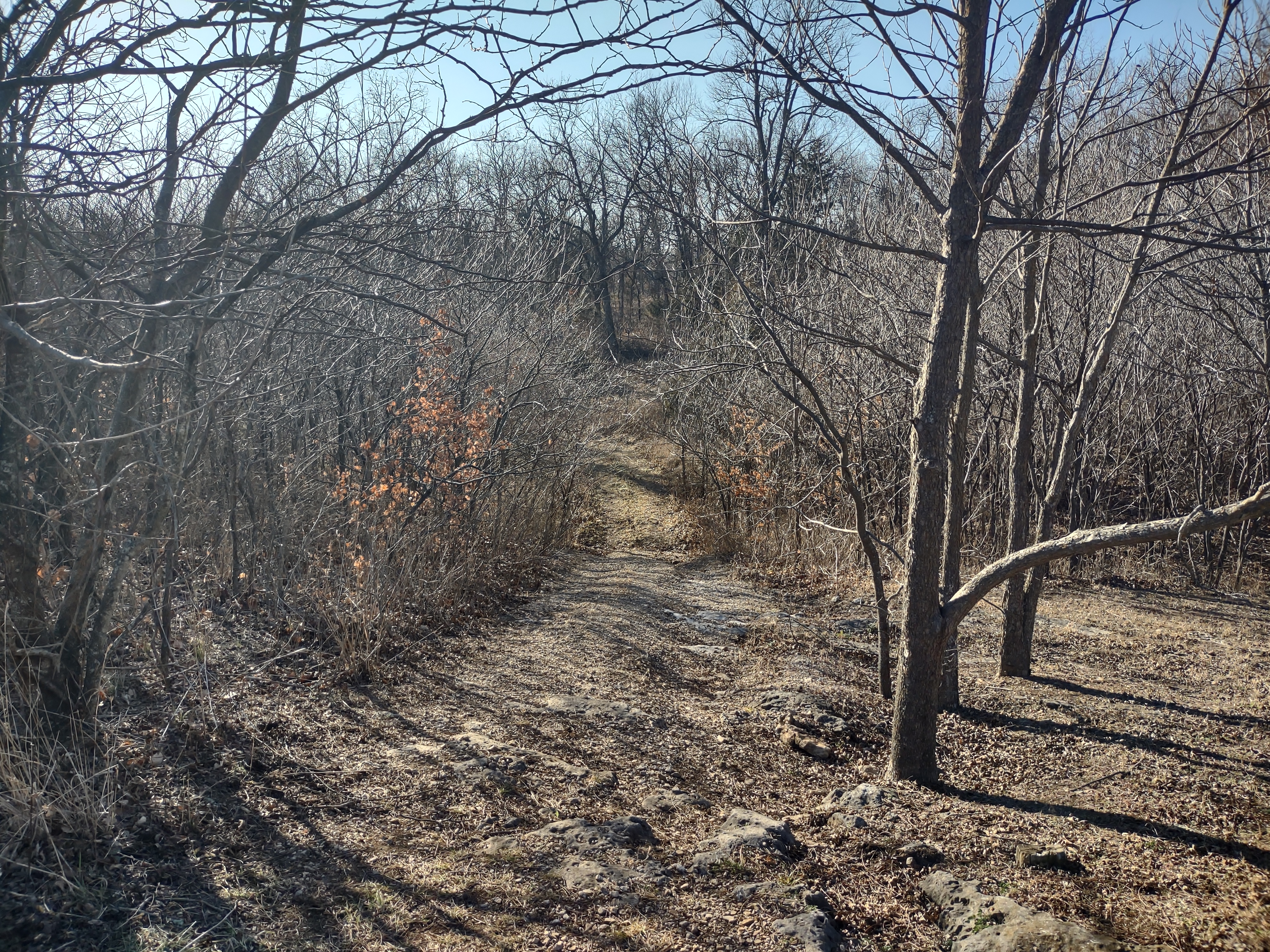
Hamilton's motive was personal as much as political. Montgomery's abolitionist fighters had forced him from his Linn County property, and he crossed back from Missouri with vengeance in mind. After gathering his 11 captives from homes and fields around Trading Post, the Border Ruffians forced them into a nearby ravine -- a narrow defile where there was no room to run. Hamilton gave the order. The volley cut down ten of the eleven men. The wife of one victim followed the raiders to the site and attempted to treat the wounded. Other settlers gathered later in the day to care for the survivors and bury the dead. Rumor soon spread that the massacre had been planned at a building called the Western Hotel; Montgomery attempted to burn it down on June 5 but failed.
John Brown's Fort
Word of the massacre reached John Brown, the abolitionist firebrand who had committed his own atrocity at Pottawatomie Creek two years earlier. In late June 1858, Brown built a two-story log fort south of the ravine where the killings occurred, on land owned by Charles Hadsall, a sympathizer who allowed Brown to maintain a military post on the site. Brown abandoned the fort later that summer, but his presence underscored the territory's descent into armed camps. Eighteen months later, Brown would lead his famous raid on Harpers Ferry, be captured, tried, and hanged -- becoming a martyr to the abolitionist cause and helping to push the nation into civil war. The connection between the quiet ravine near Trading Post and the national conflagration was direct and unmistakable.
A National Historic Landmark
The site where Hamilton's men opened fire is preserved today by the Kansas Historical Society as the Marais des Cygnes Massacre State Historic Site. The first commemoration came in October 1864, when soldiers of the 3rd Iowa Cavalry Regiment erected two stone markers after the nearby Battle of Mine Creek -- another echo of violence on this same ground. Souvenir hunters had destroyed those markers by 1895. A formal monument was dedicated at Trading Post cemetery in 1889. In 1941, the state of Kansas acquired the massacre site along with the 1870s-era stone house that Hadsall built near Brown's fort. The site was listed on the National Register of Historic Places in 1971 and designated a National Historic Landmark in 1974. The area remains rural and quiet. Visitors can walk the grounds from dusk to dawn at no charge. A hand-cranked device plays an audio recording telling the story of what happened in the ravine.
From the Air
Located at 38.281N, 94.620W in Linn County, eastern Kansas, near Trading Post. Elevation approximately 850 feet MSL. The site is in rural prairie with timber along creek drainages. The Mine Creek Battlefield State Historic Site is nearby to the west. Pleasanton Municipal Airport (K44) lies approximately 5 miles to the southwest. The ravine where the massacre occurred is not visible from altitude, but the general area of Trading Post is identifiable at the junction of local roads amid farmland. Best viewed at 2,000-3,000 feet AGL.