Maralinga
The word "Maralinga" comes from the language of the people whose land it is. For most Australians, though, the name evokes something else entirely: mushroom clouds, irradiated soil, and one of the Cold War's more troubling chapters played out on Aboriginal country. This 3,300-square-kilometer stretch of the Great Victoria Desert in western South Australia became a British nuclear testing ground in the 1950s, contaminated with plutonium and uranium through detonations and dispersal trials. The Maralinga Tjarutja people -- southern Pitjantjatjara whose ancestors had walked this country for millennia -- were removed from their land. Getting it back would take thirty years.
Before the Bombs
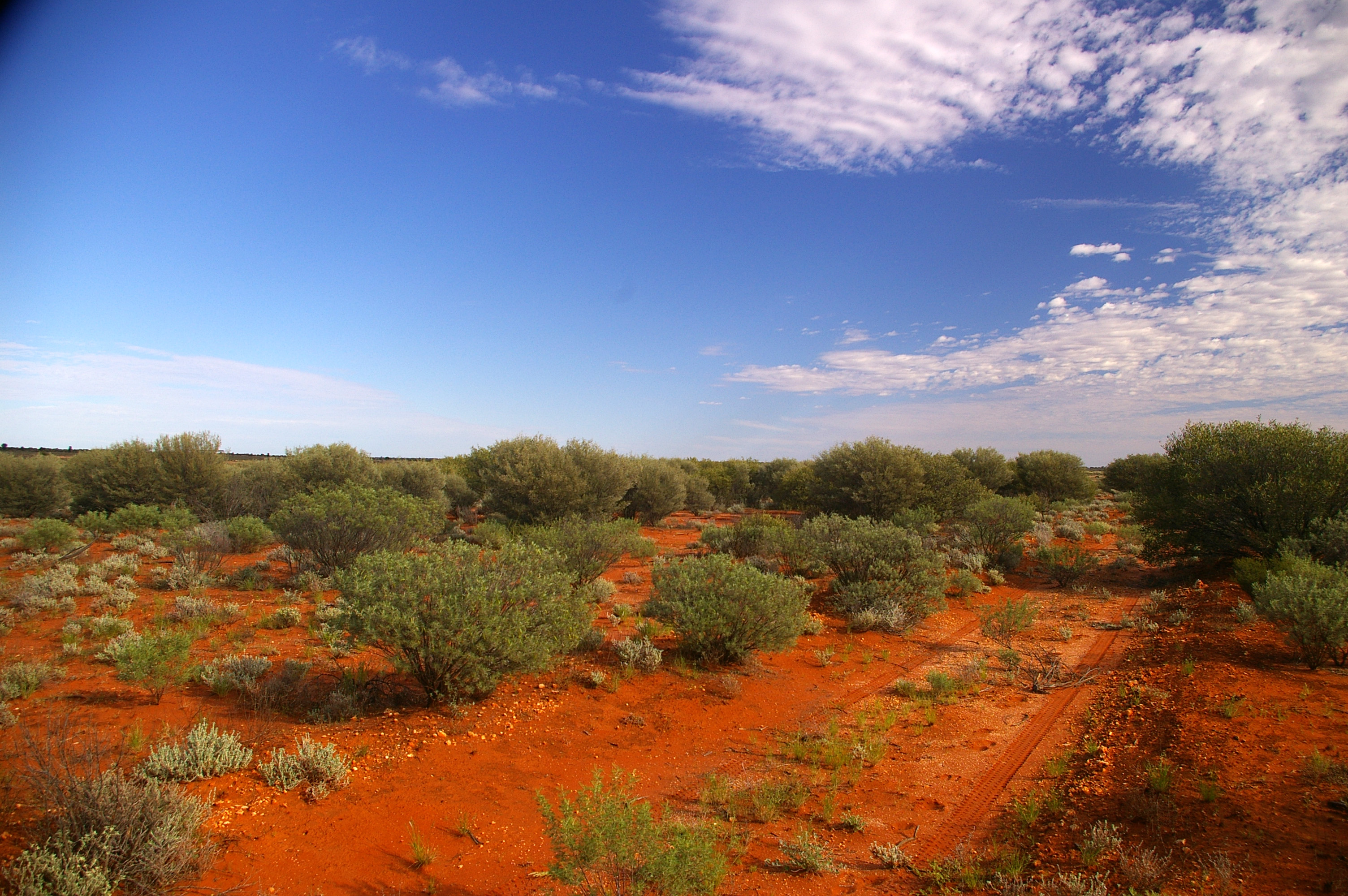
The Great Victoria Desert is not empty. It is arid, harsh, and unforgiving to those who do not know it, but the Anangu -- the Aboriginal people of this region -- developed a deep and sophisticated knowledge of its water sources, food plants, and seasonal rhythms over tens of thousands of years. The Maralinga Tjarutja, a southern branch of the Pitjantjatjara, lived according to that knowledge. When the British government, working with its Australian counterpart, identified the area as a suitable nuclear testing site in the early 1950s, surveyor Len Beadell was sent to map the terrain. He had previously surveyed Emu Field, further north, where Operation Totem's two nuclear tests were conducted. Maralinga, being slightly less remote, was deemed more practical. The people who lived there were deemed less relevant.
Seven Explosions and Hundreds of Trials
Operation Buffalo commenced on 27 September 1956 with four fission bomb tests. Two were tower-mounted, one detonated at ground level, and one dropped from a Vickers Valiant bomber -- the first British air-delivered nuclear weapon. Operation Antler followed in 1957 with three more tests, the largest yielding 25 kilotons. But it was the so-called "minor trials" that left the deepest scars on the land. Hundreds of experiments between 1953 and 1963, bearing codenames like Kittens, Tims, Rats, and Vixen, tested weapons components by scattering plutonium, beryllium, and uranium across the desert floor using conventional explosives. These trials contaminated far more land than the bomb blasts themselves, spreading radioactive material through the topsoil in ways that proved almost impossible to fully remediate.
Secrets and Silence
Participants in the testing program were bound by official secrecy. Servicemen who had witnessed the blasts, advanced toward ground zero, or handled contaminated equipment were prohibited from discussing what they had seen or experienced. The silence served the program's purposes but not its victims. In the 1970s, Avon Hudson, a nuclear veteran, broke ranks and spoke to the media about the testing and its effects. His courage helped catalyze the McClelland Royal Commission of 1984-1985, which found significant residual contamination at the test sites and confirmed that both military personnel and Aboriginal people had been exposed to dangerous levels of radioactive fallout. The commission's findings shattered the official narrative that the tests had been conducted safely and cleaned up responsibly.
Coming Home to Poisoned Ground
In January 1985, under the Maralinga Tjarutja Land Rights Act 1984, freehold title was returned to the traditional owners. They resettled at Oak Valley, a new community about 128 kilometers north-northwest of the original Maralinga township. In 1994, the Australian government paid $13.5 million in compensation -- a settlement for all claims related to the nuclear testing. Cleanup efforts were completed in 2000, with contaminated soil and debris buried in trenches 16 meters deep. But in 2021, scientists at Monash University found that radioactive "hot" particles persist in the soil, and that natural desert processes may be slowly releasing plutonium into the environment, where wildlife could absorb it. In 2003, Premier Mike Rann opened a new school at Oak Valley, replacing what had been called the "worst school in Australia." The Maralinga Tjarutja are building a future on land that still carries the residue of someone else's weapons program.
Deep Time Meets the Atomic Age
A 2020 documentary film, Maralinga Tjarutja, directed by Larissa Behrendt, gave the community's elders a platform to speak about their country in their own terms. The film was broadcast deliberately alongside the drama series Operation Buffalo, offering an Indigenous perspective that the dramatization could not. The elders, according to one review, revealed "a perspective of deep time and an understanding of place that generates respect for the sacredness of both" -- a relationship with country measured not in decades but in millennia. The callous disregard shown by the British and Australian governments for the Anangu's occupation of the land was, in this framing, not just a policy failure but a failure of imagination. The people of Maralinga continue to care for country that others contaminated. Their story is one of resilience, persistence, and a connection to land that nuclear weapons could damage but not destroy.
From the Air
Located at approximately 30.15S, 131.58E, within the Great Victoria Desert in western South Australia. The area lies within the Woomera Prohibited Area and is characterized by flat, red-brown desert scrubland. Former test infrastructure and blast sites may be faintly visible from lower altitudes. The Oak Valley community lies approximately 128 km to the north-northwest. Nearest airports: Woomera (YPWR), Ceduna (YCDU). Note: Airspace restrictions may apply within the Woomera Prohibited Area. Conditions are typically clear and dry, with temperatures ranging from below freezing in winter to over 44 degrees Celsius in summer.