Marchioness Disaster
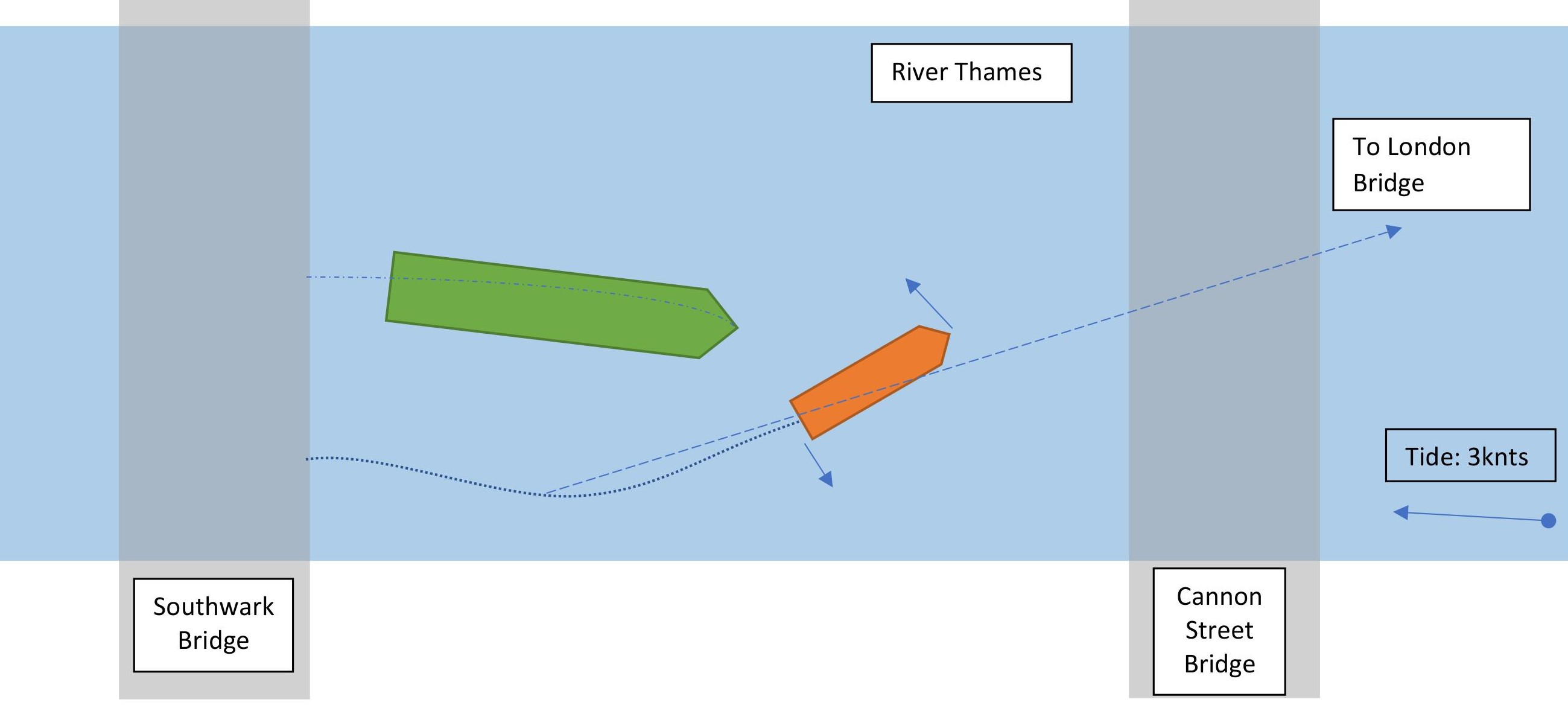
The birthday party was in full swing when the Thames swallowed it. Just before 2:00 am on 20 August 1989, the pleasure boat Marchioness was carrying around 130 people between Cannon Street Railway Bridge and Southwark Bridge, a stretch of the Thames that Londoners pass over daily without a thought. The dredger Bowbelle, more than ten times the Marchioness's weight, struck her from behind, pushed her sideways, and drove her under the water. It took thirty seconds for the boat to sink. Fifty-one people, most of them young and many attending a birthday celebration for Antonio de Vasconcellos, drowned in the dark river.
A Party on the Water
Antonio de Vasconcellos was turning 26. A well-connected young man in London's fashion and arts world, he had hired the Marchioness for an evening cruise along the Thames, with music, dancing, and drinks aboard the 1923-built pleasure launch. The guest list read like a cross-section of young creative London. By the early hours of 20 August, both the Marchioness and the Bowbelle were heading downstream against the tide. The Bowbelle, a 1,880-tonne aggregate dredger, was travelling faster than the smaller vessel. What happened next has never been reconstructed with certainty, but the inquiry concluded that the dredger likely struck the Marchioness from the rear, causing her to turn to port before being hit again and pushed under Bowbelle's bow.
Thirty Seconds
The Marchioness sank so quickly that most of those below deck had no chance of escape. Twenty-four bodies were found still inside the vessel when it was raised from the riverbed. Those who made it into the water faced a different horror: the Thames at night, cold and fast-moving, with few accessible points to climb out. Some survivors clung to the hull of the overturned boat until rescue arrived. Others swam for the riverbank in darkness. The captain of the Bowbelle, Douglas Henderson, later said he had not been aware of the collision at the time it occurred. His lookout position had been obstructed by the dredger's raised grab crane. Henderson was charged with failing to keep a proper lookout but was acquitted twice. No one was ever convicted of any offence in connection with the disaster.
Failures Upon Failures
For the families of the dead, the aftermath proved almost as cruel as the disaster itself. The Marine Accident Investigation Branch investigated but did not interview any survivors from either vessel, relying instead on police interviews. The government refused to hold a public inquiry despite years of pressure from bereaved families. When bodies were recovered, the Metropolitan Police removed the hands of some victims for fingerprint identification without informing or seeking consent from families, an act that caused lasting anguish. It was not until 2000, more than a decade after the sinking, that a formal public inquiry was finally ordered under Lord Justice Clarke. His report, published in 2001, confirmed that both vessels had inadequate lookouts and that the regulatory framework governing Thames navigation was dangerously weak.
A River Transformed
The Marchioness disaster fundamentally changed how the Thames operates. Clarke's inquiry led to new regulations requiring proper lookouts on all vessels, improved lighting on pleasure boats, mandatory life jackets, and better communication between vessels sharing the river. The Maritime and Coastguard Agency took over safety oversight from the fragmented system of authorities that had previously managed different stretches of the waterway. A memorial to the 51 victims stands in Southwark Cathedral, close to the stretch of river where they died. Each August, survivors and families gather to remember what was lost on a warm summer night when the city's ancient river claimed a generation of young Londoners who had simply gone to a birthday party on a boat.
From the Air
Located at 51.508N, 0.091W on the Thames between Cannon Street Railway Bridge and Southwark Bridge in central London. The stretch of river is clearly visible from altitude. Nearest airports: EGLC (London City, 5nm E), EGLL (Heathrow, 14nm W). Best viewed at 1,500-3,000 ft AGL.