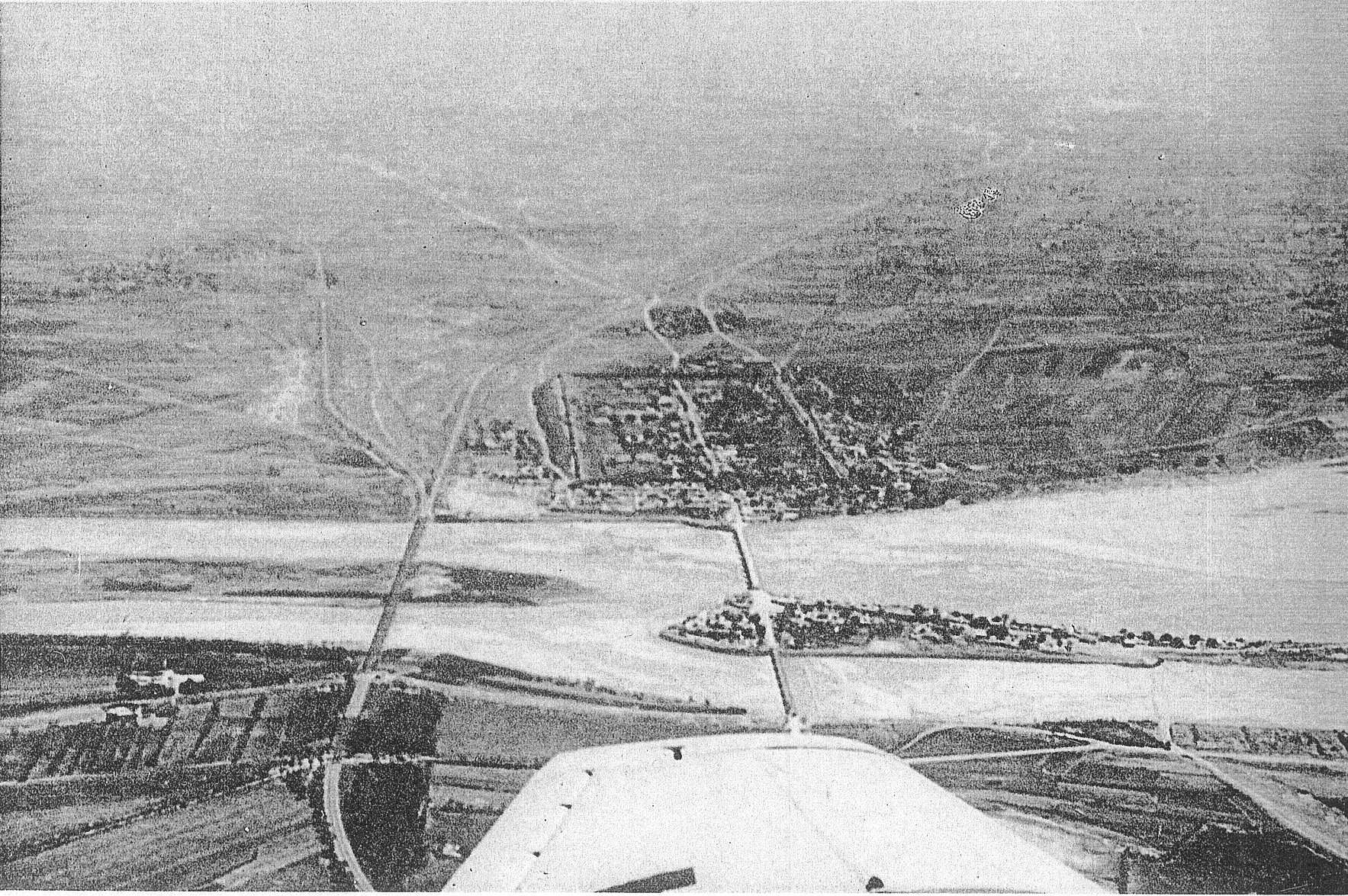
Marco Polo Bridge Incident
A Japanese soldier went missing during a nighttime military exercise near the Marco Polo Bridge on 7 July 1937. He had, by most accounts, simply wandered off -- one historian suggests he had visited a brothel. But his temporary absence gave Japanese garrison troops at Lugouqiao a pretext to demand entry into the walled city of Wanping to conduct a search. Fighting broke out while negotiations were still underway. The soldier, it turned out, had already returned to his own lines. By then it no longer mattered. The Marco Polo Bridge incident is generally regarded as the start of the Second Sino-Japanese War, a conflict that would merge into the larger conflagration of World War II and cost millions of lives.
A Fuse Already Lit
The incident did not emerge from nothing. Since the Japanese invasion of Manchuria in 1931 and the creation of the puppet state of Manchukuo in 1932 with the deposed Qing emperor Puyi as its figurehead, tensions between Japan and China had simmered continuously. Small clashes along the railway connecting Beijing to the port of Tianjin had become routine, each one subsiding before escalating further. The Kuomintang government had agreed to the Tanggu Truce in 1933, establishing an uneasy peace that neither side expected to last. By the terms of the Boxer Protocol of 1901, Japan had the right to station guards along the railways, but by July 1937 Japanese forces in China had swelled to an estimated 7,000 to 15,000 men -- far exceeding the limits the protocol set.
Night and Dawn at Wanping
The sequence of events on the night of 7 July and the morning of 8 July unfolded with the grim logic of mutual miscalculation. Japanese infantry attempted to breach Wanping's walled defenses and were repulsed. An ultimatum followed. At 02:00, Chinese acting commander Qin Dechun sent Wanping's mayor, Wang Lengzhai, alone to the Japanese camp to negotiate. The Japanese insisted on being admitted into the town. Reinforcements arrived on both sides through the predawn hours. At 04:45, Wang Lengzhai returned to Wanping and reported seeing Japanese troops massing around the town. Within five minutes, a shot was heard. Both sides began firing at 04:50, and the battle was joined. Colonel Ji Xingwen led the Chinese defense with about 100 men, outnumbered and armed primarily with rifles and dao swords. They held the bridge with the help of reinforcements, but the losses were severe.
Escalation Without Brake
What distinguished the Marco Polo Bridge incident from the many clashes that preceded it was that the escalation never stopped. A ceasefire was reached, but General Masakazu Kawabe rejected the truce and, against his superiors' orders, continued shelling Wanping for three more hours. When full-scale fighting resumed on 25 July at Langfang, the Japanese deployed armored units. By 20 July, Japanese military strength in the Beiping-Tianjin area had exceeded 180,000 personnel. After 24 days of combat, the Chinese 29th Army was forced to withdraw. The Japanese captured Beiping on 29 July and the Taku Forts at Tianjin the following day. On 9 August, the shooting of a Japanese naval officer in Shanghai expanded the conflict into what became a full-scale war across China.
The Bridge Remembers
In 1987, on the 50th anniversary of the incident, the bridge was renovated and the Museum of the War of Chinese People's Resistance Against Japanese Aggression was built nearby inside Wanping Fortress. The walls of the fortress still bear the shell damage from 1937, now marked with memorial plaques. The 29th Army's resistance, despite their poor equipment, inspired the 1937 "Sword March," which became the National Revolutionary Army's standard marching cadence. Historians continue to debate whether the incident was engineered or accidental. Most consider the "accidental shot" hypothesis most likely -- that a low-ranking Chinese soldier fired in fear, triggering a chain reaction that neither side's leadership could control. The weight of that single moment, a trigger pulled in darkness by a frightened man, set a war in motion that would reshape the entire Pacific.
From the Air
Located at 39.85N, 116.21E at the Marco Polo Bridge (Lugou Bridge) crossing the Yongding River in Fengtai District, southwestern Beijing. The Wanping Fortress and the Museum of the War of Chinese People's Resistance Against Japanese Aggression are immediately adjacent. Beijing Capital International Airport (ZBAA) is approximately 45 km northeast. Beijing Daxing International Airport (ZBAD) is about 40 km south-southeast. From the air, the Yongding River and the distinctive eleven-arch bridge are visible at lower altitudes. The walled Wanping Fortress adjacent to the bridge is also identifiable.