First Yard on the Pacific
The crew deserted before the shipyard even existed. In 1849, when Navy surveyor William McArthur arrived in San Francisco to chart the California coast, his sailors threw an officer overboard and fled for the gold fields. McArthur pressed on anyway, surveying the Mare Island Strait with a skeleton crew. The next year, still in Oregon, he bought a personal stake in the island for $468.50 -- a shrewd bet on a peninsula that would become the first United States Navy base on the Pacific Ocean. Commissioned in 1854 and active for 142 years until its closure in 1996, Mare Island Naval Shipyard built or overhauled thousands of vessels, trained generations of Marines, and produced the West Coast's nuclear submarine fleet. Its story tracks the full arc of American naval power, from wooden sloops to ballistic missile submarines.
Stone, Granite, and the Raison d'Etre
A shipyard's soul is its dry dock, and Mare Island's first permanent one took nearly two decades to build. The Navy intended a stone dock from the start, but Congress did not authorize the $2 million until 1872. Engineer Calvin Brown designed Dry Dock 1 after touring shipyard facilities across the United States and Europe. Granite blocks were quarried at Crystal Lake, Rocklin, Folsom, and Penryn, then dressed and laid with a precision that still impresses engineers today. The first concrete foundation was poured in 1874; the first stone was set in 1875. Construction was not completed until 1891 -- $400,000 over budget, but the result was extraordinary. Dry Dock 1 remains one of the most remarkable examples of stone masonry construction in the country, its stepped walls and smooth floors a monument to an era when shipyards were built to last centuries. By the time it was finished, however, American warships were already outgrowing it, and the Navy began planning a larger concrete dock almost immediately.
The Chapel, the Marines, and the Rose Bowl
Mare Island was more than an industrial complex -- it was a self-contained community. St. Peter's Chapel, built in 1901 under the guidance of Chaplain Adam McAlister and Senator George Perkins, was the first interdenominational chapel in the U.S. armed services and only the second chapel built on Navy property. Historian McDonald wrote that it "bears witness to the closeness of the community that developed at the Mare Island Naval Shipyard." Marines arrived in 1862 and never fully left. In 1911, the Corps established its West Coast recruit training depot on the island, training new Marines there until 1923 when operations moved to San Diego. During World War I, the Marine compound became the major West Coast training station, and the Marines stationed there did something unexpected: they fielded a football team. The 1917 Mare Island Marines went 8-0, shut out six opponents, outscored all competition 200 to 10, and won the 1918 Rose Bowl against the Camp Lewis 91st Division. The 1918 squad went 10-1, losing only in the 1919 Rose Bowl.
Submarines, Speed Records, and 50,000 Workers
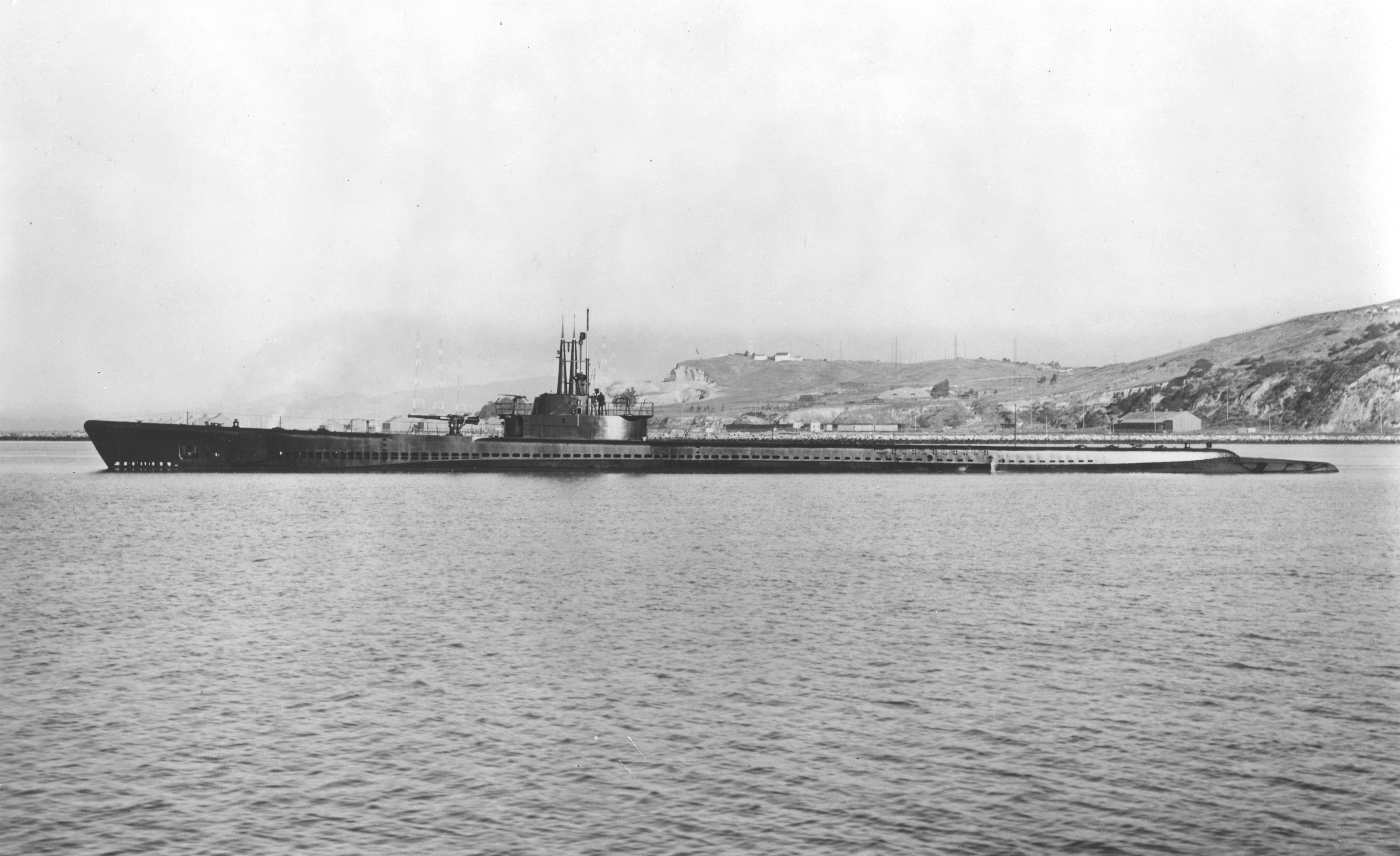
World War I revealed Mare Island's potential for scale. The shipyard still holds a destroyer construction speed record, launching a ship in a matter of days in May-June 1918. It was also selected to build the only dreadnought battleship constructed on the West Coast, launched in 1919. But it was submarine construction that defined the yard's modern identity. Recognizing the power of undersea warfare demonstrated by German U-boats, the Navy founded a submarine program at Mare Island in the early 1920s, building its first sub in 1925. By World War II, the shipyard had reached staggering capacity. Land reclamation nearly doubled usable acreage from 635 to about 1,500 acres. Employment peaked at 50,000 workers. The redesigned Shipyard South used mass pre-fabricated sub-assembly techniques for submarine construction, while the North End produced destroyer escorts at a pace of one every ten days and landing craft at one per day. Mare Island even serviced Royal Navy cruisers and four Soviet Navy submarines -- an unlikely wartime alliance visible in the yard's service records.
The Nuclear Age and the Final Watch
The Cold War brought a new mission. In 1955, Mare Island won the contract to build the first nuclear submarine laid down at a Pacific base. The yard became one of the few facilities in the country capable of both building and overhauling nuclear submarines, including several UGM-27 Polaris ballistic missile boats. The last nuclear submarine built in California was launched from Mare Island in 1970, and in 1972 the Navy officially ended new nuclear construction there, though overhaul work continued for decades. When the Base Realignment and Closure process identified Mare Island for shutdown in 1993, the yard had expanded to over 5,200 acres and still employed more than 7,500 civilians. Naval operations ceased on March 31, 1996, ending 142 years of continuous service. The granite dry dock, St. Peter's Chapel, and the massive industrial buildings remain -- a landscape now finding new purposes as a California Historical Landmark. Film crews have discovered it too: scenes from the 2018 film "Bumblebee" were shot in the old dry dock slipways.
From the Air
Mare Island Naval Shipyard is at approximately 38.090N, 122.263W, on the Mare Island peninsula in Vallejo, California, along the western shore of Mare Island Strait where it meets San Pablo Bay. The shipyard's dry docks, industrial buildings, and piers are visible from the air. Best viewed at 2,000-4,000 feet AGL. Napa County Airport (KAPC) is approximately 12 nm northwest. Buchanan Field (KCCR) is about 18 nm southeast. The causeway connecting Mare Island to mainland Vallejo is a useful visual reference. On clear days, San Pablo Bay spreads to the south and west.