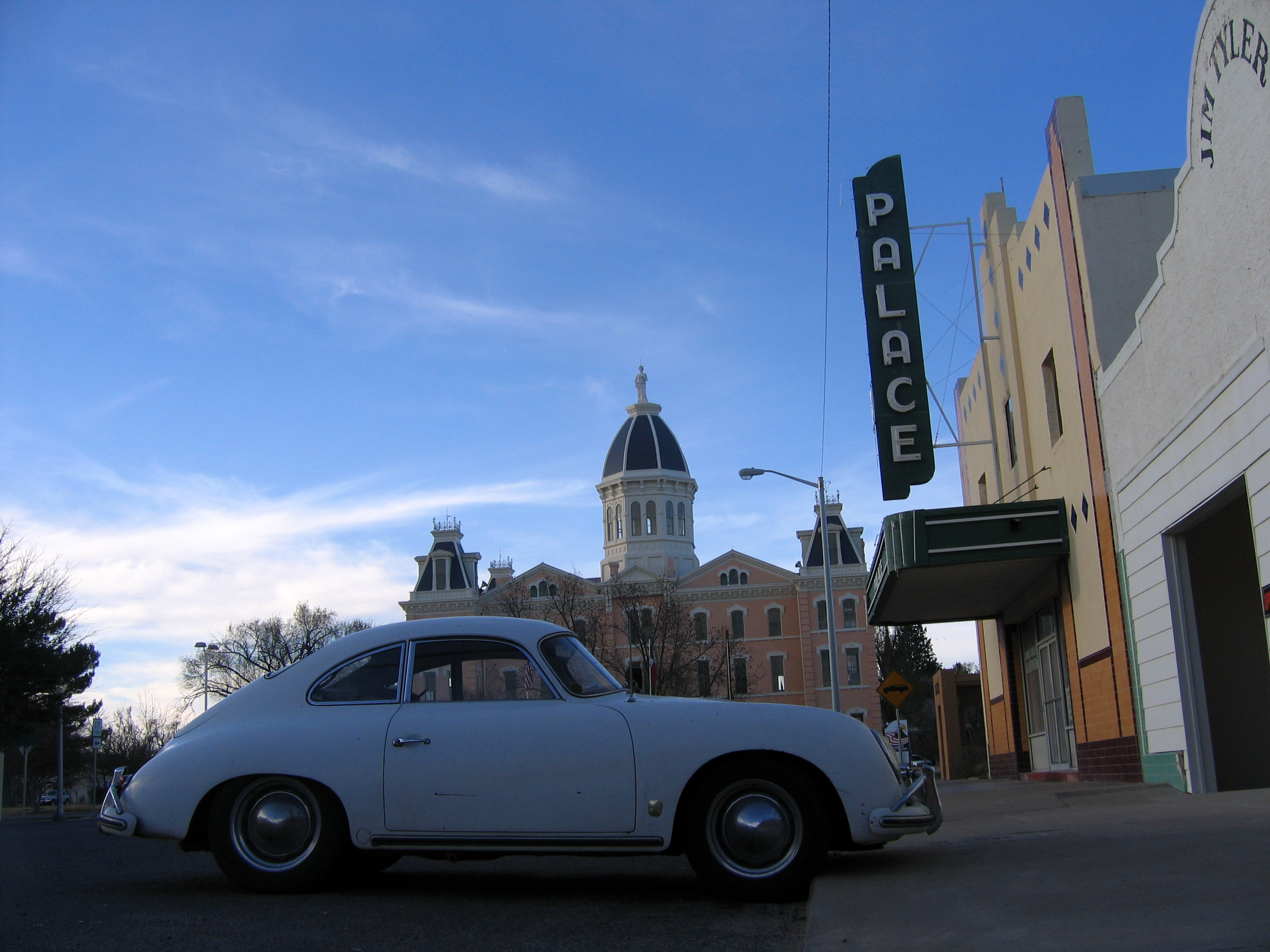
Marfa: The Desert Art Town That Shouldn't Exist
Marfa has fewer than 2,000 residents, sits 200 miles from El Paso in the middle of the Chihuahuan Desert, and is one of the most important sites for contemporary art in America. The incongruity is intentional. Donald Judd, the minimalist sculptor, arrived in 1971, escaping the New York art world for the emptiness of West Texas. He bought buildings - first one, then dozens, including two former Army hangars - and installed his work and his collection in a landscape where nothing competed for attention. The Chinati Foundation, which he founded, now operates the site; art pilgrims make the four-hour drive from the nearest commercial airport to see Judd's aluminum boxes gleaming in desert light. Marfa also has unexplained lights, a Prada store that's actually a sculpture, and hotels in converted railroad buildings. It shouldn't exist, but it does.
Donald Judd's Vision
Donald Judd was a leading minimalist artist when he left New York for Marfa in 1971. The city - barely a town, really - offered what Manhattan couldn't: space, silence, permanence. Judd believed art should be experienced in dedicated spaces, not rotated through museums; he wanted his work installed permanently, where viewers could return. He bought the former Fort D.A. Russell, a decommissioned Army post, and began installing work - his own and pieces by Dan Flavin, John Chamberlain, and others. The Chinati Foundation, named for the nearby mountains, formalized this vision. Judd died in 1994, but his installations remain: 100 aluminum boxes in former artillery sheds, concrete pieces in the desert, neon by Flavin in barracks buildings. The work exists in dialogue with the landscape.
The Marfa Lights
The Marfa Lights have been reported since the 1880s - mysterious glowing orbs that appear on the horizon east of town, moving erratically, splitting and merging. The lights are real; what causes them is debated. Skeptics cite car headlights on distant Highway 67, atmospheric inversions, or mirages. Believers suggest ball lightning, ghost lights, or something stranger. The town embraces the mystery: the Marfa Lights Viewing Area, nine miles east on Highway 90, provides a platform for watching. The lights appear inconsistently; many visitors see nothing. Whether unexplained phenomena or explainable optics, the lights add to Marfa's reputation as a place where normal rules don't fully apply.
Prada Marfa
Prada Marfa is not a store. The structure - resembling a Prada boutique, stocked with real Prada bags and shoes behind plate glass - sits on Highway 90 northwest of town, a permanent sculpture by artists Elmgreen and Dragset, installed in 2005. The work was designed to never be repaired, to decay into the desert - but vandals broke in twice within weeks of opening, stealing the merchandise. The artists relented, replacing the goods with replicas, adding locks, maintaining the structure. Prada Marfa became Instagram-famous before Instagram existed, a symbol of art-world absurdity and desert isolation. The nearest actual Prada store is hundreds of miles away.
The Chinati Foundation
The Chinati Foundation conducts tours of Judd's installations Wednesday through Sunday - advance reservations required, no drop-ins. The full tour takes several hours, moving between buildings that once housed soldiers and now house art. The 100 mill aluminum boxes in the artillery sheds are the most famous works: rectangular forms that seem identical until you examine them, each slightly different, the desert light through the windows constantly changing what you see. Outside, concrete boxes sit in the landscape. Other buildings contain work by Chamberlain (crushed car sculptures), Flavin (fluorescent light installations), and more. Chinati is a pilgrimage site; visitors drive hours for an experience that couldn't happen elsewhere.
Desert Outpost
El Paso International Airport (ELP) is 200 miles west; Midland International (MAF) is 150 miles northeast. Most visitors drive - the journey through empty desert is part of the experience. Marfa's lodging includes the Hotel Saint George (restored historic building), El Cosmico (trailers, tepees, and safari tents), and the Thunderbird Hotel. Food Shark offers Mediterranean food from an airstream; Jett's Grill serves upscale Texas. The town is walkable; most visitors stay two nights. From altitude, Marfa appears as a tiny settlement in vast emptiness - the high desert plateau stretching in every direction, the Davis Mountains to the south - the art town that shouldn't exist, 200 miles from anywhere.
From the Air
Located at 30.31°N, 104.02°W on the high Chihuahuan Desert plateau at 4,830 feet elevation, 200 miles from El Paso and 60 miles from the Mexican border. From altitude, Marfa appears as an improbable cluster of buildings in empty desert - the town's grid visible, the former Fort D.A. Russell (now Chinati Foundation) at the south edge, vast desert in every direction. The Davis Mountains rise to the south. What appears from the air as a tiny desert outpost is Marfa - where Donald Judd installed his vision, where mysterious lights appear on the horizon, and where art happens in isolation.