The Day the Courthouse Erupted
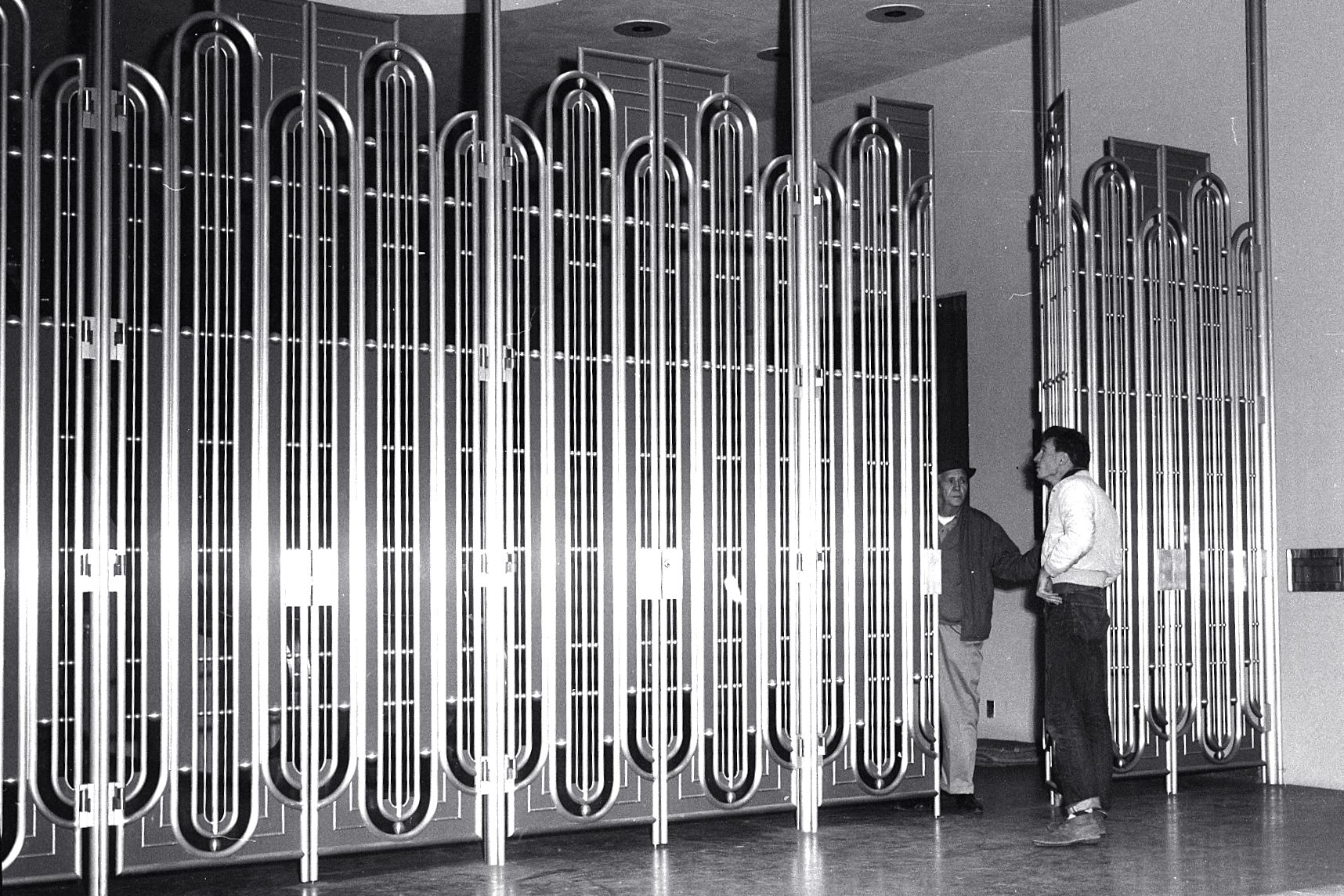
Frank Lloyd Wright designed the Marin County Civic Center as a futuristic sweep of blue roof and arched galleries, a building that looked forward. On Friday, August 7, 1970, it became the site of something brutally present. A seventeen-year-old named Jonathan Jackson walked into a courtroom carrying weapons under a long raincoat, drew a pistol, tossed it to a defendant, and announced: "Freeze. Just freeze." What followed -- a kidnapping, a shootout in the courthouse corridor, four people dead -- was the violent culmination of a crisis that had been building inside California's prisons for months, one rooted in racial violence, institutional failure, and the desperation of people who believed the system had left them no other recourse.
The Killing Yard at Soledad
The roots of the courthouse attack run back to January 13, 1970, at Soledad State Prison. That day, fifteen inmates were allowed into the exercise yard together -- the first racially integrated exercise period in months. Racial tensions had been running high since 1968, when a Black inmate named Clarence Causey was stabbed to death. The integration was deliberate, and according to inmates, some manner of confrontation had been anticipated. When a fight broke out, corrections officer Opie G. Miller -- an expert marksman -- shouted and blew a whistle but gave no warning shot. He fired directly, killing three Black prisoners: W.L. Nolen, Cleveland Edwards, and Alvin Miller. A white inmate was injured. A grand jury ruled the killings justifiable homicide. Thirty days later, prison guard John Vincent Mills was beaten, dragged up three flights of stairs, and thrown to his death. A note found beside his body read: "One down, two to go."
The Soledad Brothers
Three Black inmates were charged with Mills's murder and transferred to San Quentin: Fleeta Drumgo, John Clutchette, and George Jackson. They became known as the Soledad Brothers. Jackson was already a political activist and writer who had co-founded the Black Guerrilla Family with Nolen in 1966, a Black power group that targeted what its members saw as the white racist infrastructure of the prison system. The case drew national attention. Meanwhile, Soledad continued to unravel. In March 1970, guards were taken hostage for forty-five minutes before tear gas freed them. In July, a white guard named William Shull was found stabbed to death with forty wounds. Six days later, a white inmate's body was found shoved under his cell cot. The violence fed on itself, each act a response to the last, each response generating the next.
August 7, 1970
Jonathan Jackson was seventeen, George Jackson's younger brother. Two days before the courthouse attack, former UCLA instructor Angela Davis purchased a shotgun from a San Francisco pawn shop; its barrel was subsequently sawed off for concealment. On August 7, Jonathan entered the Marin County courtroom where defendant James McClain was on trial for stabbing a prison guard. He sat among the spectators, then drew a pistol and threw it to McClain. Jackson produced a carbine from his raincoat. McClain held the pistol against Judge Harold Haley's head. Another inmate, Ruchell Magee, freed additional prisoners from a holding cell. Road flares simulating dynamite were pressed against Haley's neck, then replaced with the sawed-off shotgun, taped under his chin. The kidnappers took four more hostages -- Deputy District Attorney Gary Thomas and three jurors -- binding them with piano wire.
The Corridor
The group moved into the courthouse corridor, which by then was crowded with police. What happened next unfolded in seconds. Deputy District Attorney Thomas, one of the bound hostages, grabbed a gun from Jackson and opened fire on the kidnappers. A chaotic melee erupted. When it ended, Jonathan Jackson, James McClain, and William Arthur Christmas were dead. Judge Haley was dead. Thomas was paralyzed for life by a bullet through his spine. Juror Maria Elena Graham suffered a gunshot wound to her arm. Ruchell Magee, the sole surviving kidnapper, was wounded and later sentenced to life in prison. He spent sixty-seven years incarcerated before receiving compassionate release in late July 2023; he died a few weeks later. Angela Davis was placed on the FBI's most wanted list and arrested in New York. She was acquitted of all charges in 1972.
The Aftermath That Would Not End
On October 8, 1970, the Weathermen bombed the Marin County Courthouse in retaliation for the deaths of Jackson and the other kidnappers. A year later, George Jackson was fatally shot in the San Quentin prison yard during a riotous escape attempt. Officials said he had smuggled a pistol inside; three corrections officers and two inmates also died. Six inmates -- the San Quentin Six -- were tried for their roles. The families of the three men killed at Soledad on January 13, 1970, filed a lawsuit against corrections officer Miller. An all-white jury found that eight prison employees had caused the inmates' deaths, and the state of California paid the families a total of $270,000. The violence that began with a shooting in a prison yard had spread outward -- to a courtroom, a bombing, another prison yard -- each act of retribution spawning the next, a cycle that left the dead uncounted and the living permanently scarred.
From the Air
Located at 38.00°N, 122.53°W at the Marin County Civic Center in San Rafael, California. The building is easily identifiable from the air: Frank Lloyd Wright's distinctive blue-roofed design stretches across the hillside, one of his last commissions. The long, low structure with its signature spire and arched galleries is unlike any other government building in the region. Nearest airports: KDVO (Marin County Airport/Gnoss Field, 8nm north), KSFO (San Francisco International, 18nm south), KOAK (Oakland International, 15nm east). The civic center sits in the rolling hills of central Marin County, surrounded by residential neighborhoods and open space. San Pablo Bay is visible to the east.