The Mariners' Museum and Park
Somewhere inside this museum sits the world's only known Kratz-built steam calliope, a mechanical organ that once sang across harbor waters to announce a ship's arrival. It is one of 32,000 artifacts collected within the galleries of The Mariners' Museum, the institution that Congress designated as America's National Maritime Museum. Founded in 1930 on 550 acres of Virginia woodland along the James River, this is not merely a building full of ship models and old maps. It is the largest maritime history collection in the Western Hemisphere, a place where scrimshaw carved by idle whalers sits alongside the propeller of the most revolutionary warship of the Civil War.
A Railroad Baron's Gift to the Sea
The museum owes its existence to Archer Milton Huntington, whose father, Collis P. Huntington, had transformed this stretch of the Virginia Peninsula in the late 19th century. Collis brought the Chesapeake and Ohio Railway to Warwick County, founded the city of Newport News, built its coal export facilities, and established Newport News Shipbuilding. His son Archer and daughter-in-law Anna Hyatt Huntington, a celebrated sculptor, acquired the vast tract of land that would become the museum grounds. The first two years after acquisition were devoted not to exhibitions but to the land itself, constructing a dam to create the 167-acre Mariners' Lake and establishing the natural park that surrounds it. The museum opened its doors with a mission as broad as the ocean: to collect the full story of humanity's relationship with the sea.
Treasures from Every Horizon
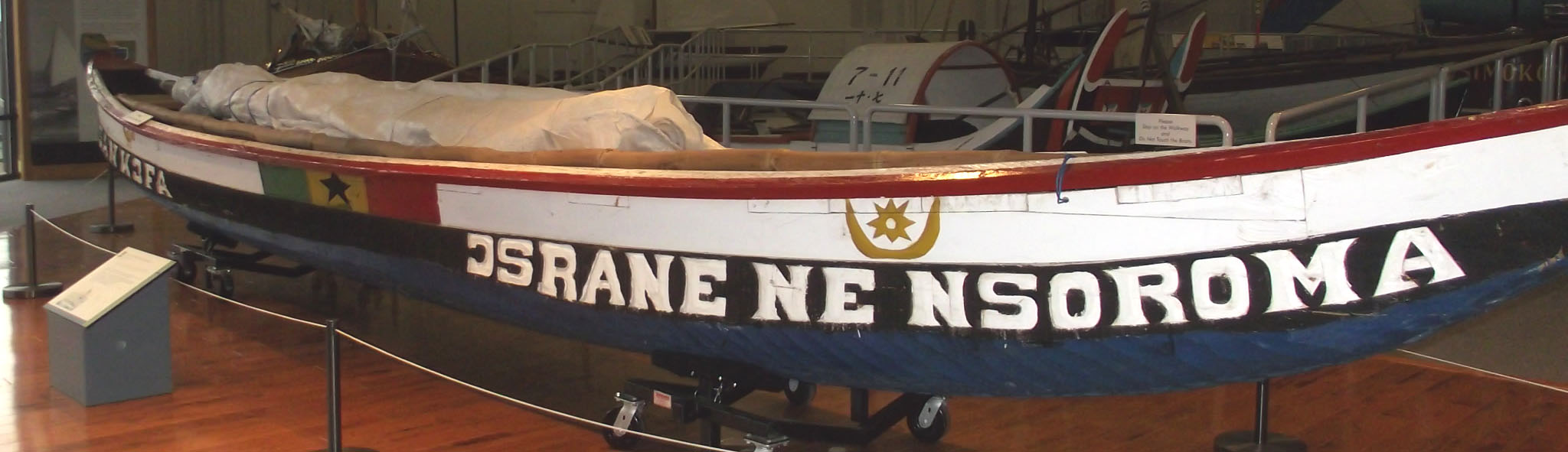
The collection spans the globe and the centuries. Miniature ship models sit in glass cases with the precision of jeweled watches. Carved wooden figureheads stare out with painted eyes that once watched the open Atlantic. Paintings by marine artists James Bard and Antonio Jacobsen capture steamboats churning through harbor light, their wakes frozen in oil and pigment. A silver-plated mariner's astrolabe from 1645, crafted by Nicolao Ruffo, represents the age when navigation was part science, part faith. A gold coin from the 1360s commemorates the Battle of Sluys. A Ghanaian dugout canoe from 2004 proves that the story of watercraft is still being written. The largest artifact in the collection is the Oracle Team USA 17, the racing yacht that won the 2013 America's Cup, its carbon-fiber hull a sharp contrast to the wooden vessels that fill the surrounding galleries.
Iron Against Iron
The museum's most dramatic centerpiece is the USS Monitor Center. The ironclad Monitor fought the CSS Virginia in the Battle of Hampton Roads in 1862, a clash that rendered every wooden warship in the world obsolete overnight. After her famous battle, the Monitor sank in a storm off Cape Hatteras, North Carolina, settling on the Atlantic floor about 16 miles southeast of the cape. When her wreck was discovered, the site became the United States' first national marine sanctuary, and the only one of the nation's 13 marine sanctuaries created to protect a cultural resource rather than a natural one. The museum now houses recovered artifacts including the ship's propeller and a Dahlgren gun, and ongoing efforts focus on restoring the Monitor's original steam engine.
Stone Lions and Shoreline Trails
Beyond the galleries, the museum park unfolds across 550 acres of naturally wooded property centered on The Mariners' Lake. The five-mile Noland Trail follows the lake's shoreline, crossing 14 bridges with benches placed at every half-mile. Each fall the museum hosts a 10K run along this route. The trail's most striking landmark is the Lions Bridge, a dam offering sweeping views of the James River. Four stone lions have stood guard on the parapets since October 1932, sculpted and placed by Anna Hyatt Huntington herself. She also created the monument Conquering the Wild, which overlooks the bridge, the park, and the lake from above. The park grounds carry their own historical weight: the Skirmish at Waters Creek, a Revolutionary War engagement, took place in this area on March 8, 1781.
From the Air
Located at 37.055N, 76.488W on the Virginia Peninsula in Newport News. The 550-acre park and 167-acre Mariners' Lake are visible from altitude as a large wooded area with a distinctive lake. The Lions Bridge dam is a notable visual landmark. Nearest airports: Newport News/Williamsburg International (KPHF) approximately 8nm north. Hampton Roads harbor and the James River provide strong geographic reference. Best viewed at 2,000-3,000 feet AGL in clear conditions.