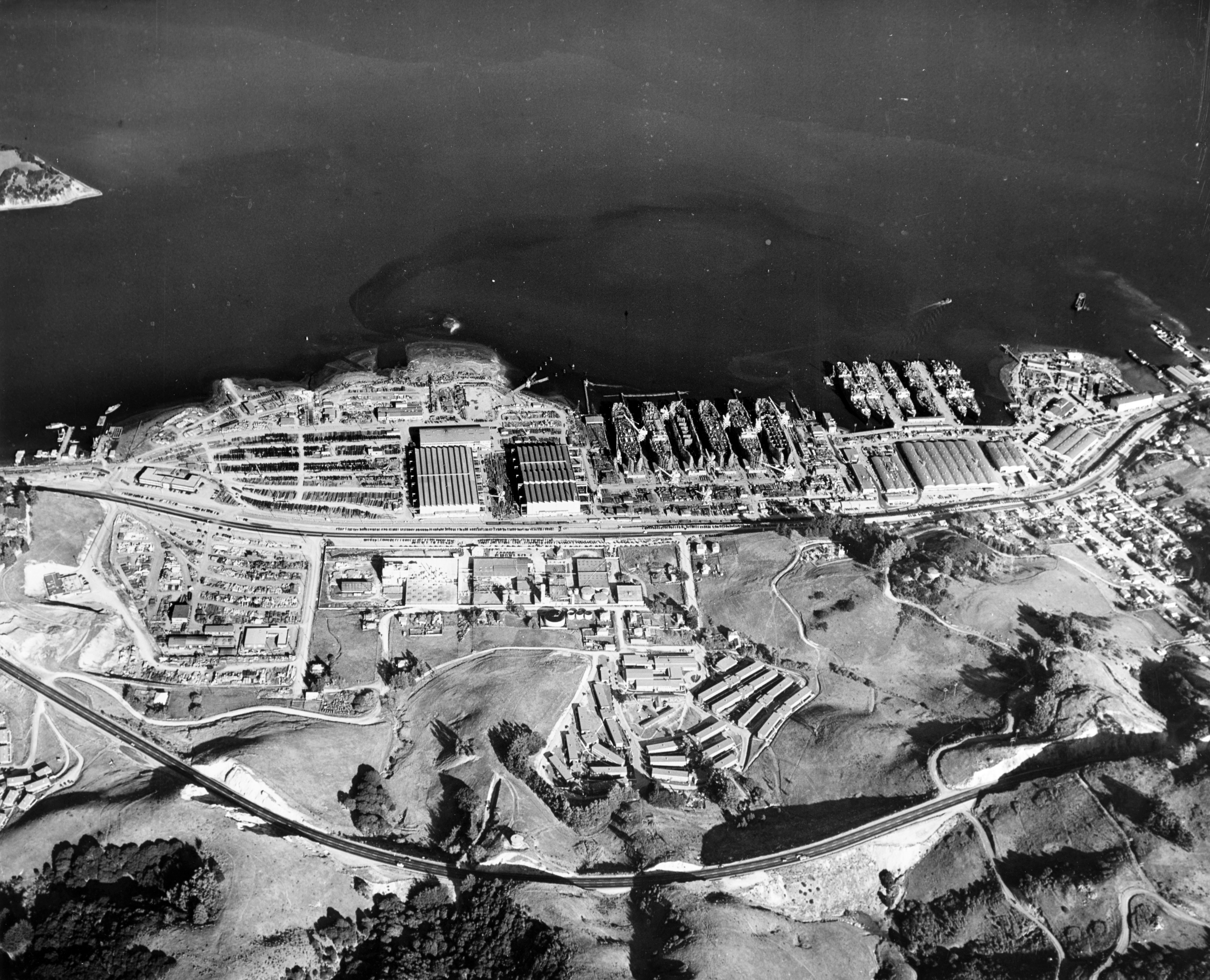
Marinship
Between 1942 and 1945, the Marinship Corporation built 93 ships in a Sausalito shipyard that had not existed before the war and would not survive it. The yard was created from scratch on filled tidal land along Richardson Bay, and at its peak employed over 20,000 workers -- many of them African Americans recruited from the South who encountered both economic opportunity and fierce racial discrimination in a county that had been overwhelmingly white.
Building Ships from Nothing
Marinship was one of dozens of emergency shipyards created across the United States to produce the vessels needed for the war effort. The site on Richardson Bay was selected for its deep water access and proximity to San Francisco's industrial infrastructure. Workers constructed Liberty ships and tankers at a pace that would have been unimaginable in peacetime, using prefabricated sections and assembly-line techniques adapted from automobile manufacturing. The yard launched its first ship in September 1942, less than six months after groundbreaking.
The Workers Who Built Them
The shipyard's labor demands drew workers from across the country, fundamentally changing Marin County's demographics. African American workers from the Southern states came north seeking the wages and opportunities that wartime industry offered. They encountered a community unprepared for their arrival -- housing discrimination was rampant, and the nearby town of Marin City was established as segregated worker housing. The shipyard itself was more integrated than the surrounding community, but racial tensions simmered throughout the war years.
After the Last Launch
When the war ended, Marinship closed almost as quickly as it had opened. The shipyard buildings were demolished or repurposed, and the site gradually transformed into the Sausalito waterfront that exists today -- a mix of houseboats, marinas, and commercial properties. Marin City, the community created to house African American shipyard workers, remained as one of the few predominantly Black neighborhoods in Marin County. The shipyard that built 93 vessels in three years left almost no physical trace, but the community it created endures.
From the Air
Located at 37.86322N, 122.49328W in the San Francisco Bay Area. Nearby airports: KSFO (San Francisco International), KOAK (Oakland International).