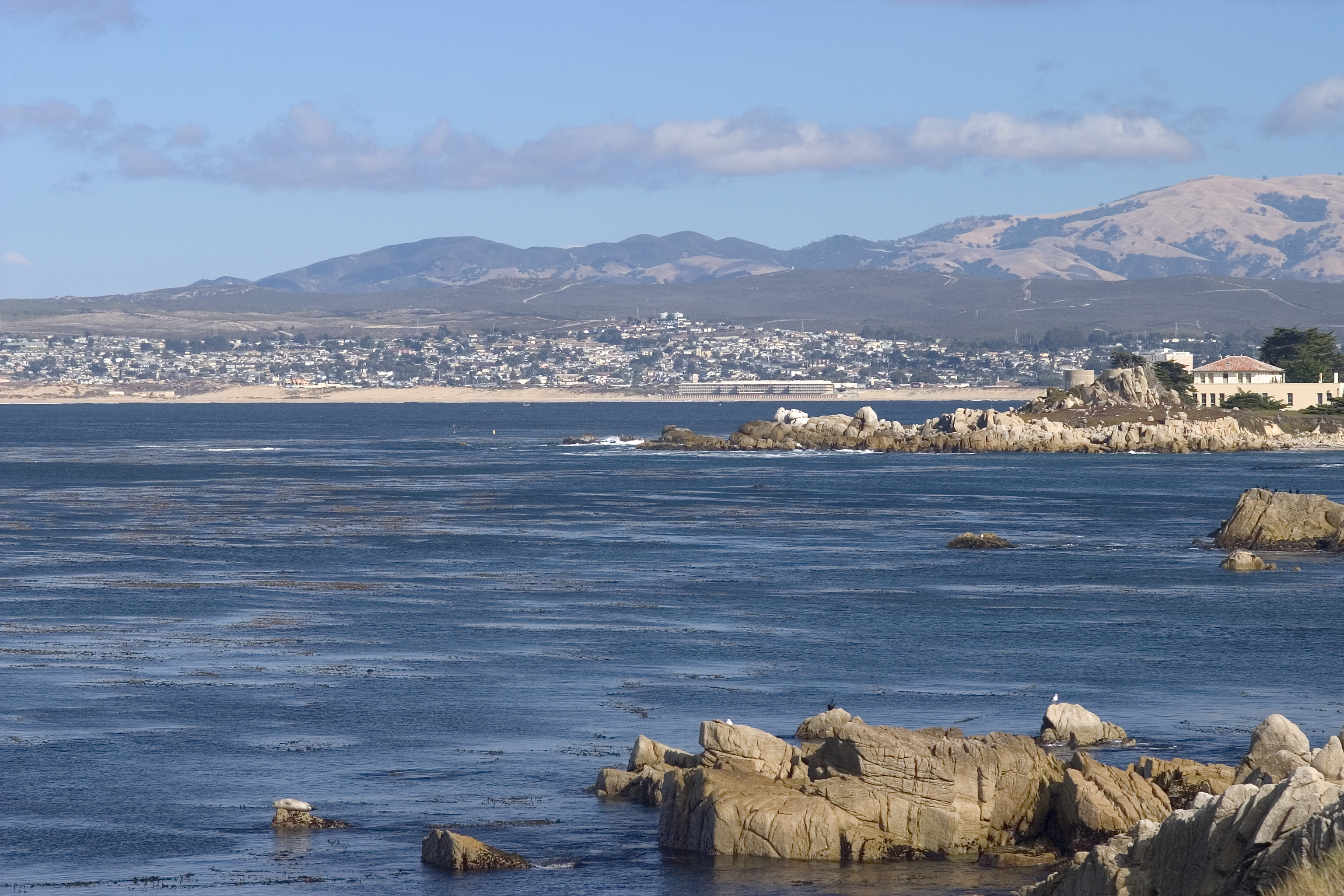
Tides of Empire: California's Maritime Story
Hundreds of ships sat rotting in San Francisco Bay in 1850, abandoned by crews who had jumped overboard -- sometimes literally -- to chase gold in the Sierra foothills. The harbor master counted 62,000 arrivals by sea in a single twelve-month stretch. Some of those forsaken hulls were dragged ashore and converted into hotels, warehouses, even a jail. Others sank where they sat and were eventually buried under landfill as the city expanded over them. Construction crews in modern San Francisco still occasionally hit old timbers and iron fittings when digging foundations. The ships are the city's skeleton, and they tell only one chapter of a maritime story that stretches back thousands of years.
Boats of Reed and Redwood
Long before European sails appeared on the horizon, California's coastal and riverine peoples built watercraft suited to their environments. In the northwest, near the redwood forests, tribes carved massive dugout canoes from fallen logs -- a single redwood trunk four meters long could weigh two thousand kilograms, so builders selected driftwood or blowdowns to minimize hauling. Further south and inland, where timber was scarce, peoples of the Central Valley and the coast fashioned boats from tule, the spongy bulrush that grows thick in California's marshes. Bundled and lashed while still green, tule reeds created buoyant craft capable of carrying several people across bays and along rivers. The Chumash of the Santa Barbara Channel took a different approach entirely, building plank canoes called tomols from driftwood redwood, sewn together with plant fiber and sealed with natural asphalt that seeped from coastal tar seeps. These elegant vessels could carry a dozen people across open ocean to the Channel Islands, twenty miles offshore.
Silver, Silk, and Scurvy
California's coast entered the European record in 1542, when Juan Rodriguez Cabrillo sailed north from New Spain and became the first European to see San Diego Bay. Cabrillo died on San Miguel Island from an infected wound during that voyage, but his pilot Bartolome Ferrer pushed on to roughly the Oregon border before storms drove the expedition home. For the next two centuries, California's coast mattered to Spain primarily as a landmark on the Manila galleon route. Each year, ships laden with silver sailed west from Acapulco to the Philippines in about ninety days, trading for Chinese silk, porcelain, and spices at exchange rates that made fortunes -- silver bought gold in China at five-to-one, compared to sixteen-to-one in Europe. The return voyage was brutal: galleons rode the North Pacific Gyre's westerly winds at high latitudes, a crossing that could take six months. Crews arrived off the California coast ravaged by scurvy, desperately searching for a harbor. More than forty Manila galleons were lost during the trade's 250-year run.
California Greenbacks
After Mexico won independence from Spain in 1821, Alta California's ports opened to foreign trade for the first time. The ranchos had cattle -- enormous herds of longhorns descended from Spanish stock -- but no manufacturing. Boston ships sailed 17,000 miles around Cape Horn to trade finished goods for cowhides, which the Yankees called "California greenbacks" because each hide was worth roughly two dollars, the same as a banknote. Tallow, the rendered fat used to make candles and soap, was the other major export. Richard Henry Dana's 1840 memoir "Two Years Before the Mast" immortalized this hide-and-tallow trade, describing the backbreaking work of tossing stiff hides from clifftops at San Juan Capistrano down to the beach, where they were loaded into small boats and ferried to ships anchored offshore. The trade transformed California from an isolated pastoral backwater into a place that appeared on merchant shipping routes worldwide.
The Great Scramble by Sea
When President Polk confirmed the gold discovery in his December 1848 State of the Union address -- displaying 300 ounces of California gold at the War Department -- roughly 80,000 people set out for the goldfields the following year. Half came overland, but half came by sea, and the sea route was often faster. A wagon journey took about 140 days. The Panama shortcut -- steamship to the Chagres River, dugout canoe and mule across the isthmus, steamship up the Pacific side -- could be done in as few as 40 days once the shipping lines were established. San Francisco, a settlement of 180 people in 1846, exploded to 32,000 by the 1852 state census. The harbor became a forest of bare masts as ships were abandoned wholesale. Nearly 96 percent of the arrivals were young men under forty, and the city they built reflected that demographic -- saloons, gambling houses, and wharves thrown up at frantic speed, burning down in catastrophic fires, and rebuilt just as fast.
Iron Yards and Submarine Pens
California's naval history began two months after statehood, when President Millard Fillmore reserved Mare Island for government use in November 1850. Commodore David Farragut became its first commander in 1854, and the yard evolved into the premier naval construction site on the West Coast for nearly 140 years, building everything from wooden sloops-of-war to nuclear submarines. During World War II, Mare Island's workforce swelled from 5,593 to over 18,500, specializing in submarine construction for the Pacific theater. To the south, Naval Base San Diego -- established on land acquired in 1920 -- grew into the home port of the largest naval fleet in the world, its 13 piers stretching across nearly a thousand acres. Today, San Diego remains the principal home port of the Pacific Fleet, hosting 54 ships and over 120 tenant commands. The coastline that once welcomed tule canoes and Manila galleons now berths supercarriers.
From the Air
This story covers California's entire coastline, but its coordinates center on the Sacramento-San Joaquin River Delta at approximately 38.02N, 121.75W, the historical junction of inland and maritime California. Key maritime landmarks visible from the air include San Francisco Bay and the Golden Gate (37.82N, 122.48W), Mare Island at Vallejo (38.08N, 122.26W), and San Diego Bay (32.71N, 117.17W). Recommended altitude: 5,000-10,000 feet AGL for bay overviews. Nearby airports: Sacramento Executive (KSAC), Oakland International (KOAK), San Francisco International (KSFO), Naval Air Station North Island (KNZY).