Marlik
A golden cup 18 centimeters tall, covered in griffin-like figures and winged bulls, sat in a tomb for three thousand years before anyone found it. The Marlik Cup, as it became known, was struck from pure gold by craftsmen whose names vanished millennia ago but whose skill would later grace Iran's 500-rial banknote. The cup came from Marlik, a rocky mound near Roudbar in Gilan Province, where the valley of the Gohar Rud -- the "gem river" -- cuts through northern Iran toward the Caspian lowlands.
The Mound Among the Orchards
Marlik rises as a rocky outcrop capped by several meters of sediment, surrounded by olive groves and fruit gardens maintained by local villagers. Below the mound, rice paddies step down the lower slopes of the valley toward the Gohar Rud, a tributary of the Sepid Rud. The site is also known as Cheragh-Ali Tepe, and it takes its primary name from the Amard people who once inhabited this part of Gilan. By the time archaeologists arrived, treasure hunters had already partially looted the mound, and the research teams found their work complicated by local corruption. What they uncovered despite these obstacles was extraordinary: a royal cemetery containing 53 tombs spanning the late 2nd to early 1st millennium BC.
Tombs of Rank and Ritual
The tombs varied dramatically in size and construction, reflecting the social hierarchies of the people who built them. The smallest, Tomb 4, measured just 1.5 by 1 by 1 meter. The largest, Tomb 52, stretched 7 by 4.5 by 2.5 meters. Some were roughly dug pits lined with local stone. Others featured carefully constructed walls of stone slabs bound with mud mortar, and a few of the most important burials used yellowish stone slabs brought from the headwaters of the Gohar Rud, 15 kilometers to the south -- imported material that signaled the occupant's status. Where skeletal remains survived, the body had been laid on its side on a large flat slab, surrounded by grave goods. Most bones had deteriorated over the millennia, consumed by natural processes and rodent activity.
Gold, Silver, and Bronze
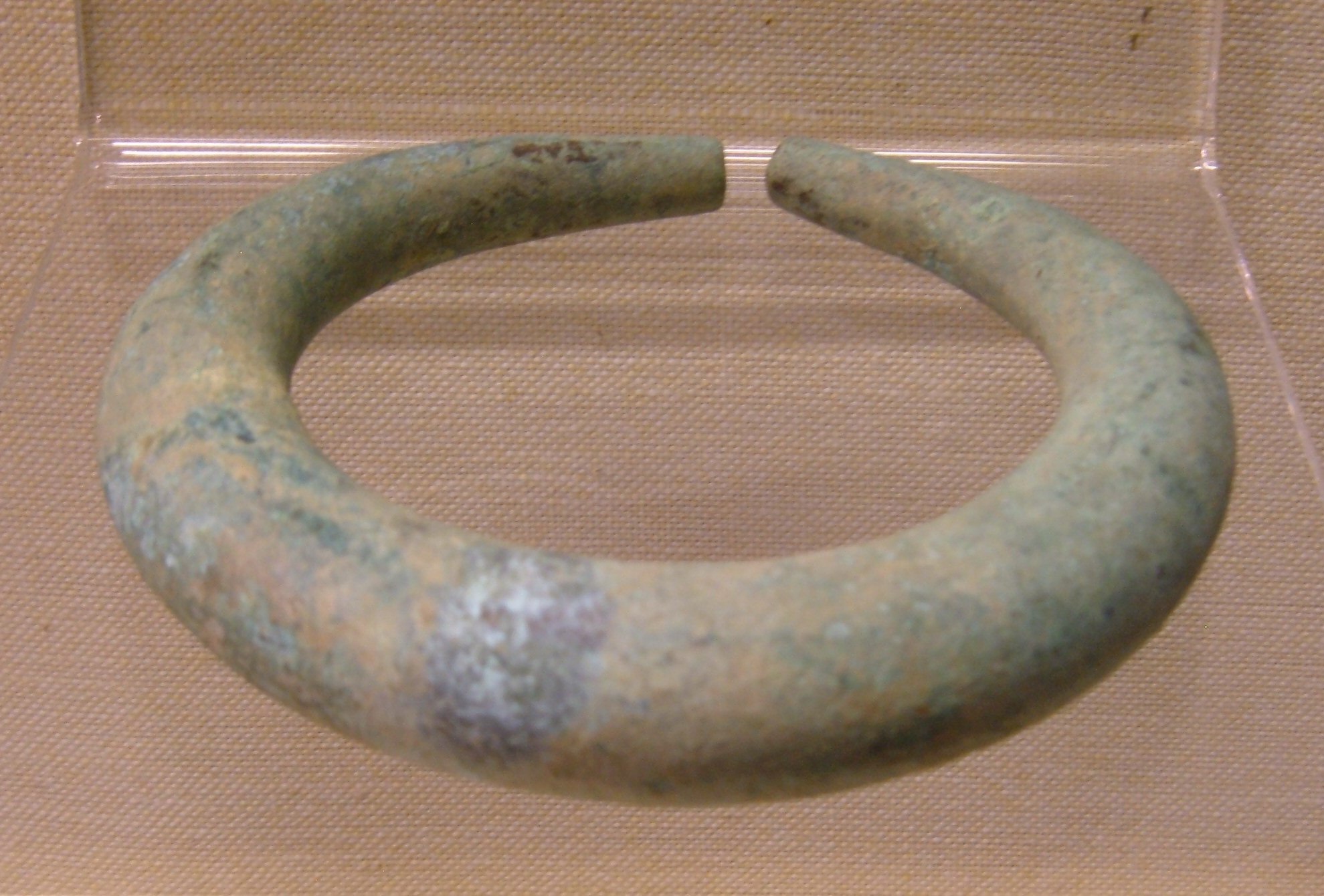
The grave goods made Marlik famous. Golden cups decorated with friezes of gazelles. A silver cup edged with the image of a sheep. A double-headed eagle vessel. Bronze bracelets. Cow-shaped earthenware. Animal-form vases. Disc-shaped necklaces. The artistry combined influences from multiple traditions -- Mesopotamian motifs like winged bulls alongside distinctly Iranian forms. These objects are now scattered across the world's museums: the Metropolitan Museum of Art in New York, the Louvre in Paris, the National Museum of Oriental Art in Rome, and the Rosicrucian Egyptian Museum in San Jose, California. A clay bowl from Marlik sits in California with a notation that this type of vessel once held the daily ration of a forced laborer -- a reminder that not everyone buried here was royalty.
Migrants from the East
Who were the people of Marlik? The archaeological evidence points to Iranian-speaking migrants who moved into the region from Central Asia during the early to mid-2nd millennium BC. The abundance of weapons, horse trappings, and horse burials among the grave goods has been cited by scholars including G.N. Kurochkin as distinct Iranian cultural signatures. Spouted vessels found throughout the tombs echo forms known from other Iranian sites. But the exact identity of these people remains a matter of scholarly conjecture. They occupied a valley between the Alborz Mountains and the Caspian coast, a corridor through which peoples and ideas have flowed for as long as humans have walked the earth. Marlik captures a moment in that flow -- a community wealthy enough to bury its dead with gold, skilled enough to craft objects that still astonish, and anonymous enough that we know them only by what they left behind.
From the Air
Located at 36.83N, 49.46E in Gilan Province, northern Iran, near Roudbar in the Gohar Rud valley. The site is a mound visible among orchards and rice paddies on the valley floor. Best viewed at 3,000-5,000 ft AGL. Nearest major airport is Rasht (OIGG), approximately 60 km northeast. The Sepid Rud river valley and Alborz mountain range provide clear navigation references. The Caspian Sea coast is visible to the north.