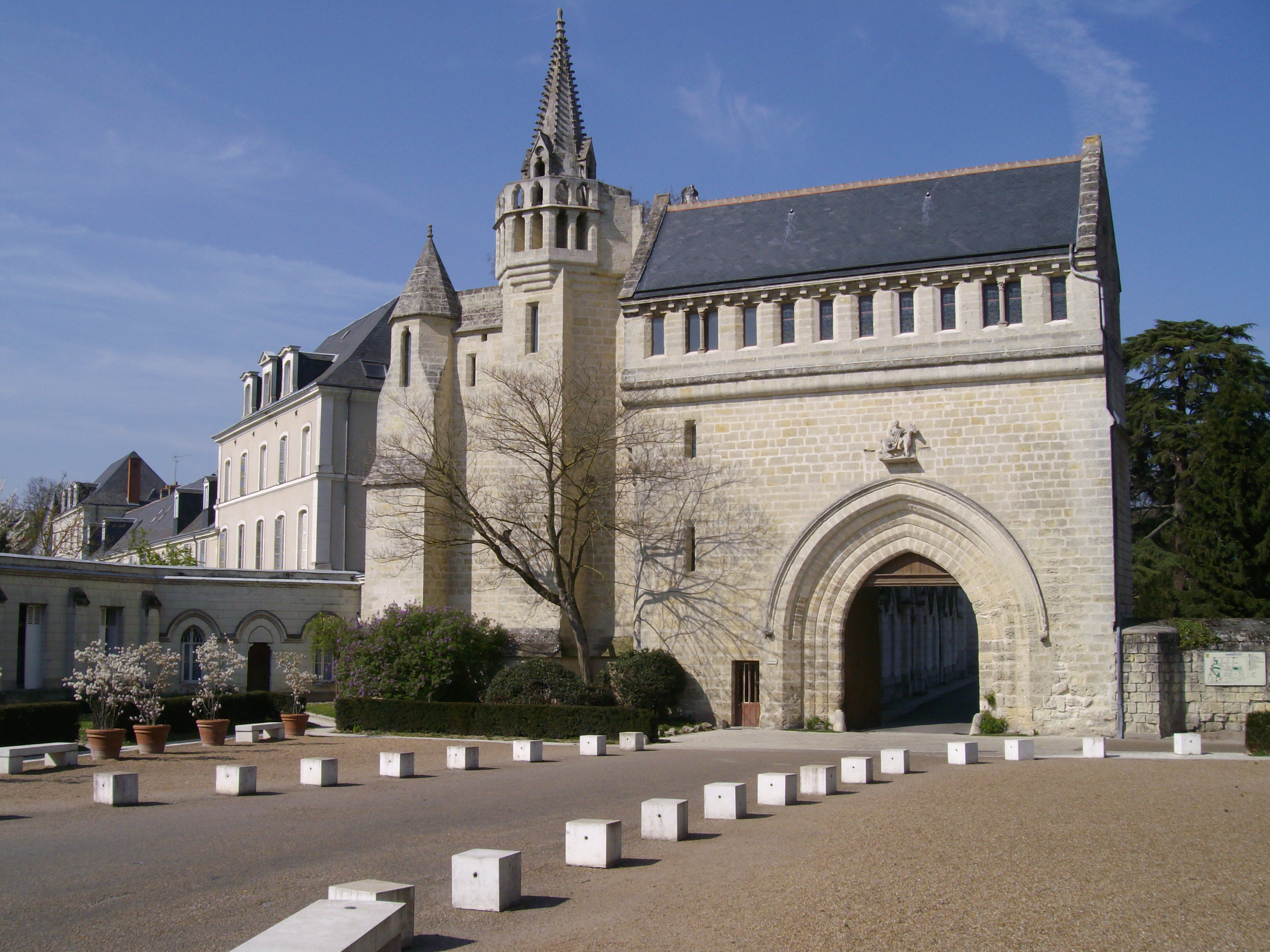
Marmoutier Abbey, Tours
In 372, a recently appointed bishop withdrew from the press of attention in his cathedral city to live in caves on the opposite bank of the Loire. Martin of Tours did not want to be a bishop. He wanted to pray, and pray he did, establishing a community of cave-dwelling monks whose austere discipline predated the Benedictine Rule by more than a century. From that beginning in hollowed-out riverbank stone, Marmoutier Abbey would grow into one of the wealthiest and most influential monasteries in medieval Europe, a place where popes preached Crusades and kings sought shelter. The caves that Martin chose for their humility became the foundation for an institution of enormous power.
The Bishop Who Lived in Caves
Martin was a Roman soldier turned Christian ascetic, and his biographer Sulpicius Severus left a vivid account of the community he established at Marmoutier -- Majus Monasterium, the Great Monastery. The monks lived in caves or huts, wore rough clothing, and followed a discipline so severe that it startled even devout contemporaries. Writing was the only approved form of labor for the younger monks; the older ones devoted themselves entirely to prayer. Martin's community preceded the formal monastic rules that would later organize Western monasticism, offering a rare glimpse of how early Christian communities actually lived before Benedict of Nursia codified the practice. The abbey's position across the Loire from Tours gave it both proximity to the city's episcopal authority and the physical separation that monks craved.
Sacked, Rebuilt, and Enriched
The abbey's early centuries were violent. In 732, Muslim raiders reportedly targeted Marmoutier for destruction. In 853, Norman raiders pillaged the abbey and killed more than 100 monks, leaving the community shattered. Recovery took over a century. In 982, Majolus of Cluny, the great reforming abbot, was invited to restore discipline to the monastery by Eudes I, Count of Blois and Tours -- who was so moved by the work that he ended his own life as a monk at Marmoutier. After the year 1000, the abbey entered its golden age, growing into one of the richest religious institutions in Europe. Its landholdings expanded across France, and following the Norman Conquest of 1066, it acquired patronage of churches in England as well.
Where Popes Preached Holy War
Marmoutier's prestige made it a stage for some of the medieval world's most consequential moments. In 1096, Pope Urban II consecrated the abbey's new chapel and preached the First Crusade from its grounds, helping to launch the military expeditions that would reshape the relationship between Christian Europe and the Islamic world for centuries. Twenty-three years later, in 1119, Pope Calixtus II returned to preach Crusade again, convincing Count Foulques V of Anjou to take the cross -- a decision that would eventually lead Foulques to become King of Jerusalem. In 1162, Pope Alexander III, driven from Rome by Emperor Frederick Barbarossa, came to reside in Tours and consecrated the monastery's new Chapel of Saint Benoit. Three popes, three consecrations, three turning points in medieval history -- all rooted in this abbey on the Loire.
Growth, Protection, and Destruction
By the 13th century, Marmoutier had outgrown itself. Under Abbot Hugues des Roches, the abbey was completely rebuilt, though the work was periodically interrupted by attacks from the counts of Blois, who had their own territorial ambitions regarding monastic properties. In 1253, Louis IX -- Saint Louis -- took the abbey under royal protection, securing it against further aristocratic aggression. The abbey continued as a functioning Benedictine community through the medieval and early modern periods. Then came the French Revolution. Marmoutier was suppressed in 1799, its buildings sold, its community dispersed. Much of the physical structure was demolished or fell into ruin. Today only fragments remain -- a medieval gateway, sections of wall, the outlines of what was once one of the most powerful religious houses in Christendom. The caves where Martin prayed are still there, beneath the ruins of everything his prayer eventually built.
From the Air
Located at 47.40N, 0.72E on the north bank of the Loire, just east of Tours in the Indre-et-Loire department. The abbey ruins occupy a site across the river from the center of Tours. Tours Val de Loire Airport (LFOT) is approximately 8 km to the northeast. The Loire provides a strong navigational reference. The site is partially obscured by later development but the medieval gateway and remaining structures are visible. Best viewed at 1,500-2,500 feet.