Marrakech
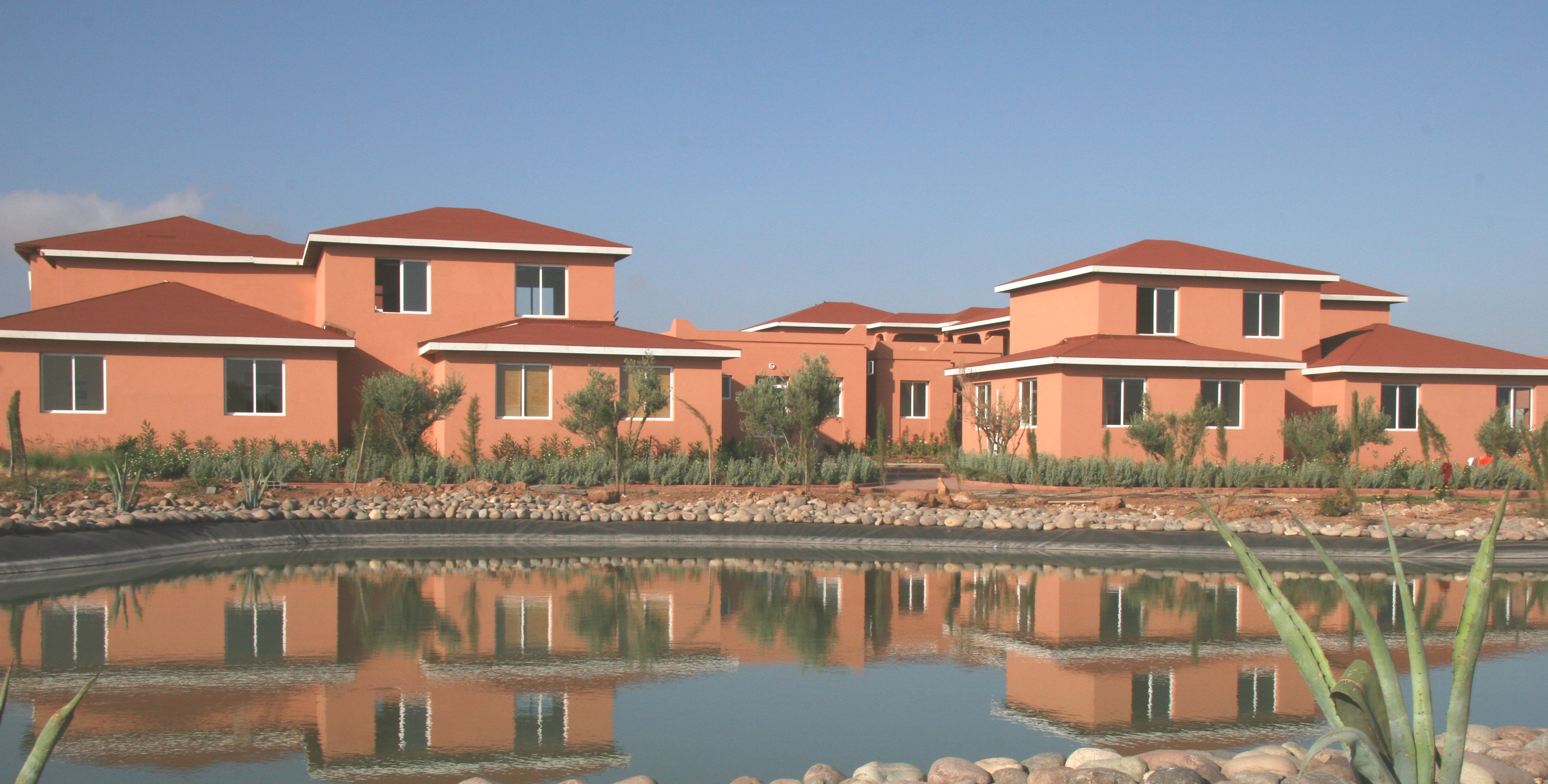
The name Morocco derives from Marrakech - medieval European traders could not distinguish the city from the kingdom it dominated. Founded in 1070 by the Almoravid dynasty, Marrakech served as capital for the Berber empires that controlled northwest Africa and, for a time, much of Spain. The distinctive red walls that gave the city its nickname - the Red City, la Ville Rouge - were built from the local pise clay, the color bleeding into everything: houses, mosques, the dust that rises from the medina streets. The Almoravids gave way to the Almohads, the Almohads to the Marinids, dynasty following dynasty across nine centuries, each adding to the medina while the basic form remained: high walls, narrow alleys too tight for cars, souks organized by trade, the call to prayer from minarets that have watched over the same streets since the twelfth century. Today Marrakech holds over a million people, the fourth-largest city in Morocco, a place where the medieval medina draws tourists who get lost in its maze while the modern city spreads beyond the walls.
The Jemaa el-Fnaa
The Jemaa el-Fnaa is the largest traditional public square in Africa - though square hardly describes the irregular space where the medina opens out into an expanse of performance and commerce. By day, it holds orange juice vendors and snake charmers, henna artists and herbalists. By night, it transforms into an open-air food court where smoke rises from dozens of grills and storytellers gather crowds.
The name translates variously as assembly of the dead or mosque at the end of the world, references to a history that included public executions. UNESCO declared the square a Masterpiece of Oral and Intangible Heritage in 2001, recognizing the performances - the halqa circles of musicians, acrobats, and healers - as cultural patrimony. The square persists, still slightly dangerous after dark, still genuinely chaotic in ways that organized culture cannot replicate.
The Koutoubia Mosque
The Koutoubia minaret rises 77 meters above Marrakech, visible from across the city and from the approaches through the plain. Built by the Almohad dynasty in the 12th century, the tower established a style that would be copied in Rabats Hassan Tower and Sevilles Giralda - the three sisters of Almohad architecture. The mosque below can hold 25,000 worshippers.
The name means mosque of the booksellers, after the market that once occupied the square nearby. Non-Muslims cannot enter Moroccan mosques - a restriction dating to French colonial rule. The proportions are deliberately harmonious: the towers height is five times its width, a ratio the Almohad architects believed approached perfection. The minaret defines Marrakechs skyline as it has for 850 years.
The Medina Maze
The medina of Marrakech covers ten square kilometers of narrow streets, dead ends, and covered passages that GPS cannot map. The confusion is partly defensive - medieval cities designed streets that would confuse invaders - and partly organic. Houses present blank walls to the street; the life within happens around interior courtyards invisible from outside. The souks organize by trade: copper workers here, leather sellers there, spice merchants around the corner.
Getting lost is the point, or at least the method. The medina reveals itself through wandering - a door opens onto a courtyard garden, an alley leads to a fountain where locals fill containers, a craftsman hammers copper the way his grandfather did. The riads - traditional houses converted to guesthouses - offer refuge behind those blank walls: courtyards with fountains, tile work that has decorated these spaces for centuries.
The Saadian Tombs
The Saadian dynasty ruled Morocco from 1549 to 1659, and their tombs remained hidden for three centuries. Sultan Ahmed al-Mansur built the mausoleum in the late 16th century; the succeeding Alaouite dynasty, rather than destroy them, simply walled them up, leaving the dead undisturbed and unknown. French archaeologists discovered the tombs in 1917 through aerial photography.
The tombs display the zenith of Saadian craftsmanship: carved cedar, gilded stucco, Italian marble imported for columns. The Chamber of the Twelve Columns holds Ahmed al-Mansurs grave, surrounded by his descendants in a space too beautiful for death. Tourists now line up in the narrow passage through the walls, emerging into courtyards where peacocks wander among graves.
The New City
Beyond the red walls, French colonial planners built the Ville Nouvelle in the early 20th century - wide boulevards, European architecture, the rational grid that the medinas organic confusion rejected. The Gueliz district holds the cafes and boutiques that serve Marrakechs middle class and tourists who tire of the medinas intensity.
The Palmeraie, the palm grove that has surrounded Marrakech for centuries, now hosts luxury hotels and golf courses. New developments push into the desert; the population grows as rural Moroccans seek urban opportunity. The medina remains the draw, but fewer Moroccans live there - the riads converted to guesthouses, residents relocated to apartment blocks beyond the walls. Marrakech holds its medieval core like a museum piece, the maze increasingly a setting for tourism rather than the everyday life that formed it.
From the Air
Marrakech (31.63N, 8.00W) lies on the Haouz Plain at the foot of the High Atlas Mountains, which rise to 4,167m (Toubkal) approximately 60km south. Marrakech Menara Airport (GMMX/RAK) is located 6km southwest of the city center with a single runway (10/28, 3,100m). The distinctive red color of the medina is visible from altitude. The Koutoubia Mosque minaret is the tallest structure in the old city. The Atlas peaks form a dramatic backdrop to the south. Weather is semi-arid - hot dry summers with temperatures regularly exceeding 40C, mild winters. Dust storms can reduce visibility dramatically, especially in summer.