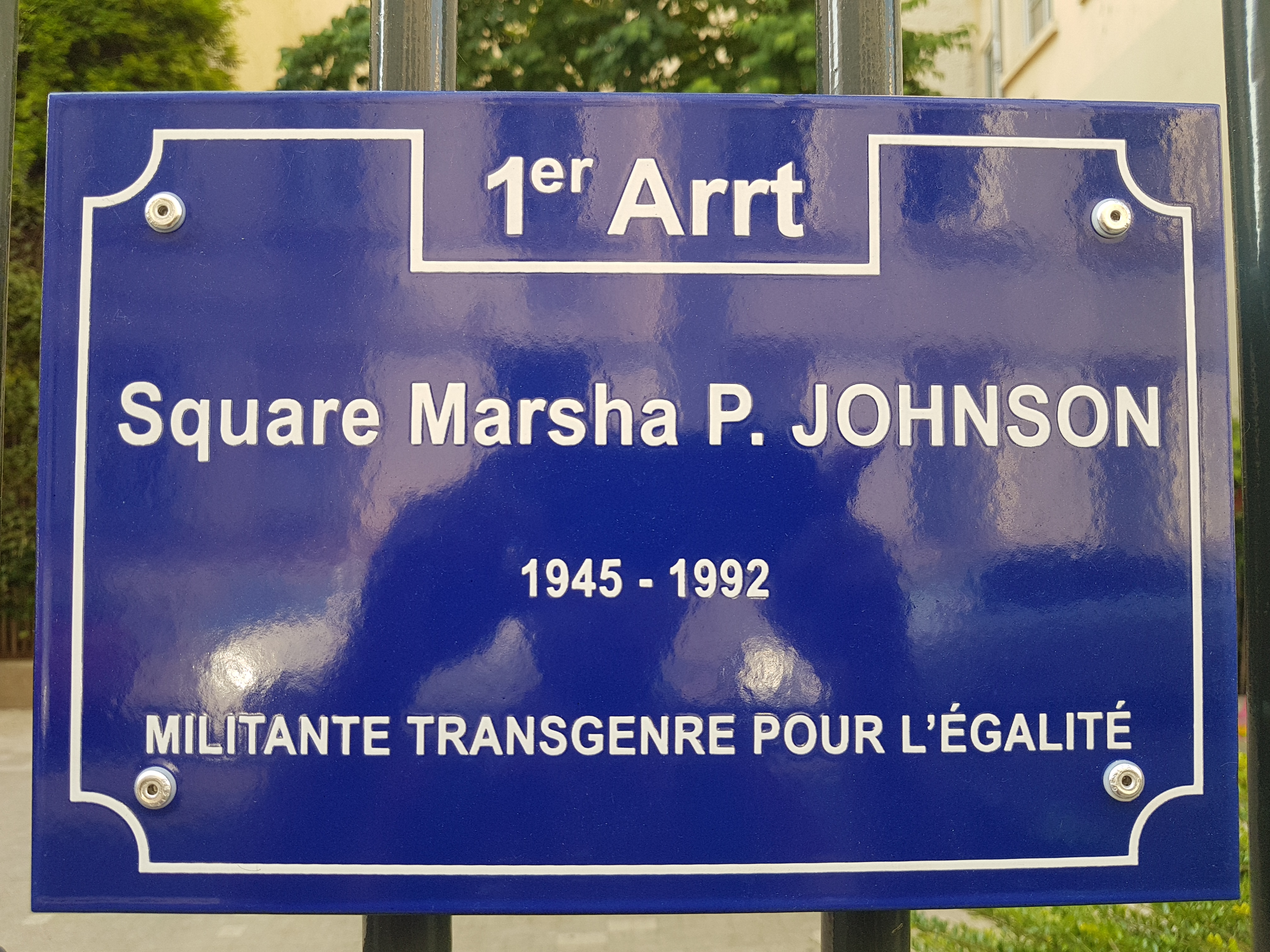
Marsha P. Johnson
When people asked what the P in her name stood for, Marsha P. Johnson had a ready answer: 'Pay it no mind.' She arrived in Manhattan in 1963 with fifteen dollars and a bag of clothes, found her way to 42nd Street, and began building a life that would make her one of the most important figures in the American LGBTQ rights movement. She could not afford the expensive outfits associated with high drag, so she improvised -- crowns made from discarded flowers, artificial fruits pinned to thrift-store dresses, strands of Christmas lights worn as accessories. She was generous to the point of recklessness, once stealing a loaf of bread to feed an unhoused stranger. By the time of her death in 1992, she had participated in the Stonewall uprising, co-founded a shelter for homeless transgender youth, cared for friends dying of AIDS, and become the person her Greenwich Village neighbors called the Saint of Christopher Street.
Elizabeth to Times Square
Johnson was born Malcolm Michaels Jr. on August 24, 1945, in Elizabeth, New Jersey, a segregated city that was also an early hub for civil rights activism. Her father worked the General Motors assembly line; her mother was a housekeeper. She wore women's clothing for the first time at five years old, against her mother's wishes and despite hostility from other children. She was deeply religious, attending Mount Teman AME Church every Sunday and performing in its Christmas programs. After graduating from Edison High School, where she was drum major for the marching band, she moved to New York in 1963. On 42nd Street in Times Square, she waited tables at a Childs Restaurant and supplemented her income through begging and sex work. It was there she met Sylvia Rivera, whom she took out to eat with money she had earned that day. The two would become inseparable allies.
The Shot Glass Heard Around the World
Johnson's role in the Stonewall uprising of June 28, 1969, has been debated by historians for decades. According to writer David Carter, activist Robin Souza reported that Johnson threw a shot glass at a mirror inside the Stonewall Inn, screaming 'I got my civil rights!' -- an act that the Gay Activists Alliance later called 'the shot glass that was heard around the world.' Carter identifies Johnson as 'almost indubitably among the first to be violent that night.' Playwright Robert Heide remembers her shouting at police and throwing rocks. Johnson herself claimed she did not arrive until 2 a.m., after the riot had started. Historian Marc Stein notes that while she 'definitely participated in subsequent developments,' it is unlikely she was present at the very beginning. What is not debated is what came after: Johnson threw herself into activism, joining both the Gay Activists Alliance and the Gay Liberation Front, marching in the first Christopher Street Liberation Day rally on June 28, 1970.
House Mothers of East Second Street
In 1970, Johnson and Rivera co-founded Street Transvestite Action Revolutionaries, known as STAR. They rented a four-bedroom apartment at 213 East 2nd Street that became STAR House, a shelter for 15 to 25 homeless transgender youths. Johnson and Rivera assumed the role of 'house mothers,' drawing on the ballroom culture tradition. They supported the house by engaging in sex work to cover rent while the residents -- their 'children' -- foraged for food. Johnson sewed banners for STAR events and dreamed of the day the organization could provide educational and medical services. Before STAR House existed, Johnson and Rivera had run an even more makeshift shelter from the back of a semi-truck trailer. When truck drivers came to reclaim it, Johnson and Rivera protested desperately, fearing youths were still inside. One teenager was accidentally hauled to California.
Caring for the Dying
The AIDS pandemic devastated Johnson's world. Beginning in 1984, she spent her evenings visiting AIDS patients in hospitals, praying for them and lighting candles. She helped organize the first AIDS Walk in Los Angeles in 1985 and participated in dance-a-thons in New York. She cared for David Combs, her roommate Randy Wicker's ex-husband, acting as his nurse while Wicker was at work. She participated in ACT UP marches and starred in Hot Peaches productions that addressed the pandemic. In 1990, Combs and fellow performer Bill Rafford both died from AIDS-related illnesses, and Johnson herself tested HIV-positive. The accumulation of grief caused a breakdown that led to another hospitalization. At that year's Pride rally, she and Wicker carried a banner memorializing Combs, marching with the People with AIDS Coalition.
The River and After
On July 6, 1992, Johnson's body was found floating in the Hudson River near Christopher Street. Police ruled it a suicide. Her friends and fellow activists rejected that explanation. Rivera said she and Johnson had made a pact to 'cross the River Jordan together.' According to Wicker, a witness saw a man fighting with Johnson on a pier on July 4, calling her a slur and later bragging at a bar that he had killed a drag queen named Marsha. When the witness tried to report this, police ignored him. Johnson's death occurred during a peak of anti-gay violence in New York City -- violence she had been protesting in the weeks before she died. Three separate funerals were held: in Hoboken, in Elizabeth, and at the Church of the Village in Manhattan. In 2020, East River State Park in Brooklyn was renamed Marsha P. Johnson State Park, the first New York state park named after an openly LGBTQ person. A monument near Elizabeth city hall, monuments at Greenwich Village, and her inclusion on the National LGBTQ Wall of Honor at the Stonewall National Monument ensure that the Saint of Christopher Street is not forgotten.
From the Air
Marsha P. Johnson's story is centered on Greenwich Village and the Christopher Street area of Manhattan, approximately 40.722°N, 73.983°W. The Stonewall Inn is at 51-53 Christopher Street. STAR House was at 213 East 2nd Street in the East Village. Johnson's body was found near the Christopher Street Pier on the Hudson River. Marsha P. Johnson State Park (formerly East River State Park) is in Williamsburg, Brooklyn. Nearby airports: LaGuardia (KLGA), JFK (KJFK), Newark (KEWR).