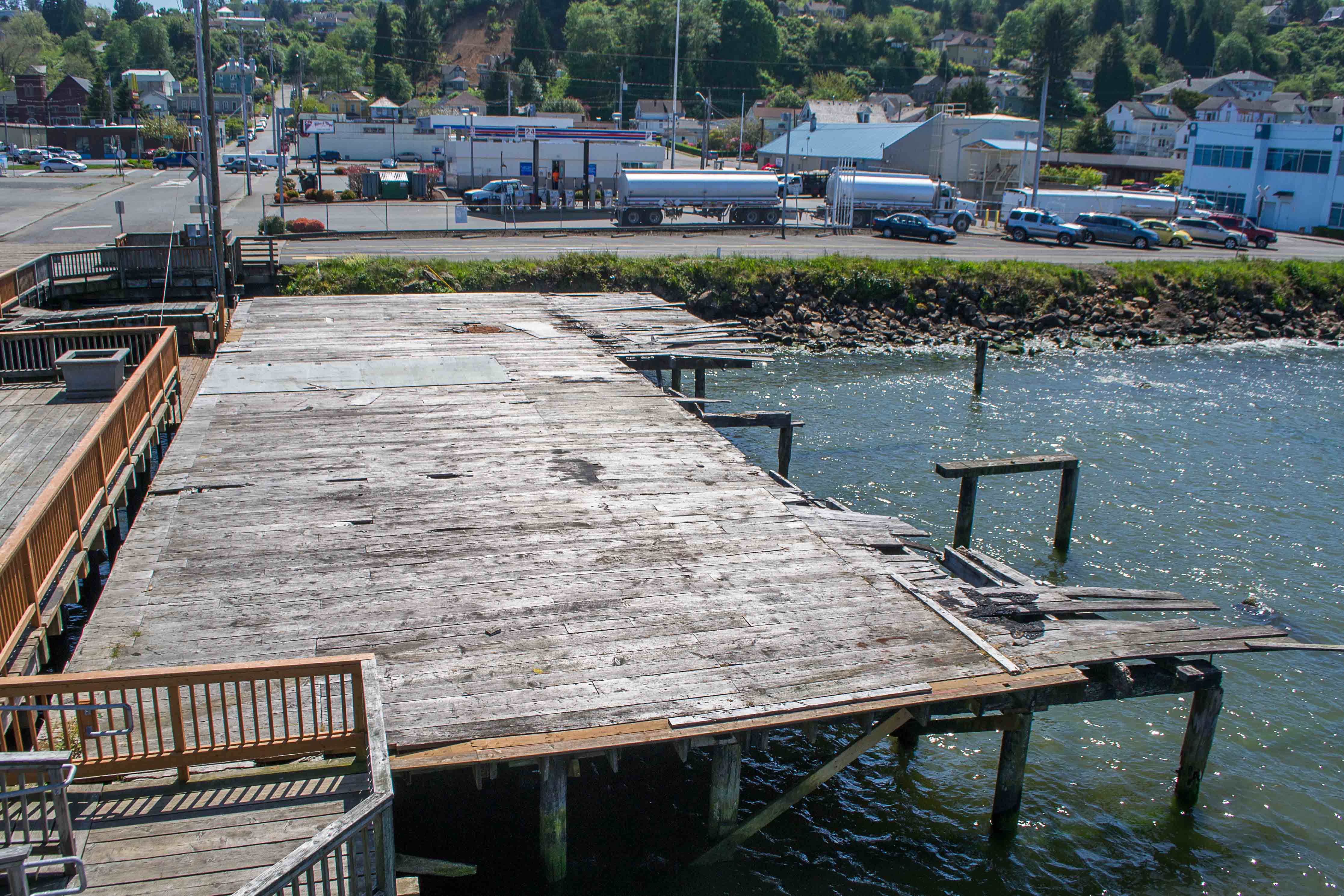
Marshall J. Kinney Cannery
In 1881, the Astoria Packing Company's operation between Fifth and Seventh streets in Uniontown could claim a title no other facility on the western seaboard could match: the largest and most extensive salmon-packing establishment on the Pacific Coast. Twenty-six thousand cases of salmon moved through its processing lines that year, packed in tin and shipped to markets hungry for Columbia River fish. Marshall J. Kinney, son of Oregon pioneer Robert C. Kinney, presided over an enterprise that embodied the industrial ambition of a town built on the belief that salmon would never stop running. The river had other plans.
Silver Tide on the Columbia
The Columbia River's salmon runs in the late 19th century were staggering. Millions of chinook, coho, and sockeye returned each year to spawn, and Astoria positioned itself as the capital of the canning industry that turned this biological abundance into shelf-stable protein. Kinney built his cannery in 1879, two years after arriving in Astoria, and the operation grew fast. The facility straddled the waterfront in the Uniontown neighborhood, wooden buildings extending over the river on pilings in the style that defined Astoria's industrial shore. By the early 1880s, the Columbia had more canneries than any river in the world, and Kinney's stood at the top of the hierarchy.
Burned and Rebuilt
Fire was a constant threat in Astoria's wood-built waterfront. In 1894, the Kinney Cannery burned to the ground. Kinney rebuilt the entire complex, a commitment that spoke both to the profitability of the salmon trade and to the stubbornness of the man behind it. The reconstructed facility was divided into two sections separated by a planked extension of Sixth Street. On the west side, a 200-by-170-foot wood-frame warehouse eventually housed machine shops, cannery equipment, cans, labels, and marine engines. On the east side stood an 80-by-150-foot, two-story can factory. Five years after the fire, in 1899, Kinney joined the Columbia River Packers Association alongside the Samuel Elmore Cannery, Fisherman's Packing Co., and several other operations - a consolidation that reflected the industry's shift from individual ambition to corporate scale.
The Long Decline
Cannery operations continued into the 1920s, but the complex gradually shifted from processing fish to servicing the association's broader needs. The western warehouse became a central machine shop; offices for Alaskan production moved in as Columbia River runs declined and the industry chased fish northward. The buildings aged. Then, in 1954, a cargo ship struck the complex, destroying part of the structure. What remained served as storage until 1980, when the surviving buildings found new life as shops and small businesses. Gunderson's Cannery Cafe opened in the repurposed space, and the site earned a place on the National Register of Historic Places in 1989. But the designation didn't last - the cannery was delisted in 1997, a rare reversal that acknowledged the extent of alteration and deterioration.
Final Fire
In December 2010, fire returned to finish what time and a cargo ship had started. The blaze destroyed the remaining Kinney Cannery buildings, taking Gunderson's Cannery Cafe and the other small businesses with them. Discussions about redevelopment followed - proposals for condominiums, a project called Riverpark Suites for the ruined half of the site - but the cannery that once packed more salmon than any operation on the coast was gone. What Kinney built in 1879, rebuilt after the fire of 1894, and sustained through decades of consolidation and decline had finally been erased from Astoria's waterfront. The site along the Columbia between Fifth and Seventh streets in Uniontown is now a gap in the shoreline, a space where industrial history once stood on wooden pilings above the river.
From the Air
Located at 46.19°N, 123.84°W along the Columbia River waterfront in the Uniontown neighborhood of Astoria, Oregon. From altitude, Astoria's waterfront stretches along the river's south bank, with the Uniontown area visible between the town's commercial center and the river. The cannery site occupied the stretch between Fifth and Seventh streets, built over the water on pilings - a pattern visible in surviving sections of Astoria's historic waterfront. The Astoria-Megler Bridge dominates the view to the west. Astoria Regional Airport (KAST) lies approximately 3 miles to the southeast. The Columbia River's broad mouth and the Pacific beyond provide dramatic context for a town that processed the river's once-immense salmon runs.