Martin Luther King Jr. National Historical Park
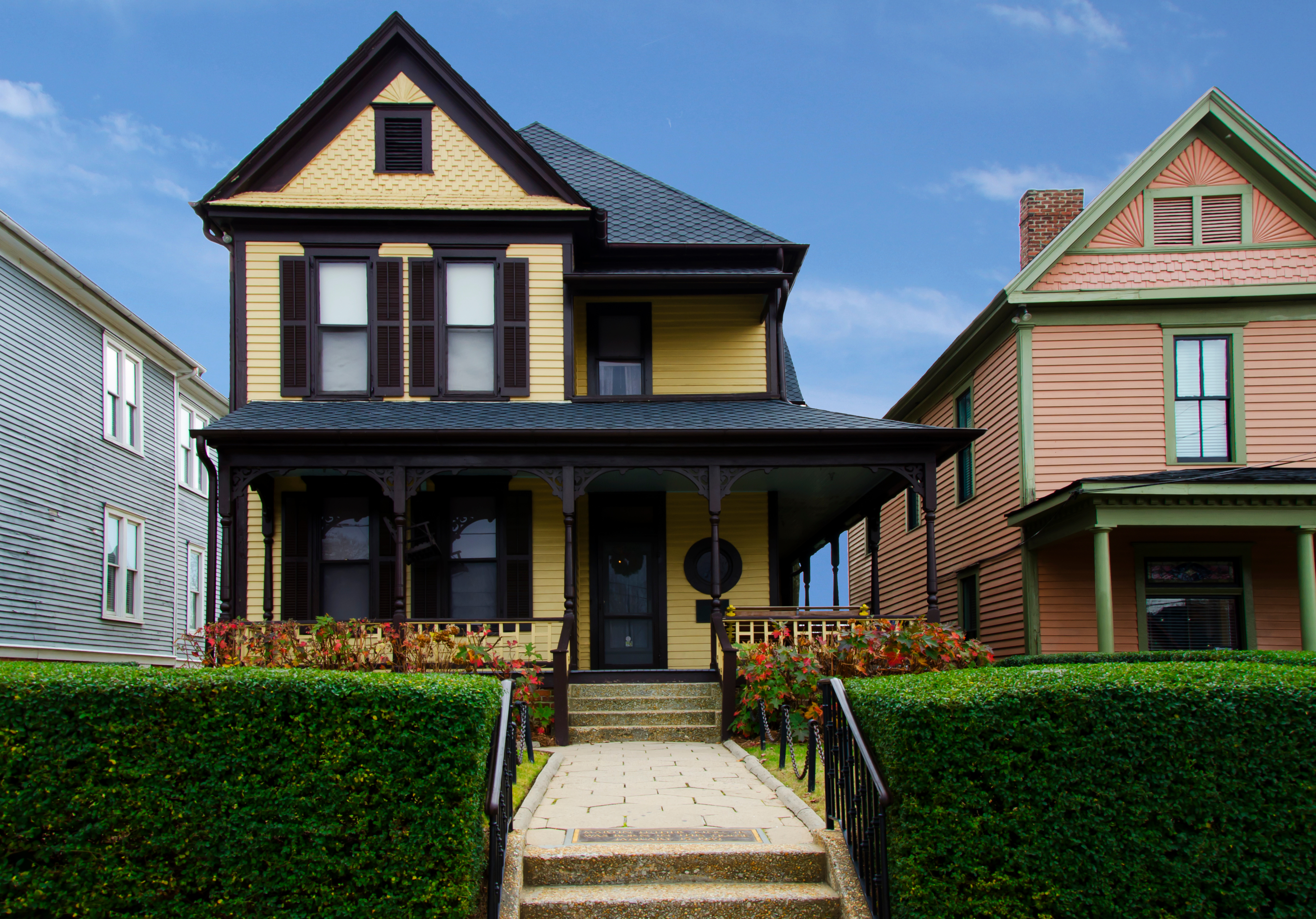
The house at 501 Auburn Avenue is not grand. It is a two-story Queen Anne, built in 1895, with a front porch and a parlor and bedrooms upstairs -- the kind of home that lined thousands of Southern streets at the turn of the century. But on January 15, 1929, a boy was born in its second-floor bedroom who would change the conscience of a nation. Martin Luther King Jr. spent the first twelve years of his life in this house, walked a block west to be baptized at Ebenezer Baptist Church, and returned to that same pulpit as a pastor. Today, the 35 acres surrounding these places form a national park dedicated not just to one man's life, but to the movement he came to embody.
Sweet Auburn's Roots
King's maternal grandparents, the Reverend Adam Daniel Williams and his wife Jennie, bought the Auburn Avenue house for $3,500 in 1909. Reverend Williams was pastor of Ebenezer Baptist Church, the spiritual anchor of what would become one of the most prosperous Black neighborhoods in America. When King's father married Alberta Williams in 1926, the couple moved in. Martin Jr. grew up in a household steeped in faith and community leadership, surrounded by the shotgun houses and Victorian homes of a neighborhood that Forbes magazine once called "the richest Negro street in the world." The King family lived in the house until 1941, after which it was converted into a two-family dwelling. King's brother, A. D. Williams King, later lived on the second floor through the 1950s and early 1960s.
The Church That Shaped a Movement
Ebenezer Baptist Church, just a block west of the birth home, is where three generations of Kings preached. Martin Luther King Sr. served as co-pastor beginning in 1927, and his son joined him at the pulpit in 1960. The church became a staging ground for the civil rights movement, its congregation a wellspring of moral courage. Across Auburn Avenue, the Southern Christian Leadership Conference established its initial headquarters in 1957 at the Prince Hall Masonic Temple at 332 Auburn Avenue. King co-founded the SCLC and served as its first president. The organization coordinated nonviolent protests across the South from this unassuming building, which was brought within the park's authorized boundary in 2018.
A Place of Rest and Remembrance
After King's assassination on April 4, 1968, in Memphis, Tennessee, his wife Coretta Scott King founded the Martin Luther King Jr. Center for Nonviolent Social Change on Auburn Avenue. In 1977, a memorial tomb was dedicated, and King's remains were moved to a plaza between the center and Ebenezer Baptist Church. A reflecting pool surrounds the crypt, and an eternal flame burns nearby. When Coretta Scott King died in 2006, she was interred beside her husband. Freedom Hall, at 449 Auburn Avenue, houses exhibits on the Kings, Mahatma Gandhi, and Rosa Parks, with art from Africa and Georgia adorning its Grand Foyer. The sapeli wood paneling lining its staircase comes from trees native to Nigeria -- a quiet connection between the American civil rights struggle and the broader story of human dignity across the African diaspora.
Hallowed Ground, Living History
The park's footprint has expanded steadily since the original National Historic Site designation on October 10, 1980. A bipartisan bill championed by Congressman John Lewis elevated it to a national historical park in January 2018. An 1894 firehouse -- Fire Station No. 6 -- served the Sweet Auburn community until 1991 and now hosts an exhibit on desegregation in the Atlanta Fire Department. The "I Have a Dream" International World Peace Rose Garden, the Gandhi Promenade with its statue donated by the Indian Council for Cultural Relations, and the International Civil Rights Walk of Fame created in 2004 all weave through the site. In 2019, the National Park Foundation purchased King's later family home on Sunset Avenue, where the Kings moved in 1965, adding yet another chapter to a park that continues to grow because the story it tells is not finished.
From the Air
Located at 33.755N, 84.372W in Atlanta's Sweet Auburn neighborhood, east of downtown. The park stretches along Auburn Avenue between Jackson Street and the I-75/I-85 connector. Nearby airports: KATL (Hartsfield-Jackson Atlanta International, 9nm south), KPDK (DeKalb-Peachtree, 8nm northeast), KFTY (Fulton County Airport-Brown Field, 11nm northwest). Best viewed at 2,000-3,000 ft AGL. Look for the green space and reflecting pool of the King Center complex east of the downtown skyline cluster. The Jimmy Carter Presidential Center is visible about a half-mile to the southeast, connected by a pedestrian greenway.