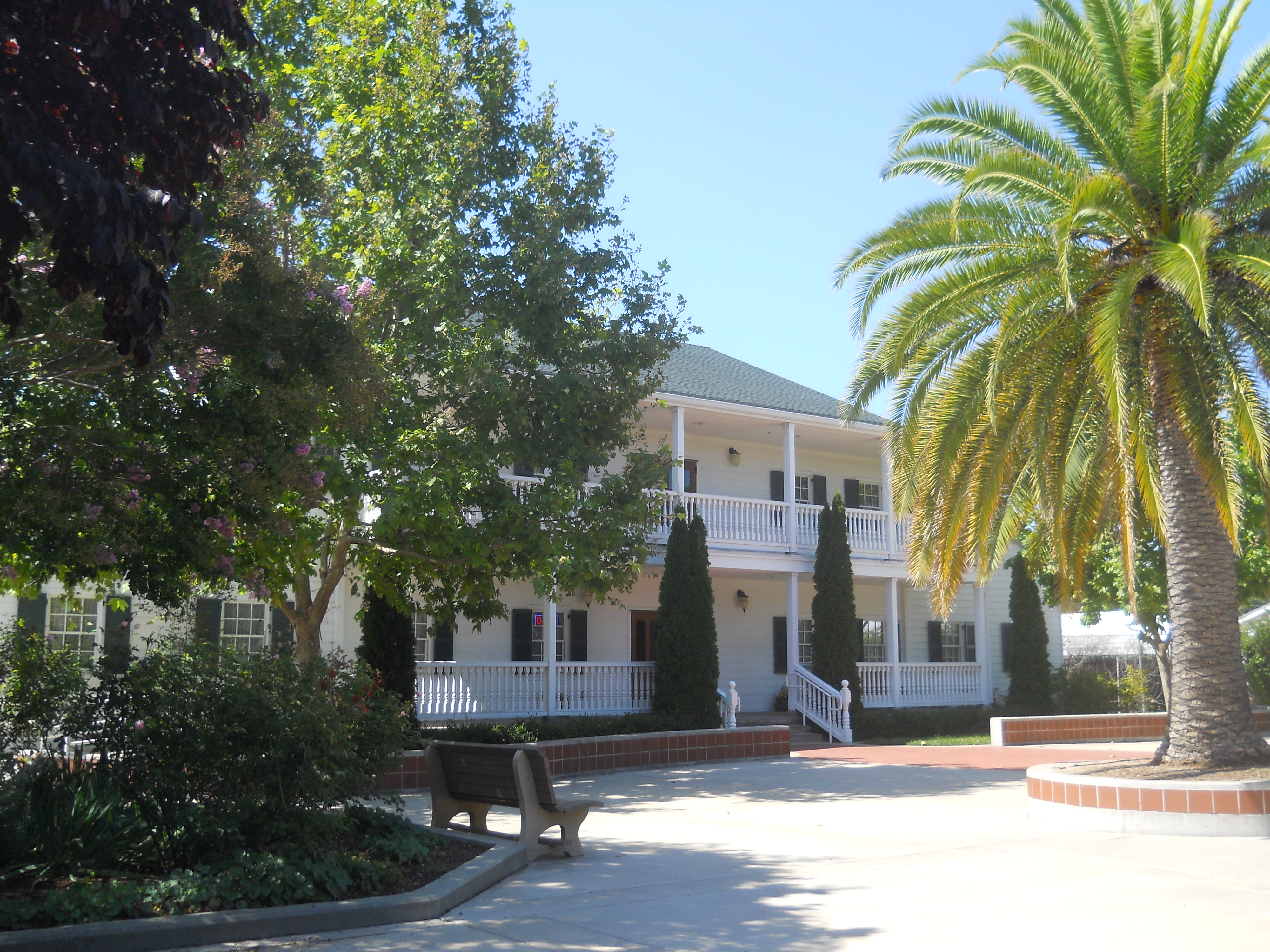
Martin Murphy House
The house arrived before the town existed. In 1849, Martin Murphy Jr. had a prefabricated lumber house shipped around Cape Horn to California, where he assembled it on the land that would eventually become Sunnyvale. It was the first frame house in the area -- everything else was adobe or rough-hewn timber. Murphy had earned the right to build wherever he pleased: in 1844, he had led his family as part of the first wagon train to cross the Sierra Nevada into California, a full two years before the Donner Party attempted the same passage with far grimmer results.
First Over the Mountains
The Murphy family's 1844 crossing of the Sierra Nevada was a landmark in Western migration. While later crossings would earn more fame -- and infamy -- the Murphy party's successful transit opened a route that others would follow. Martin Murphy Jr. settled in the Santa Clara Valley, where the rich soil and temperate climate supported the ranching and farming that would define the region for the next century. He named his estate Bay View, and the house he built there in 1849 or 1850 became the center of a sprawling agricultural operation. The Murphy family is considered the founding family of Sunnyvale, and the city's Murphy Park preserves the memory of their homestead.
A House that Traveled
Prefabricated houses shipped around Cape Horn were not uncommon during the Gold Rush era -- California needed buildings faster than local materials could supply them. But the Murphy House was notable for its permanence. The family maintained their residence there for over a century, from the 1850s until 1953, when the city of Sunnyvale took ownership of the property. For more than a hundred years, the house witnessed the transformation of the Santa Clara Valley from ranchland to orchards to the beginnings of the electronics industry. A fire destroyed the original structure in 1961, ending its physical existence but not its legacy.
Replica and Remembrance
California Historical Landmark No. 644 marks the location of Murphy's homesite at 250 North Sunnyvale Avenue. In 2008, the Sunnyvale Heritage Park Museum constructed a replica of the Murphy House next to the Sunnyvale Community Center, using historical records and photographs to recreate what the original looked like. A small museum preserves artifacts from the house and other aspects of Sunnyvale's history. On May 22, 1960, the California State Park Commission had erected a commemorative plaque at the site, recognizing Martin Murphy Jr.'s role in the city's founding. The replica cannot replicate the experience of a house that traveled 15,000 miles by sea to reach a valley that did not yet have a name, but it tries.
From the Air
The Martin Murphy House site and Murphy Park are at 37.38°N, 122.03°W in downtown Sunnyvale. The replica house is next to the Sunnyvale Community Center. Nearby airports: Moffett Federal Airfield (KNUQ), San Jose (KSJC). Best viewed at 2,000-3,000 ft AGL.