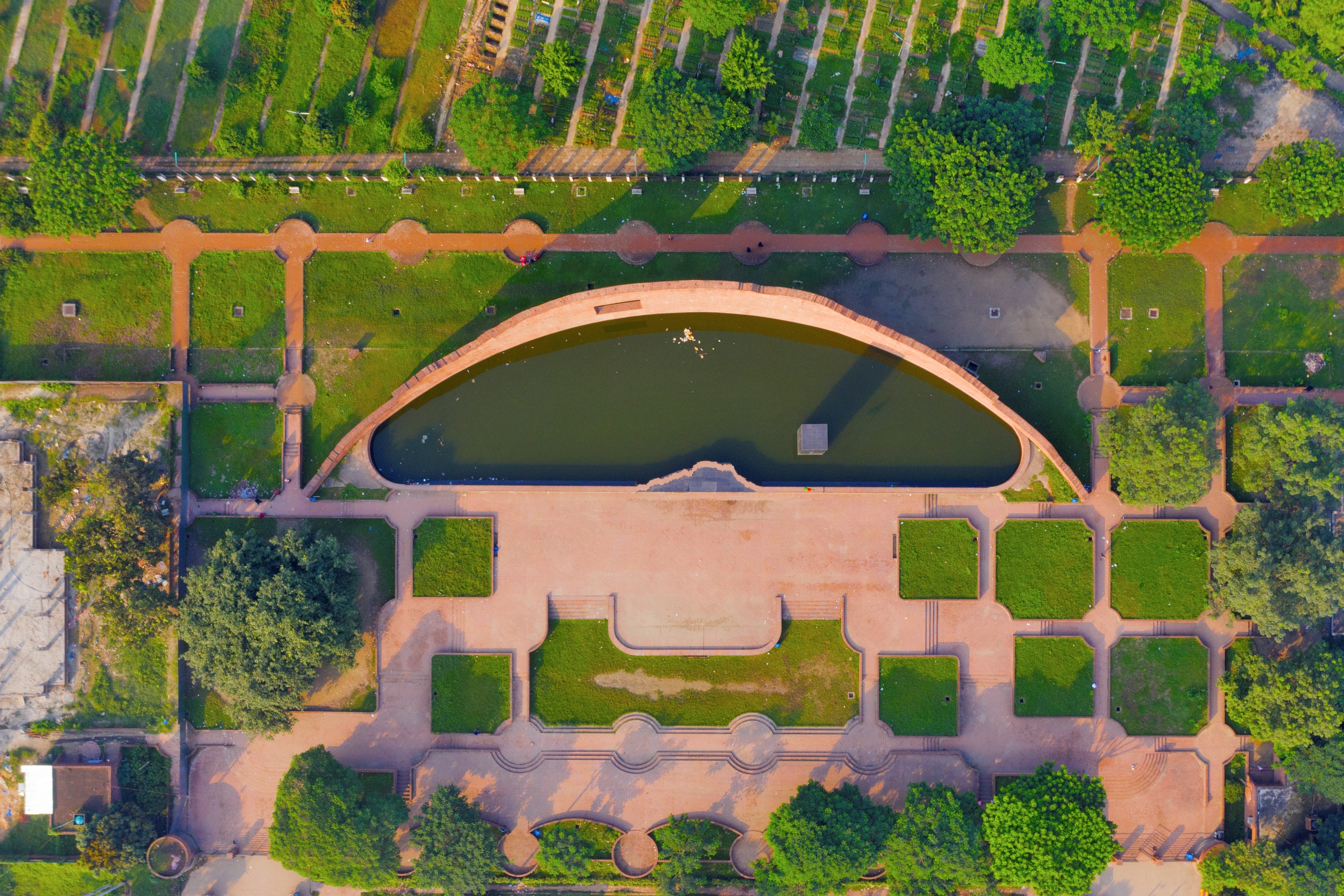
Martyred Intellectuals Memorial
Two days. That was all that remained. On 14 December 1971, with Pakistani forces facing imminent defeat in the Liberation War, over 200 of East Pakistan's intellectuals -- university professors, physicians, journalists, engineers, poets -- were blindfolded and taken from their homes in Dhaka. They were driven to torture cells in Mirpur, Mohammadpur, and Rayerbazar, and executed. Two days later, Pakistan surrendered. The timing was not coincidental. The killings were a final, deliberate act of cultural annihilation, an attempt to deprive the newborn nation of the minds it would need to govern itself.
A Systematic Decapitation
The intellectual killings of 14 December were the culmination of a campaign that had run throughout the nine-month Liberation War. From 25 March to 16 December 1971, the Pakistan Army and local collaborator groups -- particularly the Islamist militias Al-Badr and Al-Shams -- systematically targeted educated Bengalis. The numbers tell a grim story: an estimated 991 teachers and professors, 49 doctors, 42 lawyers, 13 journalists, and 16 artists, engineers, and writers were killed during this period. Among them were philosopher Govinda Chandra Dev, cardiologist Mohammed Fazle Rabbee, dramatist Munier Chowdhury, ophthalmologist Alim Chowdhury, journalist Shahidullah Kaisar, reporter Selina Parvin, and lyricist Altaf Mahmud. Each was a person with students, patients, readers, audiences -- networks of human connection severed by a bullet or a blade. Even after the official end of hostilities on 16 December, the killing continued. Filmmaker Zahir Raihan was shot dead on 30 January 1972 in Mirpur.
Brick and Water and Grief
The memorial at Rayerbazar, where many of the bodies were found in a brickfield, was first proposed by Projonmo 71 -- an organization of the children of the liberation war's martyrs -- who laid a temporary foundation stone in 1991. In 1993, the government announced a national architectural competition for the permanent memorial, titled "Badhya Bhumi Smriti Soudha." Out of 22 entries, architects Farid Uddin Ahmed and Md Jami-al-Shafi were selected. Construction took three years, from 1996 to 1999. The design translates grief into geometry. The central element is a curving brick wall approximately 17.7 meters high, 0.9 meters thick, and 115.8 meters long -- a deliberate reference to the brickfield where the dead were dumped. The wall is broken at both ends, its incompleteness a physical expression of sorrow. A square window cut into the southwest face frames the sky, offering visitors a view that passes through the monument and beyond.
A Column Rising from Still Water
In front of the curved wall lies a reflecting pool, its surface still and dark. From this water rises a single black granite column, an abstract figure of mourning. The interplay of elements -- rough brick, still water, polished stone -- creates a space that is both monumental and intimate. Visitors walk along the wall's curve, dwarfed by its height, confronted by the scale of what happened here and the deliberateness with which it was designed to be remembered. The brickfield that once concealed the bodies of murdered intellectuals has been transformed into a place where their absence is made visible. Bangladesh observes 14 December as Shaheed Buddhijibi Dibosh -- Martyred Intellectuals Day -- and the memorial at Rayerbazar is the center of national commemoration.
The Cost of Killing a Country's Mind
The targeting of intellectuals was not random violence but strategic calculation. By eliminating professors, doctors, lawyers, journalists, and engineers, the perpetrators aimed to hollow out the professional class of the new nation -- to ensure that even if Bangladesh won its independence, it would lack the human capital to function. The long-term consequences were real. Universities lost faculty who could not be replaced overnight. Hospitals lost specialists. Newsrooms lost reporters who had documented the war's atrocities. The memorial at Rayerbazar is a monument not only to the dead but to the damage done to the living -- to the students who lost their teachers, the patients who lost their doctors, and the country that lost the people it needed most at the moment it needed them most. That such a loss was inflicted deliberately, with lists prepared and addresses gathered, makes the memorial's soaring brick wall feel less like architecture and more like an indictment.
From the Air
Located at 23.7509N, 90.3572E in the Rayerbazar area of Mohammadpur, western Dhaka. The memorial's long curved brick wall is potentially visible from low altitude. Approximately 10 km southwest of Hazrat Shahjalal International Airport (VGHS). Best viewed at 1,500-2,500 feet. The Buriganga River to the south and the dense residential blocks of Mohammadpur provide navigation context.