Mas d'Azil Cave
You can drive through it. That fact alone sets the Mas d'Azil Cave apart from every other prehistoric site in Europe. The Arize River carved this tunnel through the limestone of the French Pyrenean foothills, and the opening is so vast that in 1857 someone thought it reasonable to build a road straight through the middle. Cars pass through today, headlights sweeping across walls where 15,000-year-old art once stared back at hunters gathering by firelight. It is one of the strangest collisions of deep time and modern convenience on the continent.
Thirty-Five Thousand Years of Shelter
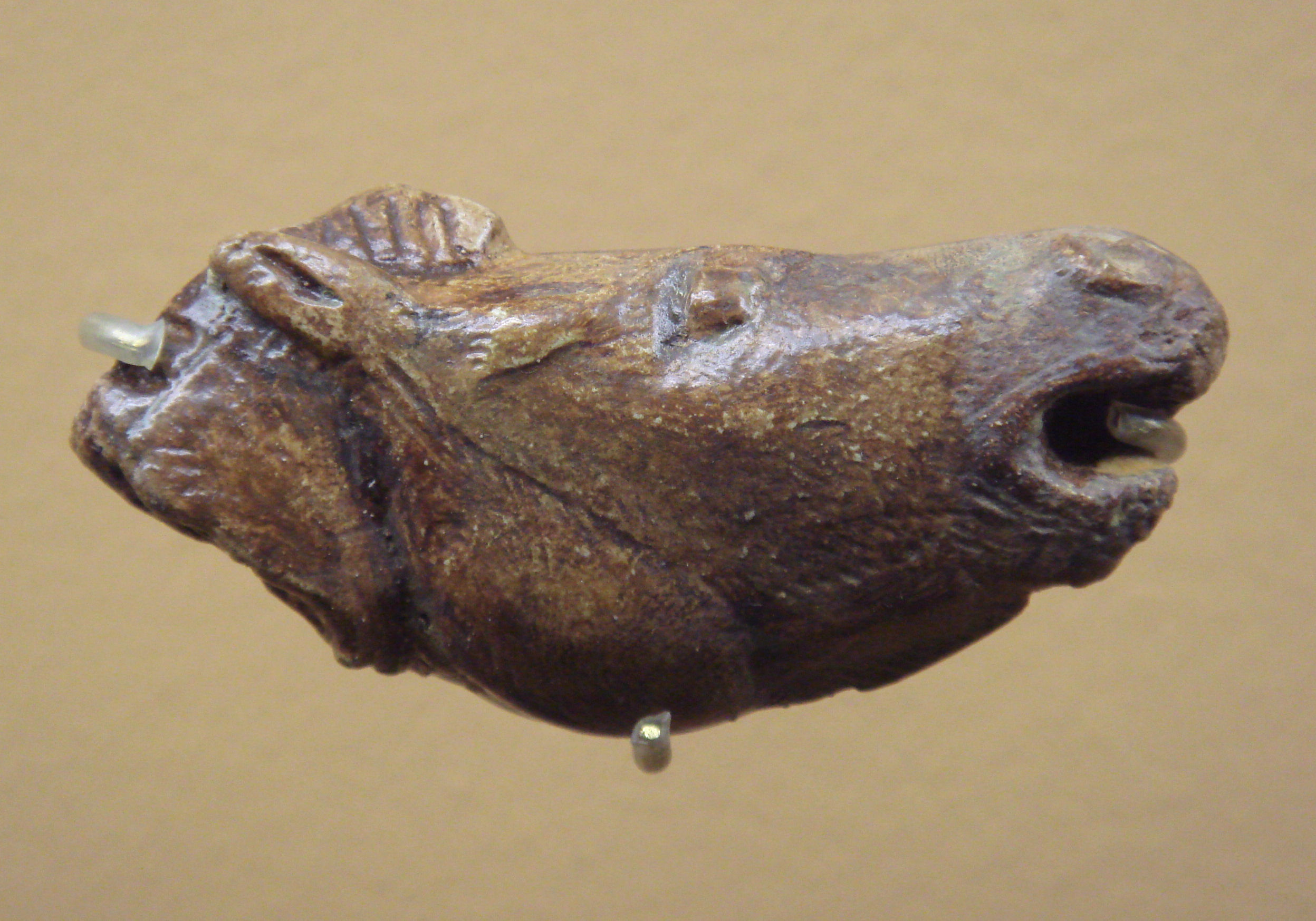
The cave's human history spans an almost incomprehensible arc. The earliest dwellings found here date to 35,000 years before the present, from the Aurignacian period -- the era when modern humans first spread across Europe. By the Middle Magdalenian period, roughly 15,000 years ago, the cave had become a major habitation site. Its most famous artifact dates from this era: the Faon aux Oiseaux, or Fawn with Birds, a spear-thrower carved with such delicacy that it remains one of the masterpieces of Paleolithic art. A young girl's skull from the same period, nicknamed Magda, was found with two carved bone plates placed in the eye sockets -- a detail as haunting as anything from any later civilization. The cave also yielded the Coco des Roseaux, a hunting scene engraved on a fragment of animal shoulder blade that includes one of the earliest known rudimentary depictions of a human figure.
The Culture That Took Its Name
Between 1887 and 1894, archaeologist Edouard Piette explored the cave and identified something no one had cataloged before: a distinct prehistoric culture that bridged the gap between the Magdalenian and the Mesolithic, roughly 12,000 to 9,500 years ago. He called it the Azilian, after the cave itself. The Azilian toolkit was different from what came before -- flat harpoons instead of barbed ones, microliths instead of large blades, and, most distinctively, small pebbles painted with abstract patterns in red ochre. Hundreds of these painted pebbles have been found at Mas d'Azil, their geometric marks possibly representing counting systems, lunar calendars, or symbolic languages that no one has been able to decode. The ochre dates back 10,000 years, and the pebbles remain one of the great unsolved puzzles of European prehistory.
Refuge for the Persecuted
The cave's usefulness did not end with prehistory. In the first centuries of the Common Era, persecuted Christians established a place of prayer in its galleries. In the 13th century, the Cathars -- the dualist Christian movement that the Catholic Church spent decades trying to exterminate -- used the cave as a refuge. The fortifications they built were ordered destroyed in 1632 under the Peace of Ales, a treaty that settled the last of France's wars of religion. During the Second World War, the cave was requisitioned in June 1940 for the Societe Nationale des Constructions Aeronautiques du Midi, which planned to build aircraft parts inside the mountain. The French defeat halted the project within a month. German occupying forces considered installing their own aircraft workshops but abandoned the plan; the cave ended up being used to store and repair planes instead.
The Excavation Never Ends
Archaeological work at Mas d'Azil has been essentially continuous since the 1840s. After the Arize flooded in 1875, new deposits were exposed, drawing excavators Felix Regnault and Tibulle Ladeveze. Piette's work in the 1880s and 1890s established the cave's scientific importance. Henri Breuil studied the cave art in 1901 and 1902. In the 1930s and 1940s, the Silex gallery yielded one of the most significant Magdalenian habitation sites in the Pyrenees. Joseph Mandement and his wife spent two decades exploring the right bank, discovering the Bear Gallery and the skull called Magda. Since 2013, a team from the University of Toulouse-Jean Jaures has been conducting a comprehensive inventory of the cave and the surrounding massif, developing new research in cartography, geology, and archaeology. The cave was classified as a historical monument in 1942. Today, parts of the upper galleries are open to visitors, and a museum in the village of Mas d'Azil presents the prehistoric finds. Since 1997, the cave has even hosted a round of the European Championship of Prehistoric Weapons -- a competition that, in this setting, feels less like a novelty and more like a homecoming.
From the Air
Located at 43.07N, 1.35E in the Ariege department of southwestern France, in the Pyrenean foothills. The cave opening is visible from low altitude as a massive arch in a limestone massif, with the Arize River flowing through it and a road passing through the tunnel. Saint-Girons is 25 km to the southwest; Foix is 30 km to the southeast. Nearest airport is Toulouse-Blagnac (LFBO), approximately 90 km north. Approach from the south for the best view of the cave entrance set into the hillside.