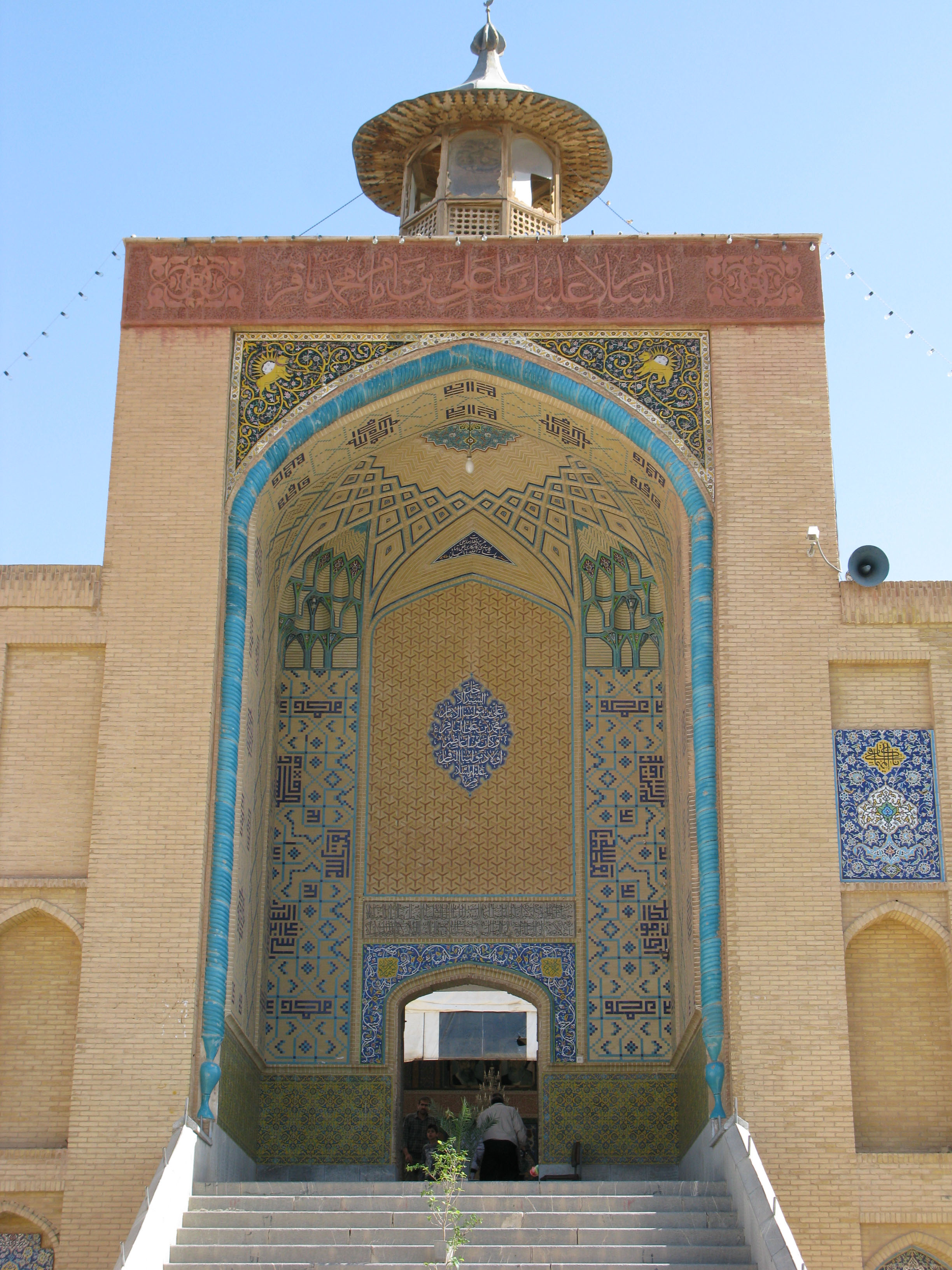
Mashhad Ardehal
Every October, 200,000 people descend on a town of 2,000. They wear black. They beat their chests and sing. They carry the tattered remains of a carpet on their shoulders through the streets, striking it with long sticks as they go. Then they wash it in a stream and believe the water becomes holy. This is the Carpet Washing Ceremony of Mashhad Ardehal, a mourning ritual more than twelve centuries old, and one of the most extraordinary religious gatherings in Iran.
The Murder of Sultan Ali
The story begins with an invitation and ends with an assassination. More than 1,200 years ago, Sultan Ali -- the son of the fifth Shia Imam, Muhammad al-Baqir -- was invited from Medina to this remote mountain settlement west of Kashan in Isfahan Province. His enemies followed. They killed him before his followers could arrive to protect him. When those followers finally reached Mashhad Ardehal, they found Sultan Ali's body and wrapped it in a carpet. They carried him 150 meters to a stream, washed his remains, and buried him on the slope of a high hill. The shrine they built above his grave grew into a complex of courtyards, minarets, and ceramic-tiled balconies, its architecture dating to the Seljuk era.
The Sacred Carpet
What makes the Carpet Washing Ceremony unique among Shia mourning rituals is its physical centerpiece: the remains of the very carpet used to wrap Sultan Ali's body. Each year on the second Friday of the Iranian month of Mehr -- typically early October -- pilgrims from Qom, Kashan, Yazd, Golpayegan, and dozens of other cities converge on the shrine. No outsider is permitted to touch the carpet fragments. The crowd lifts the sacred textile onto their shoulders and processes through the shrine courtyard, beating it with wooden sticks to symbolize their hatred of Sultan Ali's killers and to clean the fabric itself. The sticks rotate overhead in rhythmic arcs while mourners cry, chant religious songs, and strike their own chests in grief. When the procession reaches the sacred stream, the carpet is washed. Pilgrims apply the water to their skin and bottle it to carry home.
A Poet Among Saints
The shrine holds more than ancient grief. In its eastern wing lies the tomb of Sohrab Sepehri, one of modern Iran's most celebrated poets and painters, who died in 1980. Sepehri's spare, luminous verse -- exploring nature, silence, and spiritual longing -- stands in striking contrast to the dramatic public mourning that surrounds his burial place each autumn. His choice of resting place, or his family's choice on his behalf, embedded a modern artistic sensibility within one of Iran's oldest sacred sites. The juxtaposition is quintessentially Iranian: ancient devotion and modern contemplation sharing the same hillside.
The Feast and the Journey Home
The ceremony's emotional arc follows a precise rhythm. Grief builds through the morning as pilgrims process, mourn, and wash the carpet. At noon, the mood shifts. The mourning ends and a massive communal feast begins, with thousands fed for free. Some pilgrims walk to the shrine from cities that are considerable distances away, making the journey itself an act of devotion. In 2009, roughly 200,000 people packed the tiny mountain town for the ceremony. Then, as the afternoon sun moves across the hillside, they disperse -- returning to their homes across central Iran, carrying bottles of holy water and the conviction that an ancient wrong has been publicly remembered once more.
From the Air
Mashhad Ardehal is located at 34.04°N, 51.05°E, approximately 40-45 km west of Kashan in the mountains of Isfahan Province, central Iran. The town sits on a hillside at elevation, with the shrine complex visible as the dominant structure. Nearest major airport is Isfahan International Airport (OIFM), approximately 150 km to the southwest, or Kashan Airport. Best viewed at 5,000-8,000 ft. The surrounding terrain is mountainous and arid.