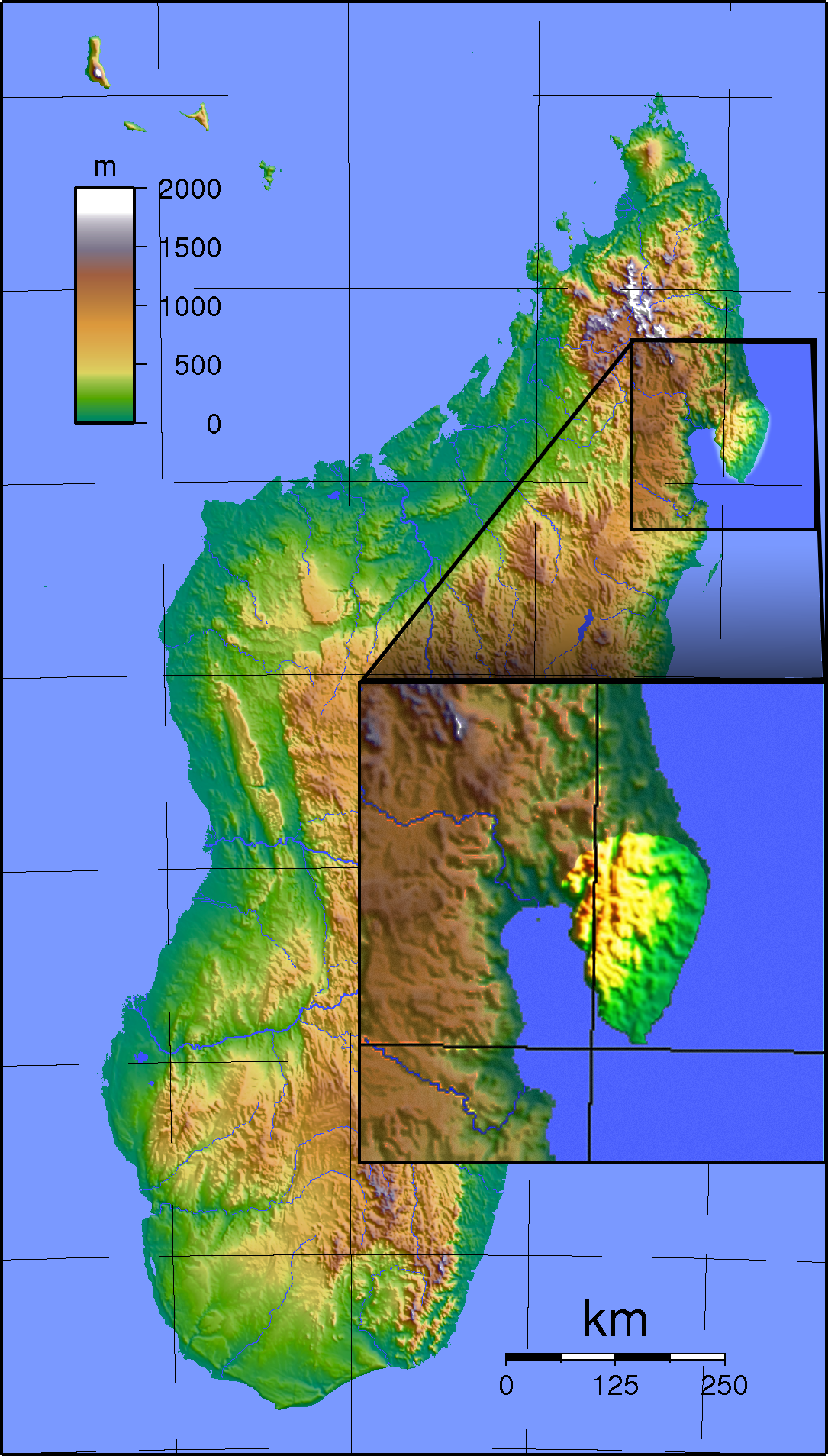
Masoala National Park: Madagascar's Largest Wild Shore
Reaching Masoala requires a three-hour boat journey, and that difficulty is the point. On Madagascar's northeastern coast, the Masoala Peninsula pushes out into the Indian Ocean like a green fist, its 2,300 square kilometers of rainforest making it the largest protected area on an island famous for the speed at which its forests are disappearing. Created in 1997, Masoala National Park protects not just tropical rainforest but coastal forest, flooded forest, marsh, mangrove, and three separate marine parks with coral reefs. The peninsula's size and the variety of its habitats have produced a density of life that even by Malagasy standards is exceptional - a place where ten lemur species, the world's most beautiful moth, and humpback whales all occupy the same stretch of coast.
Ten Lemurs and an Aye-Aye
The Masoala Peninsula hosts ten lemur species, and the most iconic is the red ruffed lemur, which is found only here. With its rust-colored fur and booming calls, it moves through the canopy in a way that announces itself before you see it. On the island reserve of Nosy Mangabe, just offshore in Antongil Bay, visitors have one of the best chances anywhere in Madagascar of encountering the aye-aye - the nocturnal, long-fingered primate that early European naturalists mistook for a rodent. The aye-aye taps branches with its skeletal middle finger, listening for the hollow sound of insect tunnels beneath the bark, then gnaws through the wood to extract its prey. It is one of the strangest feeding strategies in the primate world, and Nosy Mangabe's relatively small, protected forest concentrates the population enough that patient visitors can observe it after dark.
Wings of Sunset
Among Masoala's residents is Chrysiridia rhipheus, the Madagascan sunset moth, often called the most beautiful insect on Earth. Unlike most moths, it flies during the day, and its wings shimmer with iridescent bands of green, gold, copper, and violet - colors produced not by pigment but by the microscopic structure of the wing scales refracting light. The moth's beauty made it a prize for Victorian collectors, some of whom mistook it for a butterfly. The forests also harbor the Madagascar serpent-eagle, a raptor so elusive that it was considered possibly extinct until it was rediscovered on the Masoala Peninsula, where it exists in healthy populations found nowhere else in the country. The helmet vanga, with its absurdly oversized blue bill, the red owl, and the tomato frog - bright red-orange and found only in northeastern Madagascar - add to a bestiary that reads like invention but is simply the result of millions of years of island evolution.
The Whales of Antongil Bay
Each year from July to early September, hundreds of humpback whales enter Antongil Bay on their long migration from Antarctic feeding grounds. The warm, protected waters of the bay provide an ideal environment for breeding and calving, and mothers with newborn calves are a common sight during the season. The bay is deep enough for the whales to approach close to shore, and the contrast is striking - forty-ton animals breaching within view of a rainforest that has never been logged. The three marine parks within Masoala's boundaries - Tampolo to the west, Ambodilaitry to the south, and Ifaho to the east - protect the coral reefs and marine ecosystems that fringe the peninsula. These are among the most diverse marine environments in Madagascar, and they offer superb conditions for kayaking and snorkeling in water so clear that the reef is visible from the surface.
World Heritage Under Siege
In June 2007, Masoala was designated a UNESCO World Heritage Site as part of the Rainforests of the Atsinanana, a cluster of six national parks representing the biodiversity of Madagascar's eastern rainforests. The other parks in the group - Marojejy, Zahamena, Ranomafana, Andringitra, and Andohahela - together with Masoala form a network protecting what remains of forests that once blanketed the entire eastern coast. But recognition has not guaranteed safety. During 2009 and 2010, in the political chaos following a coup, thousands of illegal loggers invaded the park in search of rosewood - the dense, dark heartwood prized for furniture and musical instruments in international markets. The logging was brazen, organized, and devastating to sections of primary forest that had survived intact for centuries. The crisis illustrated a painful truth about conservation in one of the world's poorest countries: the trees are worth more dead than alive to the people who live near them, and no UNESCO designation can change that math without addressing the poverty behind it.
From the Air
Located at 15.65S, 50.18E on the Masoala Peninsula in northeast Madagascar, jutting into the Indian Ocean with Antongil Bay to the west. The peninsula appears as a densely forested promontory, distinctly greener than surrounding terrain. The nearest airport is Maroantsetra Airport (FMNR/WMR) on the western side of Antongil Bay. Access to the park is by boat only, typically a three-hour journey from Maroantsetra. Best viewed at 5,000-8,000 feet to appreciate the full extent of the peninsula and the contrast between the dark green rainforest, white sand beaches, and turquoise reef-fringed waters. The island of Nosy Mangabe is visible in Antongil Bay.