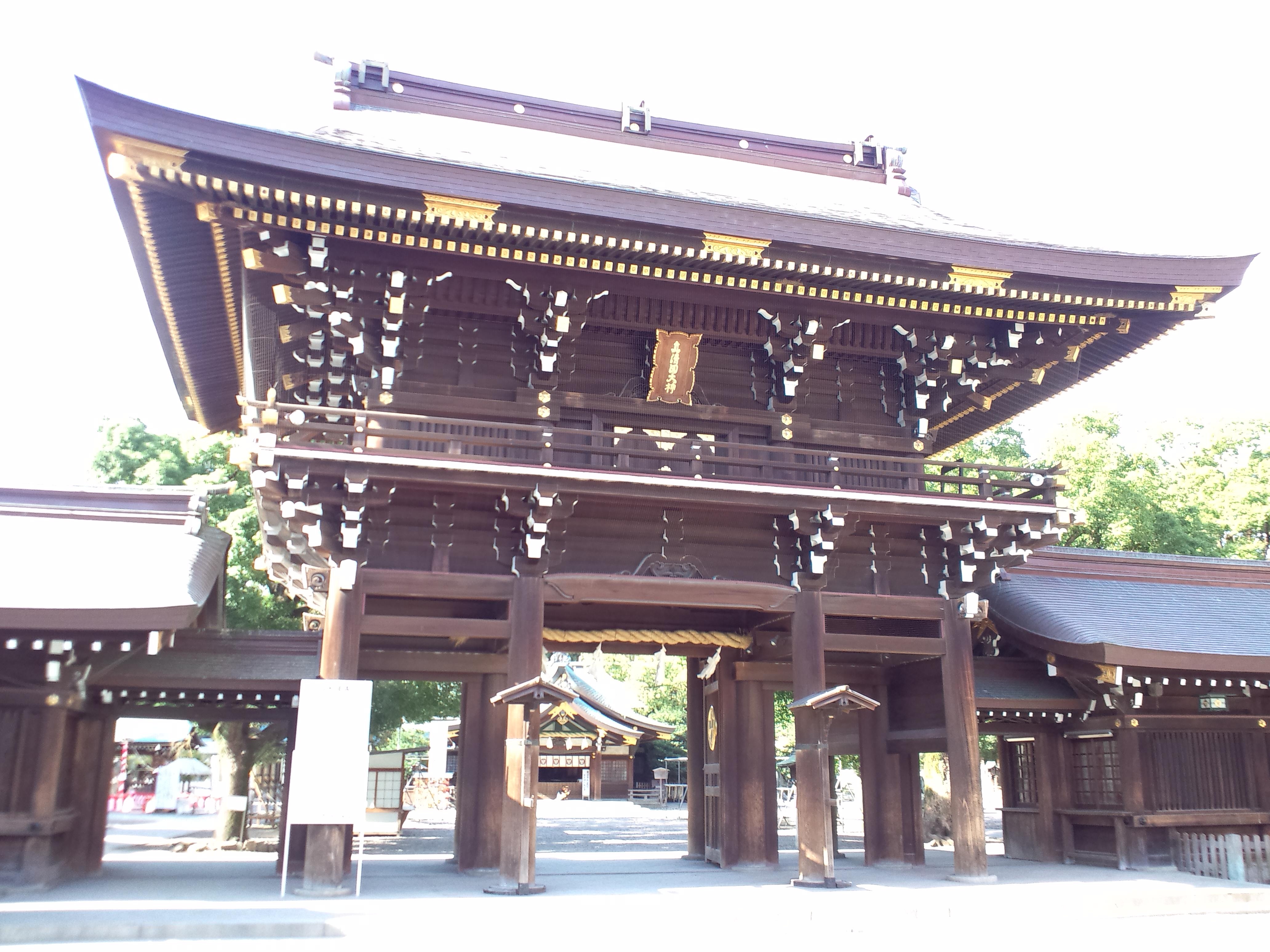
Masumida Shrine
The very name of the city gives it away. Ichinomiya means 'first shrine,' and for over a thousand years, the identity of this Aichi Prefecture city has been inseparable from Masumida Shrine, the highest-ranked Shinto sanctuary of the old Owari Province. Stand before its reconstructed romon gate on a clear April morning, when the annual festival draws crowds through the torii, and you are participating in a tradition so old that its origins have passed from history into legend.
When History Dissolves into Myth
No one knows when Masumida Shrine was founded. Shrine tradition and the ancient Kujiki records offer a date of 628 BC, during the supposed reign of Emperor Jimmu, when the spirit of Amenohoakari, the kami of sun and agriculture, was brought to Owari from Mount Katsuragi in Yamato Province. Another tradition credits the semi-legendary Emperor Suinin, whose reign is traditionally placed between 97 and 30 BC. What historians can confirm is that the shrine stood near the provincial capital of Owari Province by the Nara period, that it appears in the Rikkokushi chronicles and the 10th-century Engishiki records during the Heian period, and that it has held the rank of ichinomiya, the first shrine of the province, since at least the late Heian era. Masumida enshrines Amenohoakari, regarded as the ancestor of the Owari clan who ruled this flat, fertile stretch of the Nobi Plain in prehistoric times.
Warlords and Benefactors
The shrine's fortunes rose and fell with the powers that controlled the region. In 1584, an earthquake damaged the sanctuary, and it was rebuilt under the patronage of Toyotomi Hideyoshi, the peasant-born general who unified Japan after decades of civil war. Following the establishment of the Tokugawa shogunate, the shrine received the ongoing support of the Owari Domain, one of the three senior branches of the Tokugawa house based in nearby Nagoya. That patronage sustained the shrine through the long peace of the Edo period, ensuring the maintenance of its buildings, its festivals, and its collection of sacred objects. Among those objects are a set of twelve wooden bugaku dance masks, ten from the Kamakura period and two from the Muromachi period, donated by Emperor Juntoku. The masks survive today as designated Important Cultural Properties of Japan.
Ashes and Reconstruction
The peace that had sheltered Masumida for centuries ended in fire. During the Ichinomiya air raid of 1945, incendiary bombs destroyed the shrine complex. The loss was devastating but not permanent. Reconstruction began in 1951 and took a full decade to complete, with the honden, romon gate, and surrounding structures rebuilt in forms faithful to the original designs. The postwar shrine buildings, dating from the Showa period in the 1950s, have themselves become Registered Tangible Cultural Properties, a recognition that even reconstructed architecture can carry historical significance when it embodies a community's determination to restore what war took away. The shrine had already survived the Meiji restoration's upheaval of the traditional shrine ranking system, receiving official government rank in 1885 and a promotion in 1914, so reinvention was not entirely new.
Festival and Daily Life
Each year on April 3, the shrine's main festival transforms the streets of central Ichinomiya. The celebration draws on centuries of ritual practice, connecting the modern city to the agricultural cycles that once defined life on the Nobi Plain. On ordinary days, the shrine is a quieter affair. Visitors pass through the torii, cross the approach, and enter through the romon gate that frames the honden beyond. The shrine sits ten minutes on foot from Owari-Ichinomiya Station on the JR Central Tokaido Main Line and from Meitetsu Ichinomiya Station on the Nagoya Main Line, making it one of the more accessible historic shrines in the greater Nagoya area. That accessibility means Masumida serves both as a neighborhood shrine for local residents and as a pilgrimage destination for those tracing the network of sacred sites across the old Owari Province.
From the Air
Located at 35.308N, 136.802E in central Ichinomiya, Aichi Prefecture. The shrine grounds are visible as a tree-covered block in an otherwise dense urban grid. Nagoya Airfield (RJNG) lies approximately 15 km to the east-southeast. Gifu-Kakamigahara Air Base (RJNG area) is to the north. Chubu Centrair International Airport (RJGG) is roughly 45 km to the south. The Nobi Plain stretches flat in all directions, making the shrine difficult to spot above 4,000 feet without reference to the Ichinomiya rail stations and surrounding commercial district.