Matsusaka Castle
Gamo Ujisato was in a hurry. Toyotomi Hideyoshi had just handed him a 123,000-koku domain on the coast of Ise Province, but the existing castle at Matsugashima was cramped, indefensible, and rotting from the salt air. So Ujisato did what warlords of the 1580s did when they needed building materials fast: he tore down Buddhist temples and cracked open an ancient kofun burial mound, hauling the stones inland to a wedge-shaped hill where five roads converged. The castle he raised there -- Matsusaka Castle -- would outlast every lord who claimed it, every typhoon that battered its towers, and every political order that tried to erase it. What remains today, designated a National Historic Site since 2011, is a skeleton of enormous stone walls and empty terraces that still command the landscape of central Mie Prefecture.
Five Roads and a Fortune
Location made Matsusaka. Sitting on the western shore of Ise Bay at the center of old Ise Province, the castle controlled a junction where roads from Iga, Yamato, and Kii provinces met the pilgrim route to Ise Grand Shrine. That traffic fed a castle town that grew wealthy on trade. Merchants from Matsusaka became famous across Japan for their commercial reach, and the town's most consequential son was the founder of Mitsui -- the trading house that would grow into one of the largest business conglomerates in modern Japanese history. The castle may have been a military stronghold, but the money flowing through its gates shaped the region's identity far more than any garrison.
Temples into Ramparts
Ujisato completed construction with startling speed, conscripting stones from sacred sites to build defensive walls that were unusual for their era. While most Sengoku-period castles relied on earthen embankments, Matsusaka's enclosures were faced almost entirely in stone across three terraced layers. The honmaru at the summit held a three-story, five-floor tenshu tower capped with gold roof tiles, flanked by yagura watchtowers. The completed fortress featured two concentric moats and a layout compact enough to defend -- the core measured roughly 200 meters square -- yet imposing enough to announce Ujisato's authority. After the 1590 Battle of Odawara, the Gamo clan was rewarded with the much larger domain of Aizu-Wakamatsu, and Matsusaka passed through a rapid succession of lords: the Hattori, purged in 1595, then the Furuta, who held the castle through the chaos of the Battle of Sekigahara in 1600.
A Castle Without a Lord
In 1619, the Furuta clan was transferred out and Matsusaka Domain was abolished entirely. Its lands were absorbed into the vast Kishu Domain of the Kishu-Tokugawa clan, based in distant Wakayama. Under the shogunate's strict "one domain, one castle" policy, Matsusaka should have been demolished. Instead, it survived as something rare in Tokugawa Japan: a secondary administrative center, managing 179,000 koku of revenue from southern Ise Province. The castle had no resident lord, only bureaucrats. Then, in 1644, a typhoon destroyed the tenshu tower. No one rebuilt it. By 1794, a modest jin'ya fortified residence served the site's administrative functions. When fire gutted the second bailey's palace in 1877, and the remaining buildings were pulled down in 1881, only a single rice warehouse was left standing.
Stone Memory
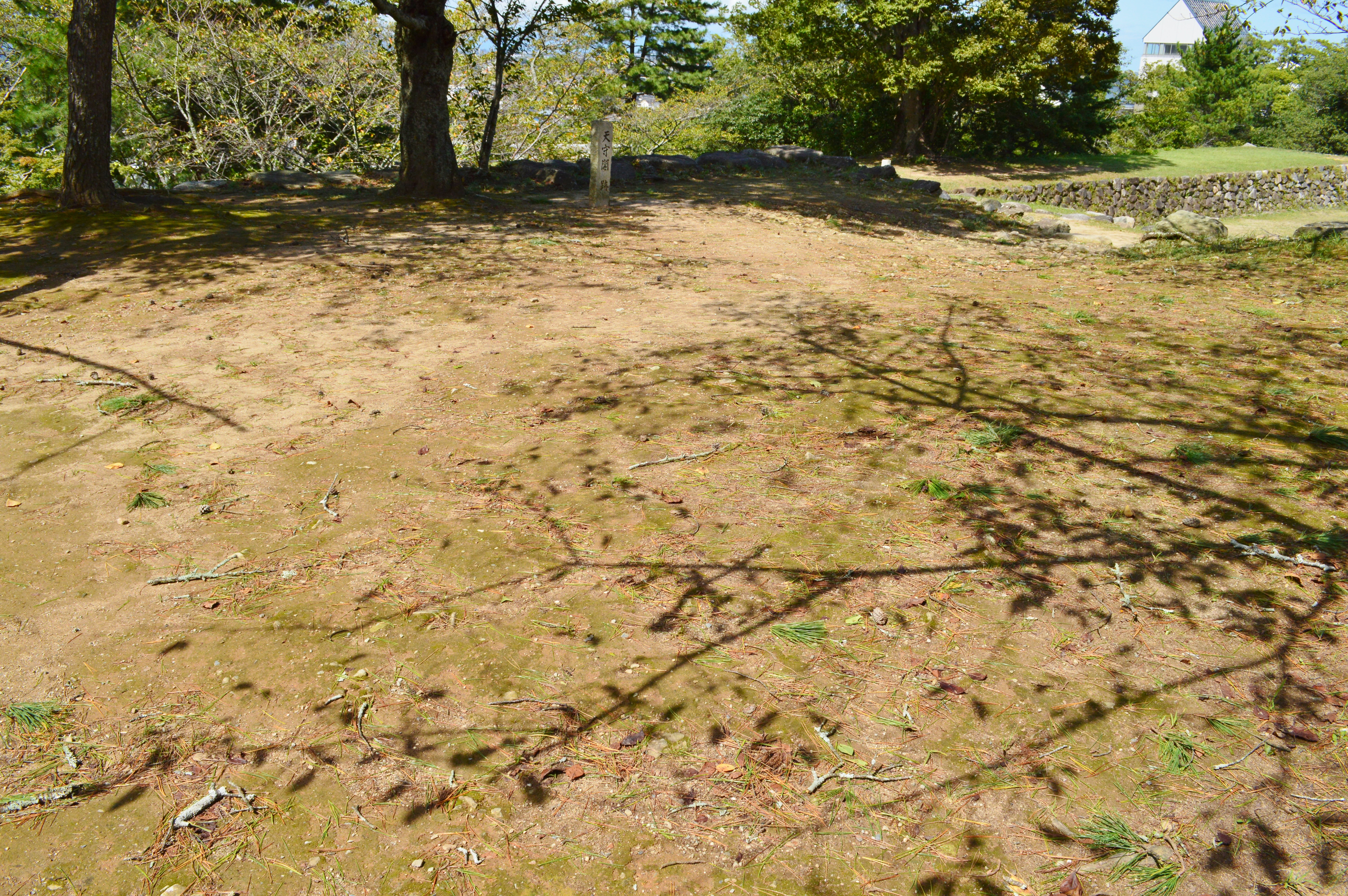
The walls endured. Archaeologists working on a massive restoration project between 1988 and 2003 discovered that Matsusaka's stonework shared construction techniques with Azuchi Castle, Oda Nobunaga's legendary lakeside fortress -- a connection that traces back through Ujisato, who had served Nobunaga before entering Hideyoshi's service. In 1982, local residents vetoed a proposal to reconstruct the tenshu, choosing to preserve the ruins as they were rather than build a concrete replica. That decision left the terraced stone walls as the castle's primary monument: massive, weathered, and unadorned. Today the grounds hold Matsusaka's city hall, a local history museum, and the Motoori Norinaga Memorial Hall, honoring the 18th-century scholar of Japanese classical literature who spent his life in Matsusaka. In 2006, the Japan Castle Foundation named the ruins one of the 100 Fine Castles of Japan. The site is a 15-minute walk from Matsusaka Station.
From the Air
Located at 34.576N, 136.526E on a low hill in central Matsusaka city, Mie Prefecture. The castle ruins sit roughly 3 km inland from the Ise Bay coast. From the air, look for the distinctive rectangular terraced outline of stone walls surrounded by urban development. The wedge-shaped hill faces eastward toward the bay. Nearest major airport: Chubu Centrair International Airport (RJGG), approximately 65nm northeast across Ise Bay. Matsusaka is also within range of Tsu Airfield. Expect clear visibility along the Ise Plain, with the Suzuka Mountains forming the western horizon.