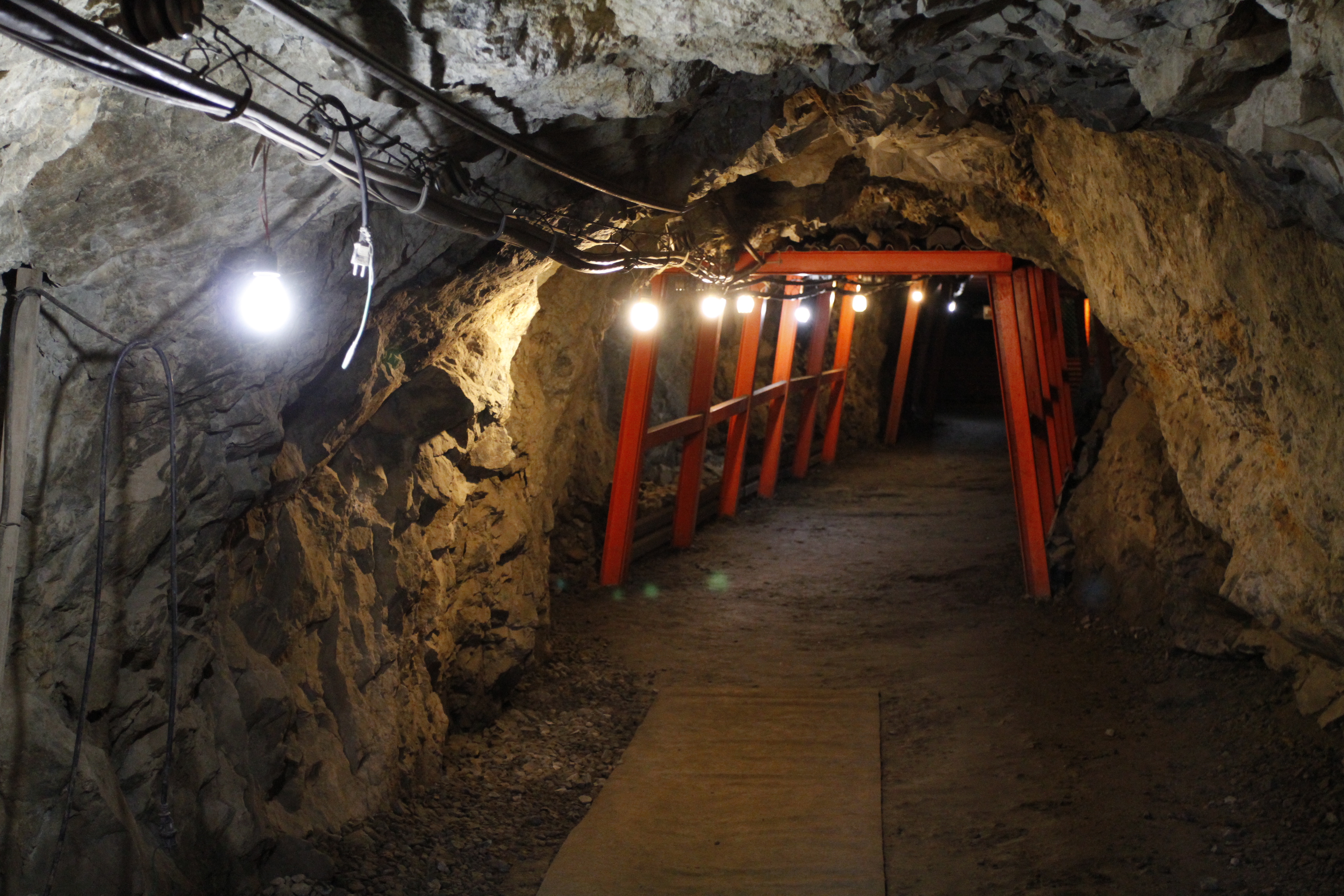
Matsushiro Underground Imperial Headquarters
Emperor Hirohito was told about the underground palace in July 1945. He refused to relocate. He was asked again. He refused a second time. The sprawling bunker complex carved beneath three mountains in Matsushiro had been designed to save the Japanese empire from annihilation, yet the man it was built to protect wanted no part of it. That refusal sealed the fate of one of World War II's most ambitious and morally fraught construction projects -- a subterranean city that was 75 percent complete when Japan surrendered on August 15, 1945, and which today sits in the quiet suburban hills of Nagano, holding secrets its builders never wanted unearthed.
The Logic of Last Resorts
Long before the first tunnel was blasted, Imperial Army strategists understood a difficult truth: Tokyo was indefensible. Situated on the rim of the Kanto Plain, close to the coastline, the capital offered little natural protection against an Allied invasion. Military planners had long considered shifting the vital organs of government inland if fighting reached Japanese soil. That hypothetical became urgent in July 1944, when the fall of Saipan put the Home Islands within range of B-29 bombers. At Hideki Tojo's last cabinet meeting that same month, approval was given to relocate the imperial palace, army headquarters, and other critical government functions to the mountains around Matsushiro, a town roughly 200 kilometers northwest of Tokyo. The site was chosen for its geological stability, its distance from the coast, and the three sturdy mountains -- Zouzan, Maizuru, and Minakami -- whose granite interiors could absorb anything a Superfortress might drop.
Tunnels Carved in Silence
Construction began on November 11, 1944, and it advanced at a staggering pace. Workers carved 60,000 cubic meters of rock from beneath the three mountains, creating a labyrinth of tunnels and chambers with enormous floor space. The complex was designed to house the Imperial General Headquarters, with corridors wide enough for military operations and chambers reinforced to withstand aerial bombardment. In March 1945, secret orders expanded the project's scope: a palace would be added for the Emperor himself. General Yoshijiro Umezu informed Hirohito about the complex's existence in May but deliberately withheld the detail about the palace. The plan called for moving the Emperor via armored train. But the labor behind this ambition carried a terrible cost. Between 7,000 and 10,000 Korean laborers were forced to build the complex. An estimated 1,500 of them died during the nine months of construction. On August 15, 1945, the day Japan surrendered, forty-six Korean workers disappeared and were never accounted for. The project consumed 200 million yen -- an enormous sum at the time -- and scarred all three mountains that had been symbols of Matsushiro's identity.
A Memory That Resists Erasure
After the war, the tunnels fell into obscurity. For decades they sat unused, a sealed reminder of imperial desperation. When Nagano hosted the 1998 Winter Olympics, the complex was deliberately omitted from all official maps and tourist materials distributed to visitors. Peace activists petitioned the Nagano Olympic Organizing Committee to include the caves as a site of historical interest, but their requests went unanswered. The silence around Matsushiro has always been contested. In 2014, Japanese nationalists pressured the city of Nagano to cover up portions of the onsite historical plaque that referenced the forced conscription of Korean laborers. The city complied, placing tape over those passages. The act itself became a new chapter in the story -- a physical demonstration of how the past is negotiated in real time, with adhesive tape serving as both censor and evidence.
Walking the First 500 Meters
Today, Nagano's sightseeing bureau administers the complex, though only the first 500 meters of the Mount Zouzan tunnels are open to visitors. The experience is one of compression -- the air grows cooler as you move deeper, the rough-hewn walls close in, and the sound of your footsteps flattens against stone that was chiseled by hand under wartime urgency. Beyond the public section, the vast majority of the tunnel network remains sealed. The scale is difficult to grasp from the surface. The gentle, forested hillsides of suburban Nagano betray nothing of what lies beneath them. The entrance is modest, almost understated, marked by simple signage. There is no monument proportional to the suffering that built these corridors. What remains is the stone itself -- indifferent to politics, holding the chisel marks of laborers whose names were never recorded, in a bunker designed for an emperor who refused to come.
From the Air
Located at 36.55N, 138.20E in the hills southeast of central Nagano city. The complex is underground beneath three mountains in the Matsushiro district, visible from altitude as a forested suburban area on the southeastern outskirts of Nagano. The nearest major airport is Matsumoto Airport (RJAF), approximately 60 km to the southwest. Nagano sits in a basin surrounded by the Japanese Alps, so approach from altitude offers dramatic mountain scenery. The area is roughly 200 km northwest of Tokyo. Look for the distinctive grid of Nagano city nestled in its valley, with the Matsushiro hills rising to the southeast.