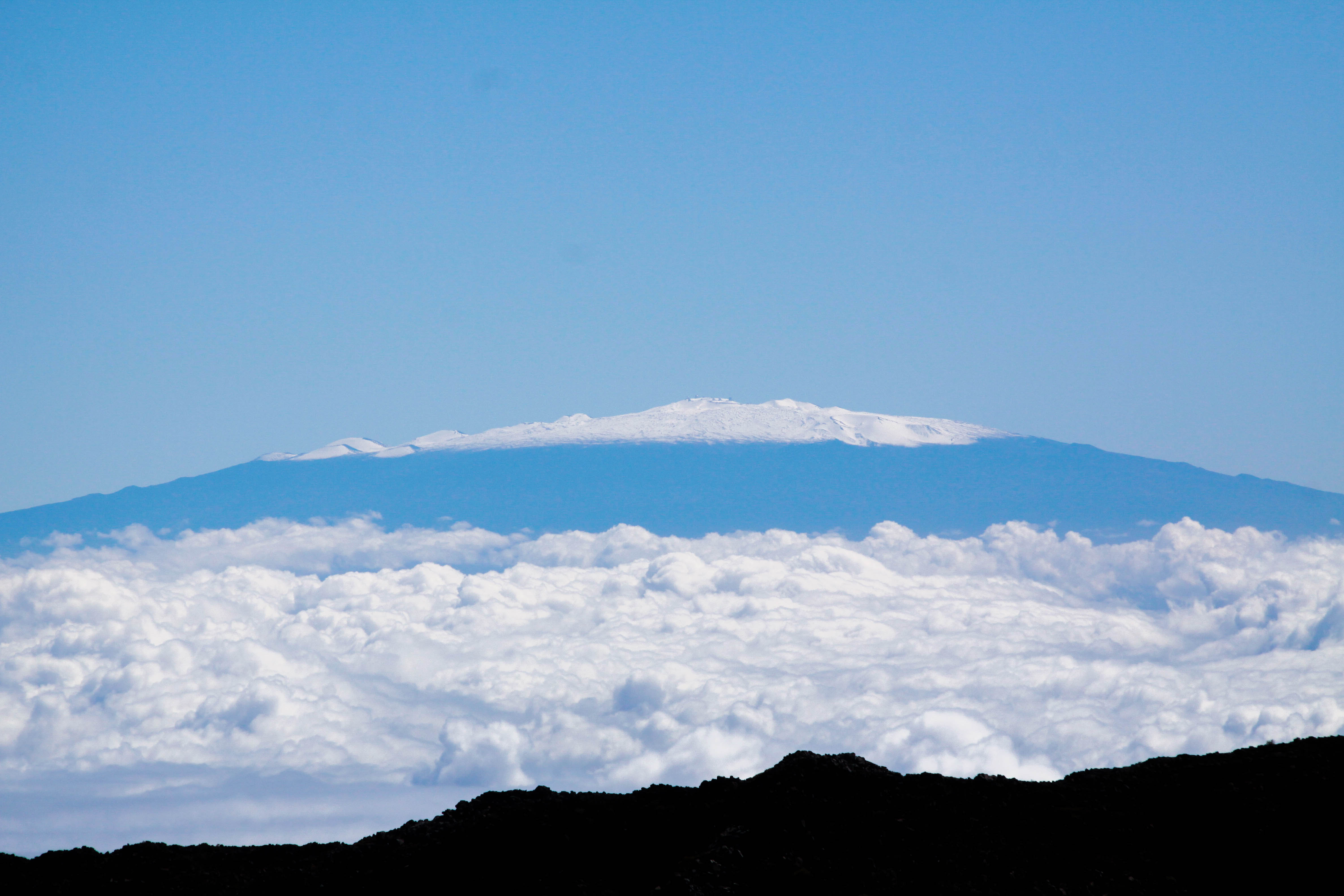
Mauna Kea: The Mountain Taller Than Everest
Mount Everest is the tallest mountain above sea level. But measured from base to summit, Mauna Kea on Hawaii's Big Island is taller. The dormant volcano rises only 13,796 feet above sea level, but its base sits on the ocean floor nearly 20,000 feet below. Total height: over 33,500 feet - more than 4,000 feet taller than Everest. The summit, rising above 40% of Earth's atmosphere, hosts the world's most powerful astronomical observatories. But Mauna Kea is also sacred to Native Hawaiians, creating conflict between science and spirituality that continues today.
The Mountain
Mauna Kea is one of five volcanoes that form the Big Island of Hawaii. It last erupted about 4,600 years ago and is considered dormant. The peak, covered with cinder cones from ancient eruptions, rises above the tropical island like a different world - cold, dry, and often snow-capped.
The name means 'White Mountain' in Hawaiian, referring to the snow that blankets the summit in winter. The mountain is so massive that it and neighboring Mauna Loa depress the ocean crust beneath them by 6 kilometers. If Hawaii were drained of water, Mauna Kea would tower over every other mountain on Earth.
The Astronomy
Mauna Kea's summit is perhaps the best astronomical site on Earth. It's above 40% of the atmosphere, reducing atmospheric distortion. It's dry, with minimal water vapor to absorb infrared light. It's remote, with dark skies far from city lights. The combination is unique.
Thirteen observatories currently operate on the summit, representing eleven countries. The twin Keck telescopes, each with 10-meter mirrors, are among the world's most powerful. Subaru, Gemini, and multiple other facilities peer into the cosmos from Mauna Kea. More cosmic discoveries have been made here than at any other observatory site.
The Sacred
To Native Hawaiians, Mauna Kea is the most sacred mountain in the archipelago - the piko (navel) connecting Earth to the heavens. The summit is where Wakea, the sky father, meets Papa, the earth mother. Ancestral spirits reside there. The mountain is not just land but family.
Hawaiian cultural practitioners have conducted ceremonies on Mauna Kea for centuries. Lake Waiau, near the summit, contains sacred water. Ancient shrines dot the slopes. The mountain's spiritual significance predates Western contact by at least a thousand years.
The Conflict
The construction of telescopes on Mauna Kea has created ongoing conflict. Native Hawaiians have protested expansion of the observatories, arguing that sacred land is being desecrated. In 2015 and 2019, protesters blocked access roads to prevent construction of the Thirty Meter Telescope (TMT).
Astronomers argue that Mauna Kea's scientific value is unmatched - nowhere else can such powerful observations be made. Both sides claim to respect the other. But the fundamental question - who owns Mauna Kea and what can be built there - remains unresolved.
The Balance
The University of Hawaii, which manages the summit, has implemented cultural practices and limited new construction. Some telescopes have been decommissioned. The TMT, after years of controversy, may be built on Spain's Canary Islands instead.
Mauna Kea remains both a scientific treasure and a sacred site, its twin identities in tension. The mountain that sees farther into space than any other place on Earth is also a place where humans must learn to balance their ambitions against what others hold sacred. The mountain, silent and massive, waits to see what its caretakers decide.
From the Air
Mauna Kea (19.82N, 155.47W) rises on Hawaii's Big Island. Hilo International Airport (PHTO) is 45km east. Kona International (PHKO) is 65km southwest. The summit is visible from both sides of the island, often snow-capped in winter. The observatory domes are visible at the summit. A road reaches the top - one of the highest-elevation roads in the world. Weather varies dramatically with altitude - tropical at sea level, near-freezing at the summit.