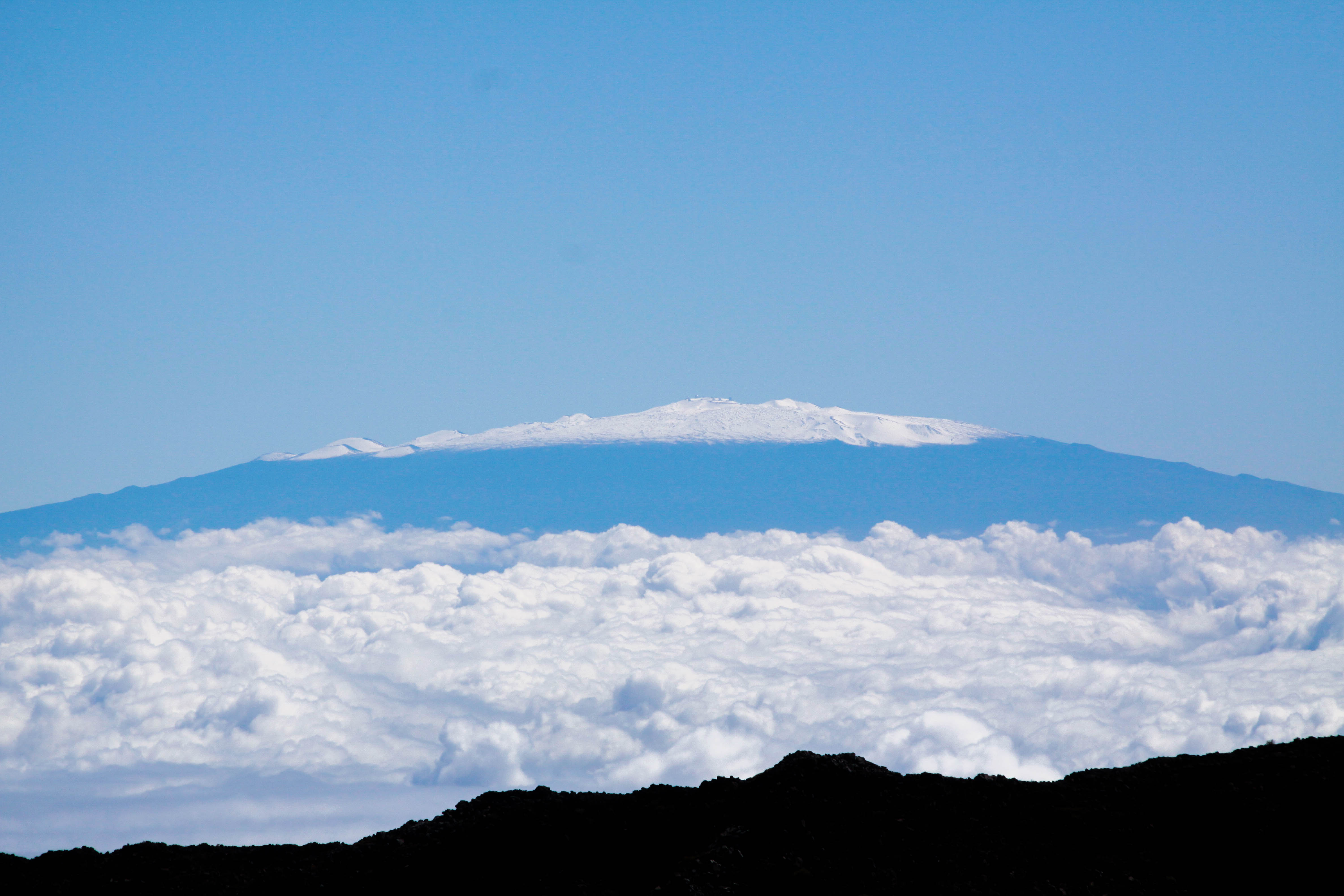
Mauna Kea: Where Sacred Mountain Meets the Stars
Mauna Kea is the best place on Earth to look at the sky. At 13,796 feet, the dormant volcano rises above 40% of the atmosphere, above most water vapor, above almost all light pollution. The air is stable; over 300 nights per year offer excellent viewing. Astronomers recognized this in the 1960s and began building telescopes. Thirteen now cluster on the summit, operated by eleven countries, revealing the universe from galactic formation to distant planets. But Mauna Kea is also the residence of gods. For Native Hawaiians, the summit is wahi pana - sacred place, home of Poliahu the snow goddess, burial site of ancestors, the origin point of Hawaiian identity. The conflict between science and sacredness has defined Mauna Kea for decades.
The Mountain
Mauna Kea is one of five volcanoes that form the Big Island of Hawaii. From its base on the ocean floor, it rises over 32,000 feet - taller than Everest measured from base to summit. The peak is dormant, last erupting 4,500 years ago. Snow covers the summit in winter; the name means 'White Mountain.' The upper slopes are barren cinder cone terrain, cold and oxygen-thin. The ecosystem is harsh but not lifeless - the Wekiu bug, found nowhere else, survives in summit cinders. The mountain's isolation and height create conditions that exist nowhere else: stable atmosphere, minimal light pollution, distance from urban heat islands, access to both hemispheres of sky.
The Telescopes
The University of Hawaii built the first summit telescope in 1968. Others followed: Canada-France-Hawaii Telescope, NASA Infrared Telescope Facility, the twin Keck Telescopes with their revolutionary segmented mirrors. The summit became the world's most important astronomical site, producing discoveries about black holes, galaxy formation, the expansion of the universe, and exoplanets. The Thirty Meter Telescope (TMT), planned to be the Northern Hemisphere's largest, would continue the expansion - but TMT became the focus of conflict. Hawaiians who had tolerated previous construction drew the line at further desecration. The standoff continues.
The Sacred
For Native Hawaiians, Mauna Kea is not scenery but homeland. The summit connects earth to sky, ancestors to descendants, the physical world to the spiritual. Burials have occurred on the mountain; offerings are still made. The lake near the summit, Waiau, is sacred; its water has ceremonial significance. Hawaiian opposition to telescope construction is not anti-science but pro-sovereignty - the assertion that development decisions should require Hawaiian consent on Hawaiian sacred land. The protests of 2019, when TMT construction was blocked by thousands of kupuna (elders), demonstrated that the conflict is fundamentally about who decides what happens on the mountain.
The Conflict
The Thirty Meter Telescope controversy crystallized decades of tension. Permitted after lengthy review, TMT faced blockades when construction equipment arrived. The standoff lasted months; the telescope remains unbuilt. The conflict has no easy resolution: the astronomy is genuinely important, the cultural claims are genuinely valid, and compromise seems impossible when the question is whether to build at all. Some astronomers have supported alternate sites; others insist Mauna Kea's conditions are irreplaceable. Some Hawaiians support the economic benefits; others insist that no economic argument justifies desecration. The mountain remains caught between visions of its purpose.
Visiting Mauna Kea
Mauna Kea is accessible from the Saddle Road on Hawaii's Big Island. The Visitor Information Station at 9,200 feet offers exhibits and stargazing programs; no reservations needed, though programs fill. Summit access (13,796 feet) requires 4WD vehicles; rental car insurance typically prohibits the drive, though some operators specialize in the route. Guided tours provide transportation and interpretation. Altitude sickness affects some visitors; acclimating at the Visitor Station before ascending is recommended. Children under 13 and pregnant women are advised against summit visits. Sunset viewing from the summit is spectacular, but night temperatures drop below freezing. The experience of standing where science meets sacred, seeing the telescopes against the stars, understanding what both communities value - this is Mauna Kea's lesson.
From the Air
Located at 19.82°N, 155.47°W on the Big Island of Hawaii. From altitude, Mauna Kea's summit is distinctive - a barren, brown peak rising above the surrounding volcanic terrain, often snow-capped in winter. The telescope domes are visible as white structures clustered on the summit ridge. The Saddle Road crosses between Mauna Kea and Mauna Loa to the south. The Big Island's green slopes and coastal development contrast with the summit's austere terrain. The Pacific surrounds the island; other Hawaiian islands are visible to the northwest. What appears from altitude as remote mountaintop infrastructure is the world's most productive astronomical site - and contested ground where Native Hawaiian rights and scientific ambition remain unreconciled.