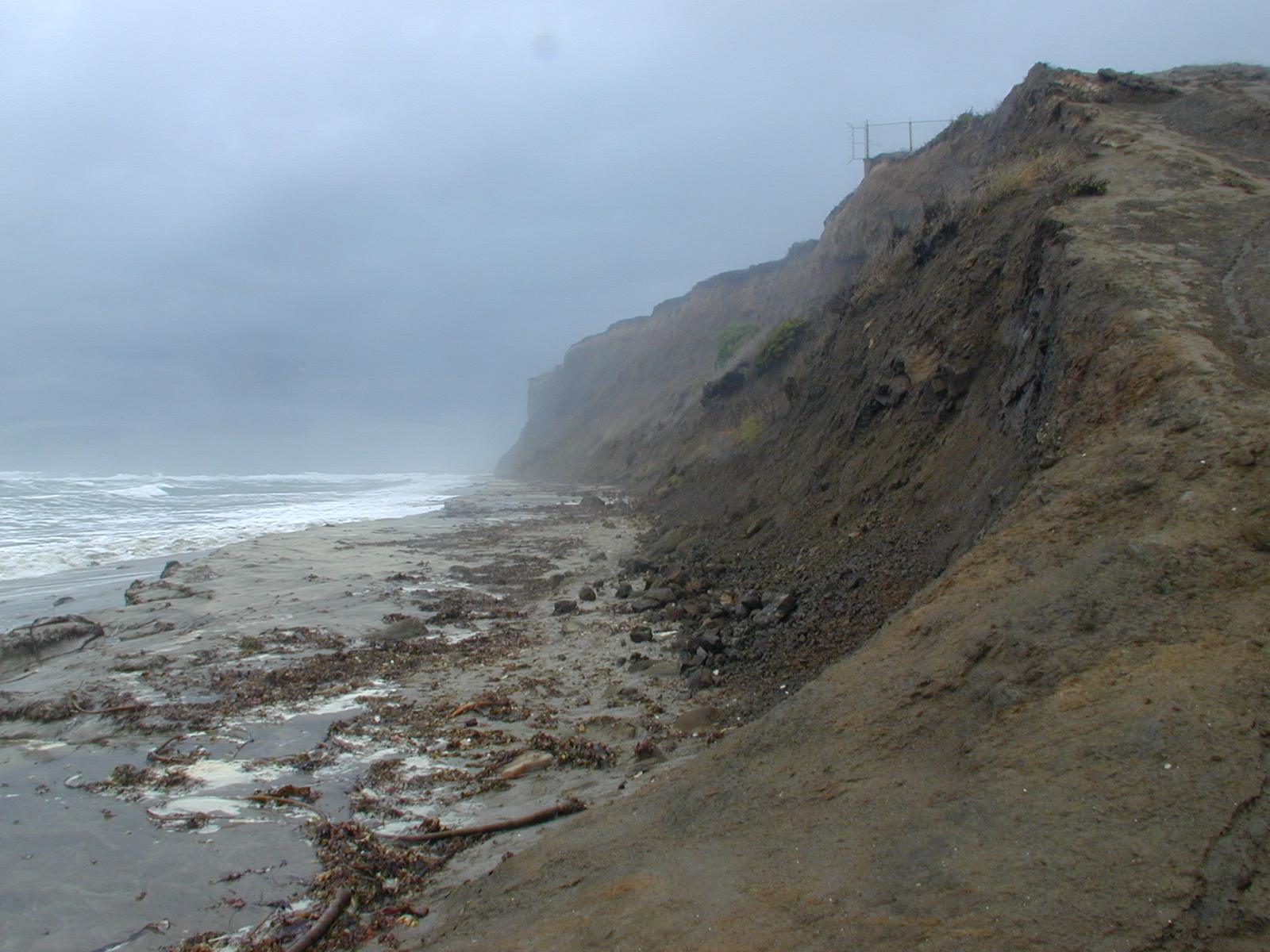
Mavericks
In March 1967, three surfers paddled out at Pillar Point with a white-haired German Shepherd named Maverick, who promptly swam after them into the churning water. They tied the dog up onshore and tackled the smaller waves near the rocks, deeming the bigger outside breaks too dangerous. They named the spot after the dog, who seemed to enjoy the outing more than anyone. Nobody could have guessed that this same break, just north of Half Moon Bay, would become one of the most fearsome big-wave surf spots on the planet -- a place where waves routinely crest at 25 feet, top out above 60, and have claimed at least one life.
Jeff Clark's Solitary Decade
Jeff Clark grew up in Half Moon Bay, watching the distant waves explode off Pillar Point from the windows of his high school. In 1975, at age seventeen, he paddled out alone to face the break. No one had tried before. The waves topped out at twenty feet or more, and Clark caught multiple left-breaking waves, becoming the first documented person to surf Mavericks. For the next fifteen years, he surfed it essentially alone. Other big-wave surfers refused to believe that California produced waves of that magnitude. Popular opinion held that large surf simply did not exist outside Hawaii. It was not until a photo taken by Clark's friend Steve Tadin appeared in Surfer magazine in 1990 that the world learned what Half Moon Bay had been hiding.
The Science Beneath the Surface
In 2007, NOAA released sea-floor maps that finally explained what makes Mavericks work. A long underwater ramp slopes upward toward the surface, slowing wave propagation over it. But the water on either side of the ramp sits in deep troughs, where waves continue at full speed. This creates a U-shaped wavefront that funnels the energy from the entire width of the ramp into a small area at its top center. The wave collapses with tremendous force, producing a break that Surfline describes, in the case of the rarely ridden left, as "a short-lived explosion of hell and spitfire." The geometry is specific to this one point on the coast, a geological accident that concentrates Pacific storm energy into a single, devastating impact zone.
Mark Foo's Last Wave
On December 23, 1994, Hawaiian big-wave legend Mark Foo traveled to Mavericks during a week of massive swells. In the late morning, he attempted a late takeoff on an eighteen-foot wave, caught his board's edge on the surface, and pitched forward into a wipeout near the bottom. Hours later, a fellow surfer spotted a body floating in the water. The only visible injury was a small cut on Foo's forehead. Many believe his leash snagged on a rock formation underwater, holding him down. Foo's death transformed Mavericks from a surfers' secret into international news. It also prompted Clark and safety coordinator Frank Quirarte to form the Mavericks Water Patrol. The debate over surfboard leashes -- safety device or drowning risk -- intensified, eventually leading to quick-release velcro leashes becoming standard equipment.
Records, Women, and an Operating System
In 1999, Sarah Gerhardt became the first woman to surf Mavericks. In 2018, women were finally included in the Titans of Mavericks competition and received equal prize money. In 2001, Carlos Burle won the Billabong XXL Big Wave Award for a 68-foot ride here. On December 23, 2024, thirty years to the day after Mark Foo's death, Alessandro "Alo" Slebir rode a massive wave at Mavericks initially estimated at 108 feet, but officially measured by the World Surf League at 76 feet -- the largest wave of the 2024-2025 season but short of the world record. The surf break's cultural footprint extends beyond the water: Apple named its 2013 Mac operating system OS X Mavericks after this spot, declaring it one of the California places that inspired them. The Titans of Mavericks competition, held intermittently from 1999 to 2016, was canceled indefinitely by the World Surf League in 2019. The waves, of course, keep coming.
From the Air
Located at 37.485°N, 122.470°W, outside Pillar Point Harbor at Princeton-by-the-Sea. The break is visible during large swells as white water approximately 0.5 nm offshore from Pillar Point. Nearest airport: Half Moon Bay Airport (KHAF), 2 nm south. KSFO is 15 nm northeast. During big wave events, boat and jet ski activity is heavy in the area. Best viewed below 2,000 ft AGL.