McGregor Museum
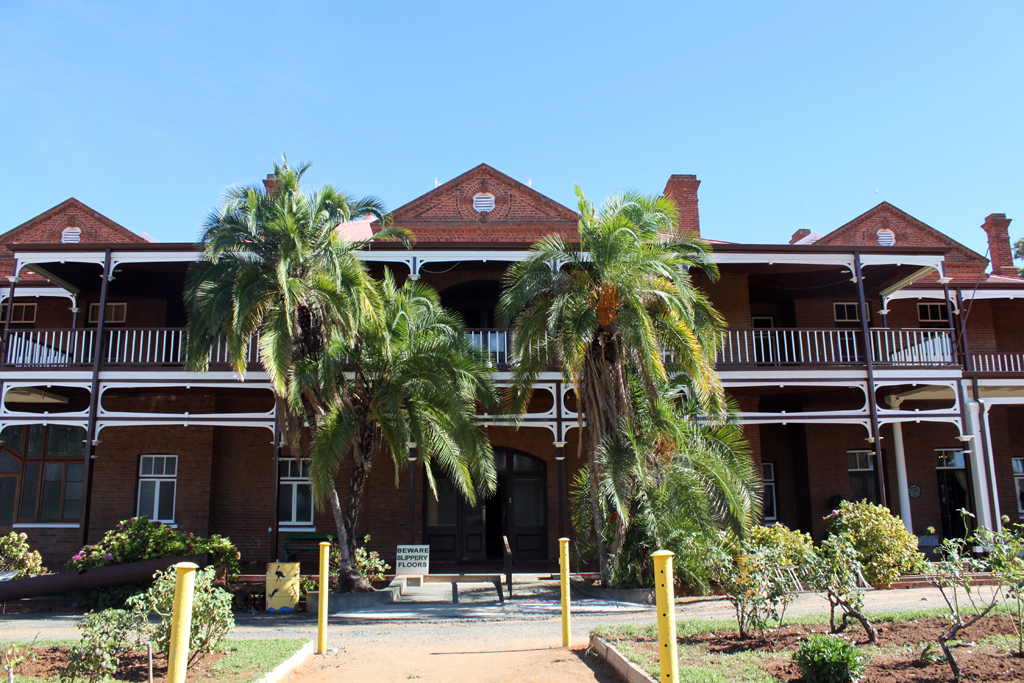
Cecil Rhodes slept here. During the Siege of Kimberley, which lasted from 14 October 1899 to 15 February 1900, the diamond magnate and political colossus lodged in rooms at the Kimberley Sanatorium while Boer artillery shelled the town around him. That same building, a handsome structure built in 1897, now serves as the headquarters of the McGregor Museum, a multidisciplinary institution whose collections stretch from two-million-year-old stone tools to photographs documenting South Africa's struggle for democracy. The juxtaposition is fitting for a museum in Kimberley, a city whose entire existence was conjured from the ground by the discovery of diamonds.
From a Mayor's Memory to a Provincial Institution
The museum was established in 1907, originally named the Alexander McGregor Memorial Museum after a former mayor of Kimberley whose wife bequeathed a purpose-built Chapel Street building to perpetuate his memory. For its first decades, the institution was supported by the Kimberley Municipality and De Beers, the diamond company that made the city. Its first director, Maria Wilman, served for an extraordinary 38 years, from 1908 to 1946, building the foundational collections that would define the museum's scope. Today the McGregor operates as a Provincial Public Entity under the Northern Cape's Department of Sport, Arts and Culture, though it retains the board-of-trustees governance model established at its founding.
The Sanatorium's Many Lives
The building that houses the museum has had as many identities as the city it serves. Constructed as the Kimberley Sanatorium in 1897, it became Rhodes' refuge during the four-month siege. After the war it operated as the Hotel Belgrave from 1908 to 1933, then served as the Holy Family Convent School until 1971. The museum outgrew its original Chapel Street quarters and moved here in 1973, with the new headquarters officially opening on 22 November 1976. Each transformation left its architectural mark, and today the building carries the accumulated character of a structure that has been hospital, hotel, school, wartime billet, and museum within a single century.
Satellites Across the Northern Cape
The McGregor is not a single building but a constellation of sites. Its branches include the original Chapel Street museum, the Duggan-Cronin Gallery housing Alfred Martin Duggan-Cronin's photographic and ethnographic collections from the 1920s and 1930s, and two preserved house museums, Dunluce and Rudd House. The Pioneers of Aviation Museum marks Kimberley's early role in South African flight. The Magersfontein Battlefield Museum, developed in 1971 and refurbished for the Anglo-Boer War centenary in 1999, preserves one of the war's most significant engagement sites. But the most remarkable satellite may be Wonderwerk Cave near Kuruman. This ancient solution cavity in dolomite rock contains archaeological deposits spanning roughly two million years, including what researchers have identified as the earliest secure evidence of controlled fire in an archaeological context, dating to approximately one million years ago. It was approved as a Grade 1 National Heritage Site in 2009.
Diamonds, Democracy, and Deep Time
What makes the McGregor unusual among South African museums is the sheer breadth of time and experience its collections encompass. The natural history holdings include a botanical herbarium, zoology collections, and palaeontology specimens. The cultural history archive spans oral recordings, photographs, archaeological material, and rock art. The Wildebeest Kuil Rock Art Centre outside Kimberley, declared a Provincial Heritage Site in 2008, opened as a public archaeology project showcasing San engravings. Exhibitions on the coming of democracy were opened by Northern Cape Premier Manne Dipico in 1995. A Robben Island project exhibition was opened by Ahmed Kathrada in 2001. The Sol Plaatje Museum on Angel Street honours the writer and activist who documented the dispossession of Black South Africans. From the earliest stone tools to the liberation struggle, the McGregor tells the full, complicated story of a region shaped by geology, greed, resilience, and time.
From the Air
Located at 28.75S, 24.78E in Kimberley, Northern Cape. The city is easily identifiable from the air by the Big Hole (Kimberley Mine), one of the largest hand-excavated holes in the world. The museum is in the Belgravia district. Kimberley Airport (FAKM) is located just south of the city centre. The flat, semi-arid Karoo landscape stretches in all directions. Magersfontein battlefield lies approximately 30km south of the city.