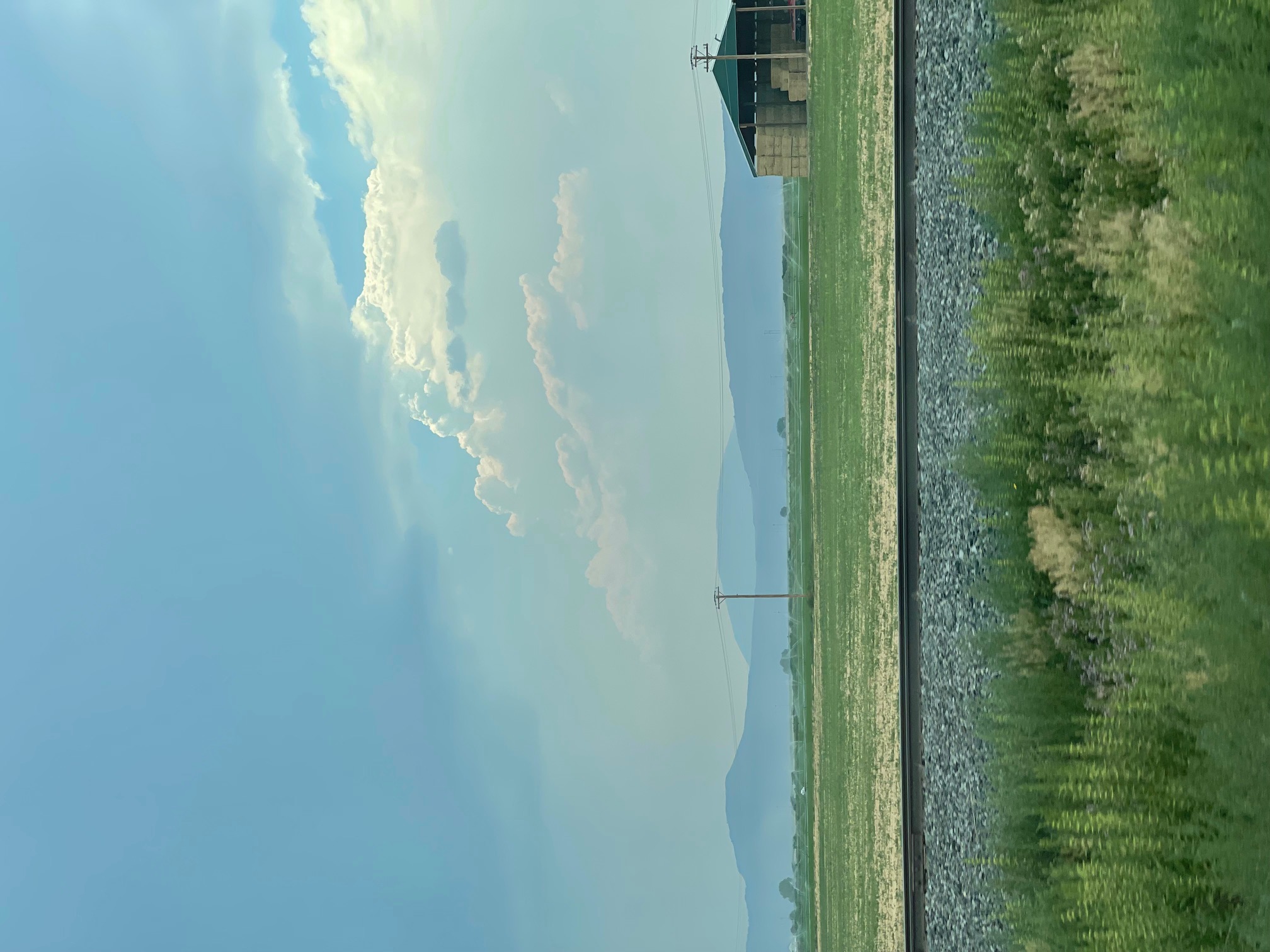
McKinney Fire
The fire created its own weather. On the night of July 29, 2022, as flames raced through the bone-dry forests of the Klamath National Forest, an enormous pyrocumulonimbus cloud punched 50,000 feet into the atmosphere, piercing from the troposphere into the stratosphere. The column generated its own lightning, feeding energy back into the inferno below. Firefighters who had been attempting perimeter control abandoned their positions, shifting to evacuation and structure defense. In less than 36 hours, the McKinney Fire would consume more than 50,000 acres, destroy 185 structures, and claim four lives.
Perfect Conditions for Disaster
The Klamath National Forest had been primed for catastrophe. Yreka, the nearby county seat, had received only half its normal precipitation for the year. A heat dome had trapped the Pacific Northwest in relentless triple-digit temperatures for weeks. In Montague, just east of Yreka, the thermometer had not dipped below 96 degrees in over two weeks. Vegetation that would normally provide fire resistance had become tinder. When the McKinney Fire ignited near McKinney Creek Road at 2:15 p.m. on July 29, investigators could not determine the exact cause, though they ruled out lightning. By 8:30 p.m., the fire had grown to 300 acres. By morning, it was 18,000.
Explosive Growth
Governor Gavin Newsom declared a state of emergency for Siskiyou County on July 30 as the fire continued its rampage. Nearby thunderstorms contributed gusty outflow winds without delivering rain, pushing the fire in unpredictable directions. By July 31, the blaze had reached 51,468 acres and lost all containment. The community of Klamath River bore the worst of it. Most of the small town's structures were destroyed, including the community hall and a building housing archives for the Karuk tribe. More than 5,800 people were forced to evacuate, while search and rescue teams from Oregon and California evacuated 60 hikers from a 110-mile section of the Pacific Crest Trail that the Forest Service had closed.
The Human Cost
Four civilians died in the McKinney Fire, all found near Highway 96. Two victims were discovered in their vehicle in their own driveway, trapped as flames overran the area. Two others perished in separate residences along the same highway. At least 12 firefighters sustained injuries during the suppression effort. At its peak, more than 3,500 personnel from states as distant as Delaware and Pennsylvania were deployed to fight the blaze through mutual aid programs. The fire ultimately burned just over 60,000 acres before containment was achieved in early September. For the families who lost loved ones and the communities reduced to ash, the statistics offered cold comfort.
Water and Death
The fire's destruction extended beyond what the flames touched directly. On August 2, up to three inches of rain fell on the eastern burn scar, a seemingly positive development that instead triggered catastrophe. Massive debris flows roared down tributaries of the Klamath River, doubling the river's flow in some areas. A contractor working with fire crews was hospitalized after floodwaters collapsed a bridge, trapping him in his vehicle. But the worst damage occurred beneath the surface. The debris flows stripped oxygen from the Klamath River. A Karuk tribal monitoring station recorded oxygen saturation plunging to zero percent for hours on August 3 and 4. Salmon, steelhead trout, lamprey eels, crayfish, and suckers died in massive numbers, a secondary ecological disaster caused by the fire's disruption of the watershed.
Aftermath and Memory
The McKinney Fire burned through areas that had seen fire before, overlapping with the footprints of the 1955 Haystack Fire and the 2014 Beaver Fire. For a landscape accustomed to periodic burning, this fire was something different: hotter, faster, more destructive. In March 2023, residents near the burn scar received evacuation warnings as heavy rains threatened to trigger new debris flows. The cause of the McKinney Fire remains officially undetermined, though power line issues the night before ignition drew investigative attention. For the Klamath River community, rebuilding has been slow. The community hall that served as a gathering place for generations exists now only in memory and in plans for reconstruction.
From the Air
Located at 41.83N, 122.89W in the Klamath National Forest of Siskiyou County, California. The fire footprint covers mountainous terrain along Highway 96 and the Klamath River corridor. Nearest airports include Montague-Yreka Rohrer Field (KROF) approximately 20nm east and Scott Valley Airport (O81) to the southwest. The burned area shows characteristic post-fire scarring visible from altitude, with denuded hillsides and debris flow channels. Smoke conditions may persist during subsequent wildfire seasons.