McLean Mill National Historic Site
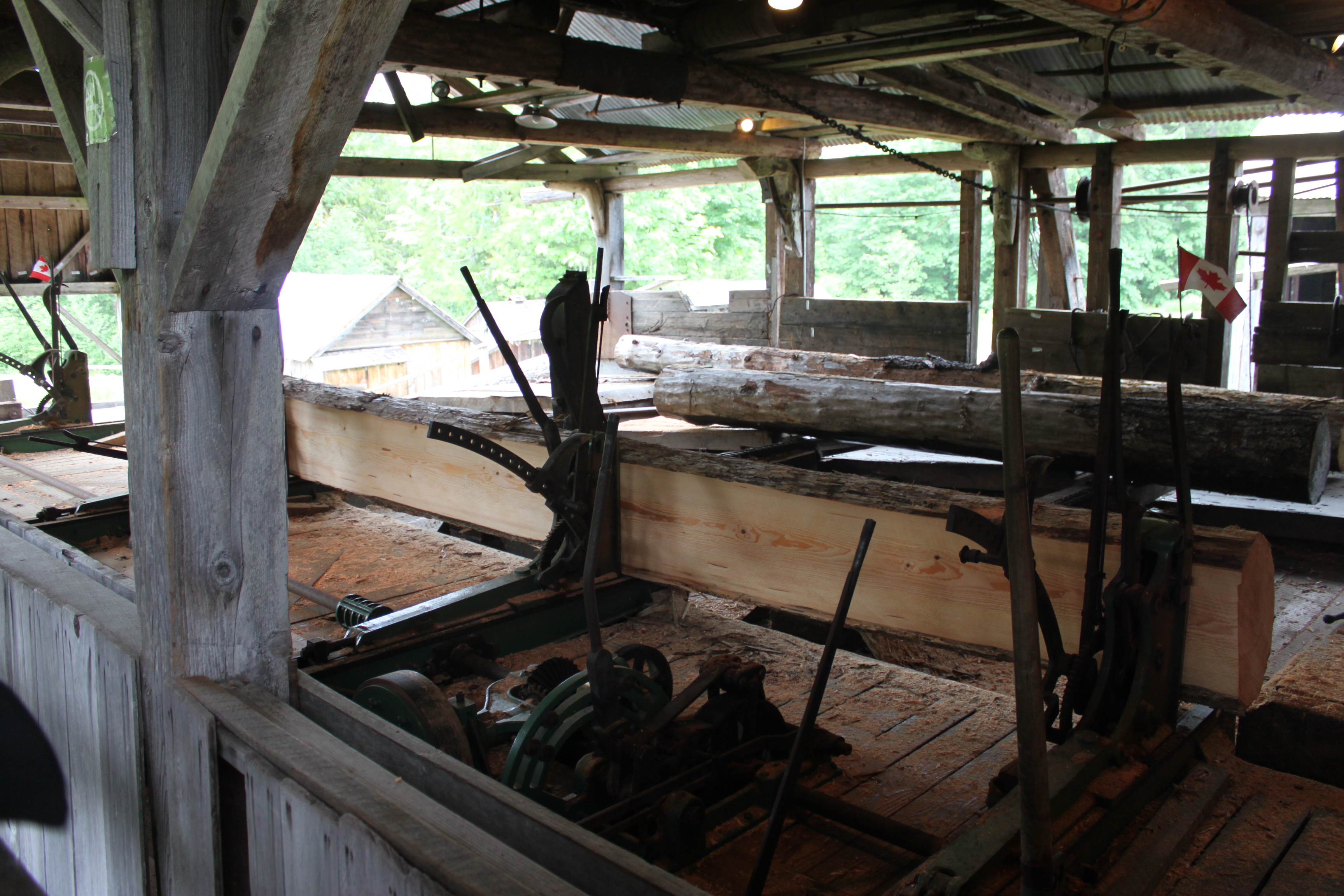
The boiler still fires. Steam still hisses through pipes that R.B. McLean laid down nearly a century ago, and the saw blade still bites into timber with the high whine that once defined working life in the Alberni Valley. McLean Mill is not a museum in the usual sense -- it is a National Historic Site of Canada where a steam-powered sawmill actually runs, demonstrating the technology and the labor that built British Columbia's forest industry one board at a time.
Three Generations of Sawdust
Robert Bartlett McLean -- known as R.B. -- purchased the plot in 1926 and moved his family there: his wife Cora and their three sons, Arnold, Philip, and Walter. The operation was modest by design, a family business in an era when the Alberni Valley's old-growth forests attracted large corporate outfits with far more capital. R.B. ran the mill with his sons, cutting lumber with a steam-powered rig that required constant attention -- feeding the boiler, maintaining the belts and pulleys, keeping the blade true. Arnold eventually took over the business and passed it to his own son, Howard McLean. Three generations worked the same saw, the same steam engine, the same patch of Vancouver Island timber.
The End of Small Timber
By 1965, the economics had shifted irreversibly. Large lumber companies -- operations like MacMillan Bloedel that could harvest, mill, and ship at industrial scale -- dominated the Alberni Valley. A family sawmill cutting boards one at a time could not compete. Howard McLean shut down the operation that year, leaving the machinery in place. It was, in many ways, a story repeated across rural British Columbia: the small operator squeezed out by corporate consolidation. But McLean Mill had an advantage that other defunct operations did not. Because the family had never modernized, the original steam equipment survived intact -- a complete, working snapshot of early twentieth-century milling technology.
Preservation and Recognition
In 1989, the federal government designated McLean Mill a National Historic Site of Canada, recognizing it as one of the few remaining examples of a steam-era sawmill. The site opened to tourists on July 1, 2000, and visitors can now ride a heritage steam railway from the Port Alberni harbour up the valley to the mill itself. The demonstrations are the draw: watching the old machinery come alive, hearing the rhythmic thump of the steam engine, smelling the cedar and fir as the blade cuts through freshly loaded logs. It is industrial heritage made visceral, a reminder that the forests surrounding Port Alberni were not simply scenery -- they were the reason the city existed in the first place.
The Valley's Timber Legacy
McLean Mill sits within a landscape shaped entirely by logging. Port Alberni's first sawmill opened in 1861, just south of where the Somass River meets Alberni Inlet, and the industry has defined the valley ever since. The mill's location -- nestled in second-growth forest northwest of Port Alberni -- places it in context. Stand at the mill and look outward: the mountains are blanketed in trees, some old-growth, much of it regrown after decades of cutting. The McLean family worked within this cycle for nearly four decades, taking timber and watching the forest recover. Their mill, frozen in time, offers a tangible connection to an era when the sound of a steam whistle meant another day's work in the woods of Vancouver Island.
From the Air
Located at 49.31N, 124.83W, northwest of Port Alberni on Vancouver Island. The mill site is set in forested terrain along the valley. Nearest airport is Port Alberni Airport (CBS8). The heritage steam railway route from the harbour to the mill is visible as a cleared corridor. Sproat Lake lies to the west and Alberni Inlet to the south.