McLeod Plantation
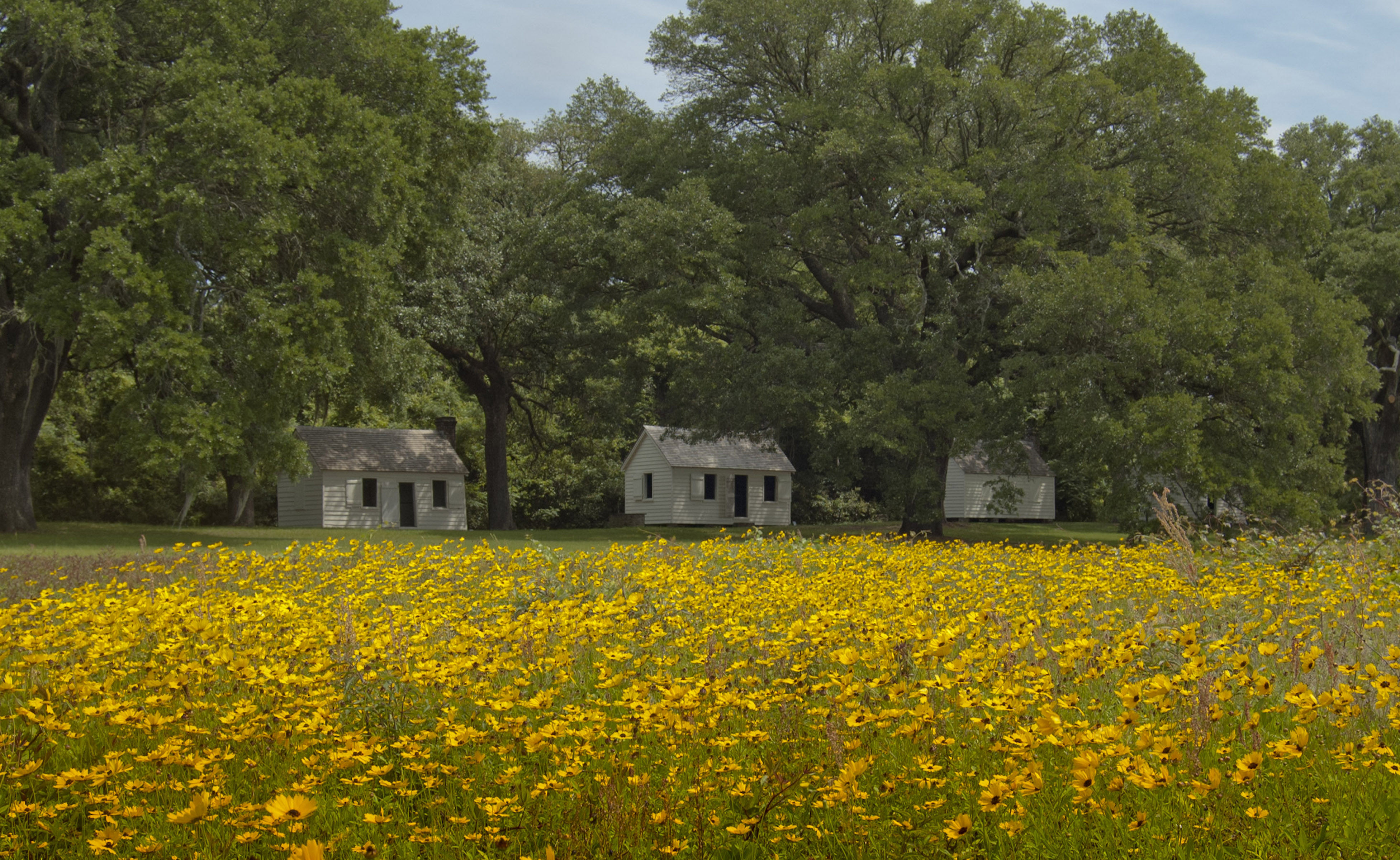
Six weathered clapboard cabins still stand in a row on James Island, their wooden walls holding more history than any plantation house ever could. McLeod Plantation is not the story of the family whose name it bears. It is the story of the 74 enslaved men, women, and children who lived in those cabins by 1860, who planted and harvested the sea island cotton that made their captors wealthy, and who forged a resilient creole culture that persists along the Carolina coast to this day. When this site opened to the public in 2015, it became one of the few plantation museums in the American South to center the enslaved experience rather than the planter's lifestyle.
Transition Row
The cabins at McLeod are called Transition Row, and the name carries a weight that no architectural term can convey. Built before the Civil War, the small clapboard structures housed enslaved people who worked the cotton fields stretching across James Island. By 1860, twenty-three such cabins stood on the property. Six survive. Their doorways faced the main house, a Georgian-style residence William W. McLeod built between 1854 and 1858 to oversee his labor force. But the cabins outlasted their purpose as instruments of control. After the war ended and Union troops occupied the site, those same structures became the first homes of freed people. The Freedmen's Bureau set up offices in the main house, and the formerly enslaved families stayed in their cabins, now as free tenants. The buildings transitioned from bondage to freedom without moving an inch.
Roots in West Africa
The enslaved people at McLeod were part of the broader Gullah Geechee community, a culture born from the forced migration of West and Central Africans to the Lowcountry and Sea Islands. Isolated on barrier islands and coastal plantations, these communities preserved African languages, foodways, spiritual practices, and craftsmanship in ways that mainland enslaved populations could not. McLeod Plantation sits within the federally recognized Gullah Geechee Cultural Heritage Corridor, which stretches from Wilmington, North Carolina, to Jacksonville, Florida. In 1993, ten acres of the property were designated for growing sweetgrass, the essential material used in coiled sweetgrass baskets, a craft tradition directly descended from West African weaving techniques. Those baskets, sold today at roadside stands throughout the Lowcountry, represent an unbroken artistic lineage spanning centuries and an ocean.
A War Fought on Its Doorstep
The Civil War came directly to McLeod's front door. Confederate forces used the main house as a field hospital, headquarters, and commissary during the fighting on James Island, which guarded the southern approach to Charleston Harbor. The property saw action throughout the conflict. When Charleston was finally evacuated in February 1865, Union troops moved in. Among the regiments that occupied McLeod were soldiers of the 55th Massachusetts Volunteer Infantry, one of the first African American units in the United States Army. Black soldiers, many of them formerly enslaved, now walked the grounds as liberators. The irony was not lost on anyone. The main house that had served Confederate officers became the regional office for the Freedmen's Bureau, the federal agency charged with helping four million newly freed people transition to citizenship.
What the Oak Remembers
A live oak on the McLeod grounds has stood for roughly a thousand years. It was already ancient when the first European maps recorded this land under the name Morris in 1678. It was old when William Wilkins sold 617 acres to Samuel Peronneau in 1741 for the first documented cultivation. It watched as the McLeod family planted their last cotton crop in 1922 and converted to a small dairy operation. It shaded the property as farming ceased entirely in 1940. The oak survived hurricanes, earthquakes, development pressures, and the near-demolition of the site when the American College of the Building Arts acquired it in 2004 but could not sustain both a school and a historic property. In 2011, the Charleston County Park and Recreation Commission took ownership, and by April 25, 2015, McLeod Plantation Historic Site opened its doors to the public at last.
A Different Kind of Plantation Tour
Most plantation tours in the South lead visitors through grand parlors and manicured gardens. McLeod leads them through the slave cabins. The site's interpretation deliberately centers the experiences of the enslaved, the freed, and their descendants. Visitors walk Transition Row, stand inside the cramped quarters where families lived under surveillance, and learn about the labor systems that powered the sea island cotton economy. The gin house, where long-staple cotton was processed before export, still stands as a reminder of the crop that drove the entire enterprise. McLeod Plantation is designated as one of South Carolina's African American Historic Places, and its approach has influenced how other sites across the region tell the story of slavery. It does not romanticize. It does not look away. It lets the cabins speak.
From the Air
Located at 32.76°N, 79.97°W on James Island, just southwest of downtown Charleston. The plantation sits near the intersection of Folly Road and Maybank Road at Wappoo Creek, which flows into the Ashley River. From the air, look for the cluster of historic structures near the creek's edge. Charleston Executive Airport (KJZI) is approximately 5nm to the northwest; Charleston AFB/International (KCHS) is about 10nm north-northwest. The Lowcountry terrain is flat and marshy, with tidal creeks threading through the landscape. Best viewed at lower altitudes on clear days when the layout of the plantation grounds and surviving cabin row are distinguishable.