McNeil River: The World's Greatest Bear Show
More brown bears fish McNeil Falls than anywhere else on Earth. On peak days, 74 bears have been counted along this single stretch of river on Alaska's Pacific coast - males, females, cubs, all tolerating each other because the salmon are too plentiful to fight over. The bears have been photographed by National Geographic, filmed by David Attenborough, and watched by perhaps 10,000 humans total since the sanctuary was established in 1967. Only ten people per day are permitted; the lottery for permits draws thousands of applications. Those who win see the greatest concentration of wild bears on the planet, fishing and sparring and nursing cubs while guides keep everyone safe. It's the most controlled wildlife experience in Alaska, and the most rewarding.
The Concentration
McNeil River's bear concentration results from exceptional salmon abundance and geography that funnels fish into a single chute. Chum salmon returning to spawn must navigate McNeil Falls - a series of cascades where tired fish are easy targets. The bounty is so reliable that bears from across the region converge here during July and August, tolerating proximity that would provoke conflict anywhere else. The bears have learned that fighting costs more energy than sharing. The result is a gathering unmatched anywhere: bears fishing in lines, bears napping beside each other, bears ignoring neighbors they'd kill in leaner times.
The Sanctuary
McNeil River State Game Sanctuary was established in 1967 specifically to protect the bear concentration from hunting. The sanctuary prohibits hunting; the adjacent McNeil River State Game Refuge prohibits hunting during bear-viewing season. The protection has allowed bears to habituate to human presence without associating humans with danger - or food. Bears at McNeil largely ignore the guided groups watching them, continuing natural behaviors meters away. This habituation took decades to develop and requires strict protocols to maintain. Every visitor action affects whether future bears will tolerate human proximity.
The Selection
Visiting McNeil requires winning a lottery. The Alaska Department of Fish and Game issues permits for 10 visitors per day during peak season (July through August). Applications far exceed permits; odds are roughly 1 in 5 for popular dates. Permit holders pay fees, arrange their own transportation to the sanctuary (usually floatplane from Homer), and stay at a rustic camp with basic facilities. Groups are accompanied by Fish and Game staff to viewing pads; behavior guidelines are strict. The restriction frustrates many applicants, but it's why McNeil works - limited pressure keeps bears comfortable.
The Experience
Permit holders spend four days at McNeil, walking to viewing areas at Mikfik Creek (early season) or McNeil Falls (peak season). Days are structured around bear activity: morning and evening sessions when bears feed most actively, midday rest when bears nap. Photographers get extraordinary images; others simply watch in astonishment. The bears' proximity is remarkable - often within 20 meters - and their tolerance of human presence is unique. Staff ensure safety, but the bears themselves make it possible: they've learned that these particular humans pose no threat. Respect that bargain, and witness something available nowhere else.
Visiting McNeil River
McNeil River State Game Sanctuary is located on the Alaska Peninsula, across Cook Inlet from Homer. Access is by floatplane only; charter from Homer (45 minutes). Permits are required and distributed by lottery through the Alaska Department of Fish and Game; applications accepted March through April for the July-August viewing season. Permit fees apply; camping is mandatory at the sanctuary campsite. All food must be stored in provided bear-proof containers. Rain gear and warm layers are essential; conditions are wet and cold regardless of season. This is not a casual wildlife experience - it requires planning, expense, and acceptance that the lottery may not favor you. But if you win, you'll see more wild bears than most people see in a lifetime.
From the Air
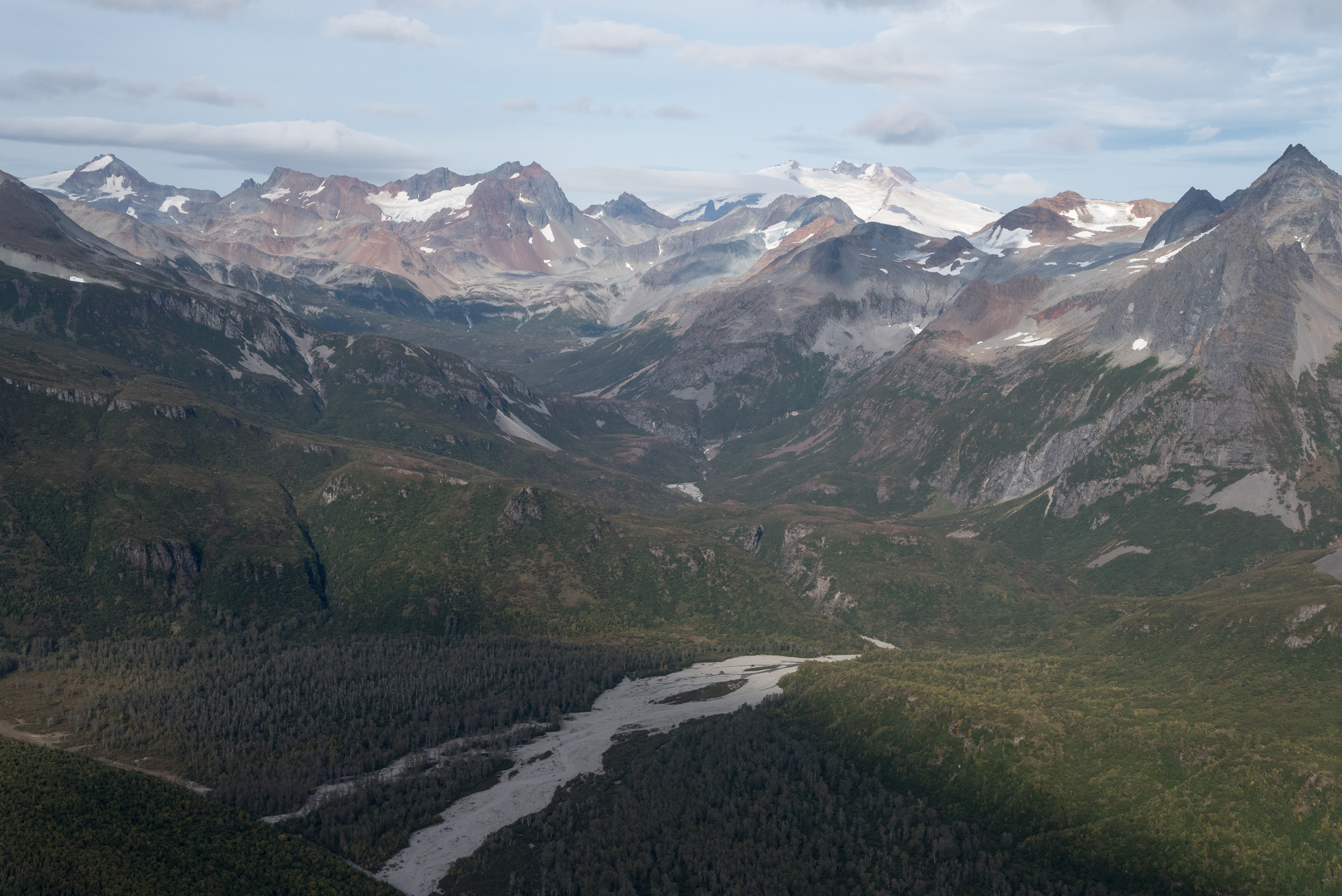
Located at 59.05°N, 154.30°W on the Alaska Peninsula. From altitude, the McNeil River is visible as a small stream draining into Kamishak Bay on Cook Inlet's western shore. The sanctuary is remote - no roads, no structures except the small ranger station and camp. The falls themselves are invisible from altitude, but the river valley is clear. Katmai National Park lies to the south; Lake Clark to the north. The coastline is volcanic; Augustine Volcano is visible across the water. The terrain looks like unremarkable Alaska coast; nothing suggests the extraordinary bear concentration that occurs at one waterfall each summer.