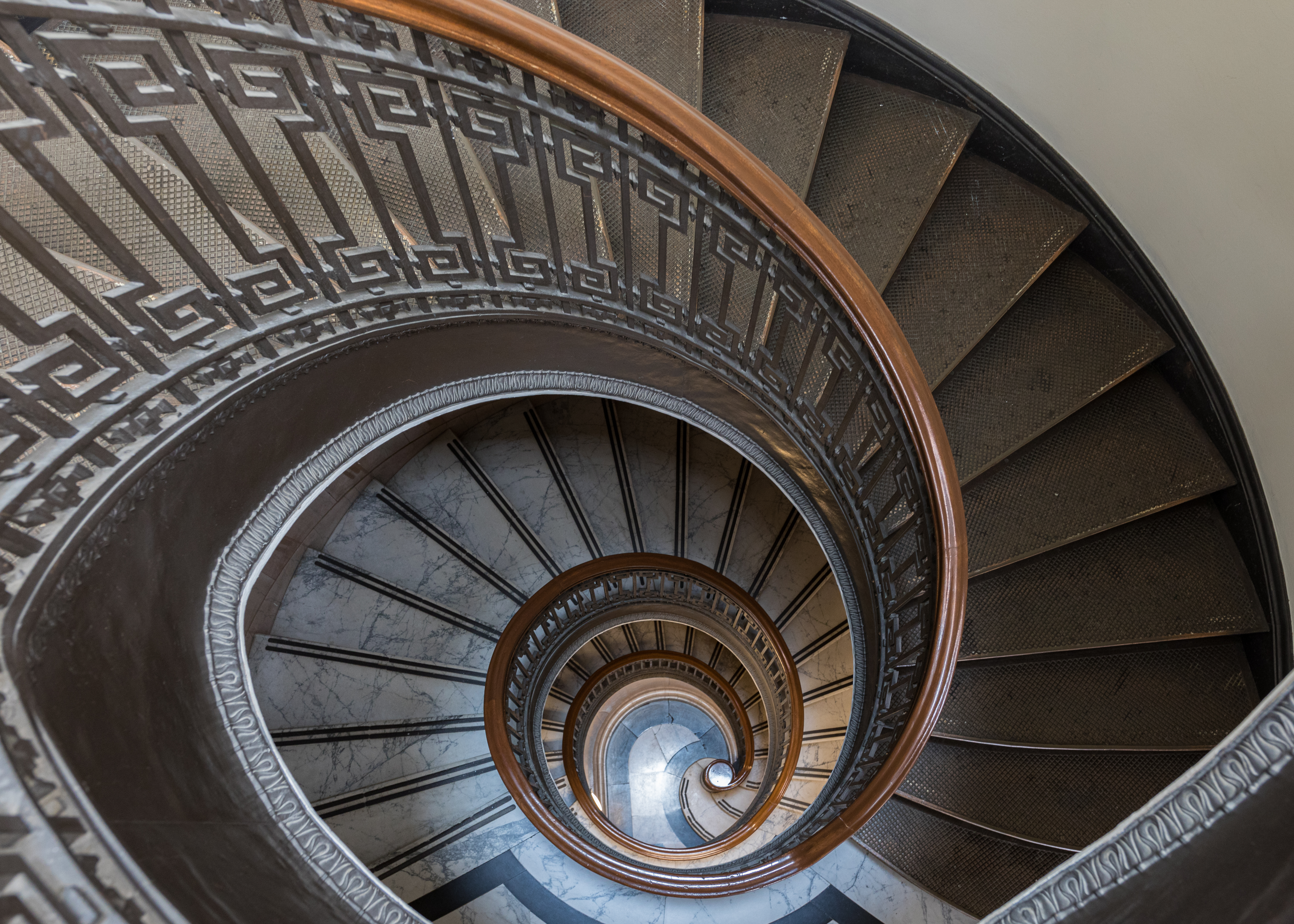
Mechanics' Institute, San Francisco
It started with four books. In 1854, the California Gold Rush was effectively over. Surface gold had been mined out by 1853, and San Francisco was flooded with former miners who had no employment, no skills, and no prospects. California had no colleges, no universities, and no public libraries. Into this vacuum stepped the Mechanics' Institute, founded with a chess and games room, those four books, and a mission to turn broke prospectors into skilled workers. The San Francisco Public Library would not open for another 25 years.
From Woodworking to the University of California
Within a few years of its founding, the Mechanics' Institute was offering classes in woodworking, mechanical drawing, industrial design, electrical science, applied mathematics, and ironwork. The practical education it provided became so central to California's development that when the state legislature granted a charter to the University of California in 1868, the Institute played a direct role in the fledgling university's first years, hosting classes and presenting lectures. Members of the Mechanics' Institute helped develop the university curriculum, and the Institute held a seat on the UC Board of Regents continuously until 1974. A vocational school for down-on-their-luck miners had helped create one of the great public universities in the world.
Burned and Rebuilt
The Institute purchased a building site at 36 Post Street in 1866 and erected a three-story building designed by William Patton. It featured a library with open stacks, a lecture hall seating six hundred, a chess room, a furnished ladies' sitting room, and rental rooms for committees and scientific organizations. Retail space on the ground floor helped pay the bills. Then came April 1906. Like most of downtown San Francisco, the Institute and its collections were destroyed in the earthquake and fire. By 1910, a new building designed by Albert Pissis rose at 57 Post Street, where it remains today, a landmark of San Francisco architecture with a marble-and-wrought-iron two-story library that looks like it belongs in a European capital rather than a commercial district.
The Oldest Chess Club in America
The chess room has been part of the Mechanics' Institute since its founding in 1854, making it the oldest continuously operating chess club in the United States. The club offers tournaments, classes, and gatherings for all skill levels. Its collection of chess books is one of the library's focal areas, alongside local San Francisco history. In a city where institutions come and go with the economic tides, the chess club's persistence is remarkable. People have been pushing pawns across boards in this same institution for more than 170 years, through gold busts and earthquakes, through wars and technology booms, through every version of San Francisco that has come and gone.
A Living Room for the City
After the 1906 destruction, the Institute merged with the Mercantile Library Association and broadened its focus from the mechanical arts to all subjects. Today its collection of over 160,000 items covers literature, arts, history, philosophy, business, and finance, with strong holdings in hard-to-find periodicals and digital resources including audiobooks, e-books, and online databases. Membership has always been open to the public. The Institute hosts cultural events, author readings, and film screenings. In an age when libraries are under constant pressure to justify their existence, the Mechanics' Institute justifies itself the same way it did in 1854: by being a place where people without other options can find the tools to build a different future. The tools have changed. The mission has not.
From the Air
Located at 37.79°N, 122.40°W at 57 Post Street in San Francisco's Financial District, between Montgomery and Kearny Streets. The building is not individually distinguishable from altitude but sits in the dense downtown core. Nearest airports: SFO (KSFO, 11 nm south), Oakland (KOAK, 10 nm east).