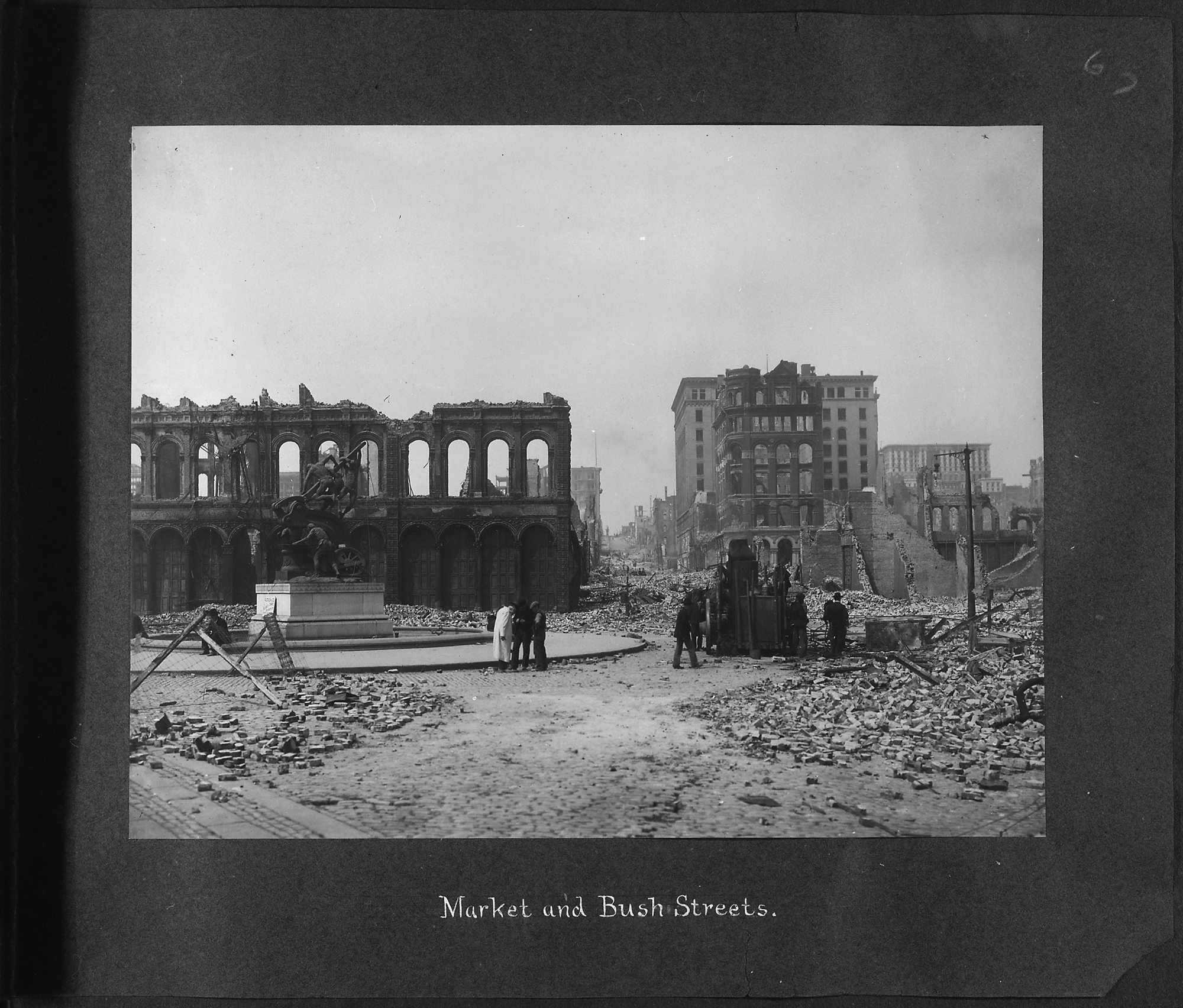
Mechanics Monument
San Franciscans called it Donahue's pump, and the nickname stuck. Douglas Tilden's massive bronze sculpture at the intersection of Market, Bush, and Battery Streets was supposed to honor Peter Donahue, who built the Union Iron Works into the first foundry on the Pacific Coast. Instead, the monument became entangled in a lawsuit between the dead benefactor's executors and his widow before a single ounce of bronze was cast. The art, when it finally arrived, was worth the wait. The family drama was a bonus.
A Bequest Under Siege
The monument exists because James Mervyn Donahue, Peter's son, left $25,000 in his will for a memorial to his father. The executors argued there were no Donahues left to keep the family name alive, and Mervyn had wanted the monument to do it. His widow disagreed, suing in June 1896 to block the bequest, arguing it constituted a charity and the amount was excessive. The courts sided with the executors twice, clearing the way for an open design competition. Executor Peter McGlynn insisted that the design should come from a California artist using California materials and workmanship. Douglas Tilden, a deaf sculptor who was already one of the state's most prominent artists, won the commission. His model was accepted in 1899. This would be his most ambitious work.
Dedication Without a President
The Donahue Fountain was dedicated on May 15, 1901, and President McKinley was supposed to attend. Mayor Phelan caused a stir by announcing that McKinley's trip had been cut short by his wife Ida's illness. Phelan accepted the statue with a brief speech, and it was unveiled by Irving M. Scott, manager of the Union Iron Works. Initial plans had called for the monument to stand forty feet tall as the centerpiece of a fountain with a basin forty feet in diameter, featuring eight-foot-high bronze figures of workers. When originally erected, it was indeed surrounded by water. Theodore Roosevelt visited on May 13, 1903, using the monument as a backdrop for a speech on expansion and trade. After the 1906 earthquake, the fountain basin was eliminated, leaving only the bronze sculpture group standing dry at its Market Street intersection.
Tilden's Market Street Legacy
The Mechanics Monument was part of a larger commission. Tilden created three major works for a Market Street beautification project at the turn of the twentieth century: the Admission Day Monument at Market and Montgomery, California Volunteers at Market and Dolores, and this monument and fountain. Together they represented California's ambition to announce itself as a place of consequence, using public art to declare that a city built by miners and ironworkers deserved monuments as grand as any eastern capital. The Mechanics Monument has outlasted the foundry it commemorates, the family it memorializes, and the fountain that once surrounded it. The nickname endures too.
From the Air
Located at 37.79°N, 122.40°W at the intersection of Market, Bush, and Battery Streets in San Francisco's Financial District. The monument is at street level and not individually visible from altitude. Nearest airports: SFO (KSFO, 11 nm south), Oakland (KOAK, 9 nm east).