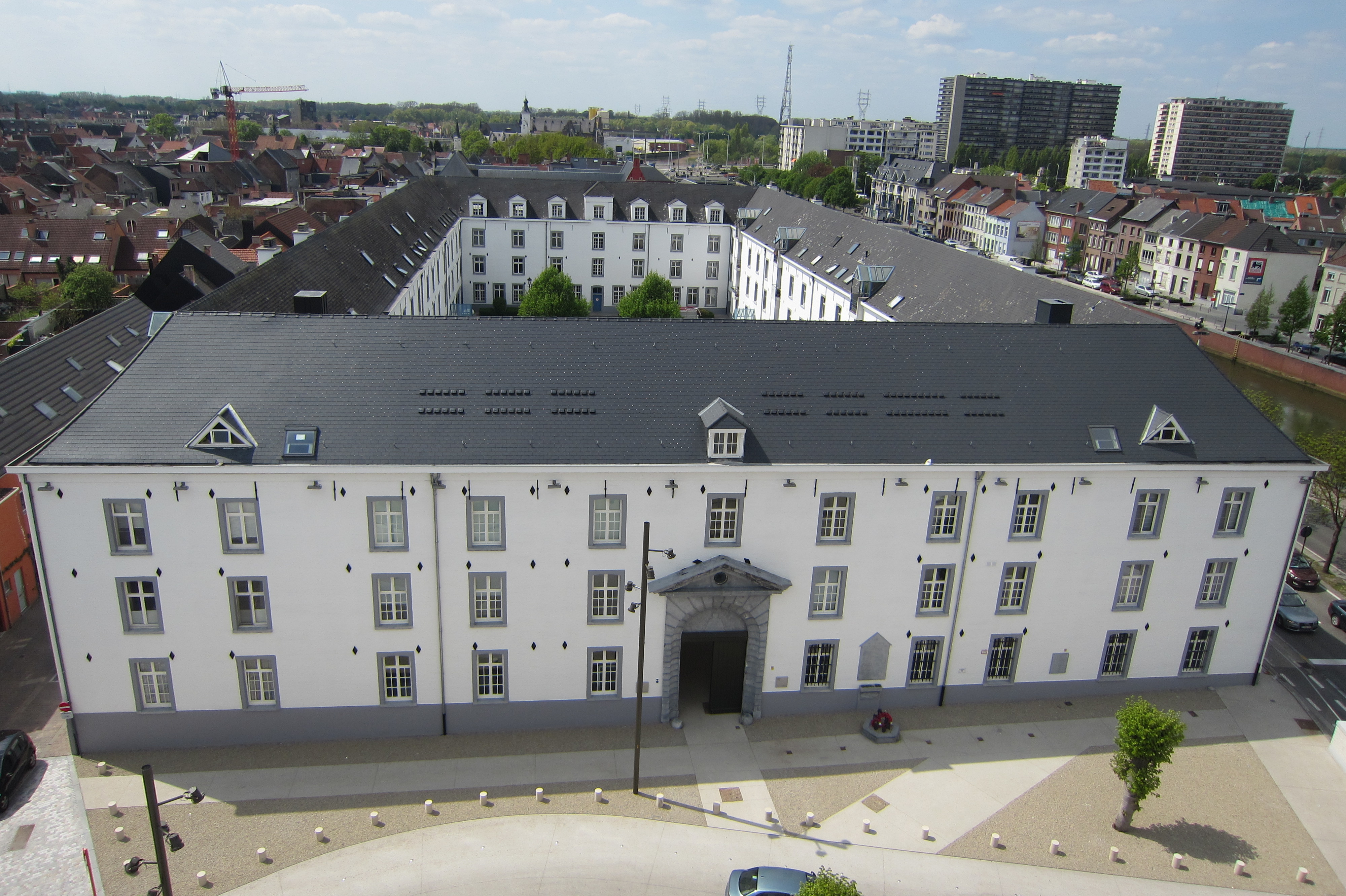
Mechelen Transit Camp
On April 19, 1943, three young resistance fighters armed with a single pistol and a storm lantern stopped a train near Boortmeerbeek. Transport 20 was carrying 1,404 Jews from Mechelen to Auschwitz. In the chaos that followed, 231 prisoners escaped from the cattle cars, though 26 were shot by guards and 90 later recaptured. It remains the only recorded armed attack on a Holocaust deportation train in all of occupied Europe, and it began here, at this three-story former army barracks that the Nazis transformed into Belgium's sole transit camp.
The Machinery of Deportation
The Dossin Barracks became operational in July 1942, its imposing three-story structure completely enclosing a large square courtyard wrapped in barbed wire. Within weeks, the deportations began. The first transport left on August 4, 1942, carrying 998 people. Between August and December of that year, two trains departed every week, each packed with approximately 1,000 prisoners. The camp was managed by the SiPo-SD under the official command of Philipp Schmitt, though SS officer Rudolph Steckmann served as acting commandant. Belgian collaborationist paramilitaries from the Algemeene-SS Vlaanderen assisted the German staff. By the time the last transport rolled east on July 31, 1944, 28 trains had carried 24,916 Jews and 351 Roma to their deaths. Only 1,240 would survive the war.
Acts of Defiance
Resistance took many forms. Some prisoners jumped from moving trains between Mechelen and the German border, especially from Transports 16 and 17, which carried men returning from forced labor on the Atlantic Wall. About 500 prisoners managed to escape across all 28 transports. The attack on Transport 20 near Boortmeerbeek station stands apart. Three resistance fighters, Youra Livchitz, Jean Franklemon, and Robert Maistriau, acted on their own initiative with minimal planning. When they stopped the train with a red lantern, prisoners began forcing open the cattle car doors. The chaos created opportunities for 231 to flee into the darkness. The final transport departed on July 31, 1944, but Allied forces could not intercept it before reaching its destination.
Liberation and Its Echoes
As Allied forces approached in early September 1944, the Germans attempted one last deportation: 1,600 political prisoners and Allied POWs aboard what became known as the Nazi ghost train. Belgian railway workers and resistance fighters thwarted the plan. The train reached Mechelen but was forced back to Brussels, where Swiss and Swedish diplomats negotiated the prisoners' release. On September 3, 1944, the Germans fled the Dossin Barracks, abandoning 527 prisoners who either escaped that night or were freed the following day. Crucially, the deportee lists were left behind at Hasselt during the German retreat and later discovered intact, preserving the names of those who passed through these walls.
From Barracks to Memorial
In 1948, the Belgian Army reclaimed the building for its original military purpose, using it until 1975. Two decades of abandonment followed before the Jewish Museum of Deportation and Resistance opened within its walls in 1996. The Flemish Government expanded the site in 2001, commissioning a new building opposite the original barracks. The renovated institution, now called Kazerne Dossin, Memorial, Museum and Documentation Centre on Holocaust and Human Rights, reopened on November 26, 2012. The original barracks stand as a memorial monument, its courtyard silent where thousands once waited for trains that carried them east, never to return.
From the Air
Located at 51.03N, 4.48E in Mechelen, Belgium. The former barracks and modern museum complex are visible in the city's historic center. Nearest major airport: Brussels Airport (EBBR), approximately 25km northeast. Antwerp Airport (EBAW) lies 20km north. The site sits along the railway line that once carried deportation trains toward Germany.