Medicine Lake Volcano: The Giant Hiding in Plain Sight
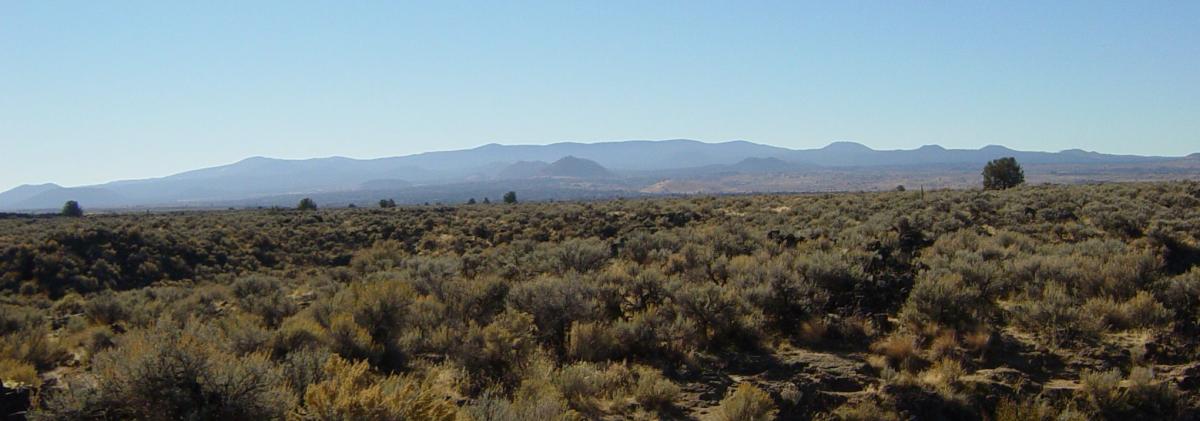
Most people don't know Medicine Lake Volcano exists. It has no classic cone, no steaming crater, no obvious volcanic features. It looks like gentle forested highlands in northeastern California - hills and meadows where nothing seems threatening. But Medicine Lake Volcano is the largest volcano in the Cascades by volume: 900 cubic miles of lava spread so wide it doesn't look volcanic at all. The last eruption was 950 years ago, producing Glass Mountain - a flow of obsidian so pure and sharp that chips were traded across North America by Indigenous peoples who knew good cutting tools when they found them. The volcano is dormant, not dead. Geothermal heat warms the earth. The magma chamber lurks. The gentle hills are a giant in disguise.
The Hidden Giant
Medicine Lake Volcano is a shield volcano - built not from explosive eruptions that create steep cones but from countless flows of fluid lava that spread wide and flat. The volcano covers 900 square miles and contains roughly 900 cubic miles of lava - more than Mount Shasta, its visible neighbor. But because the slopes are gentle (averaging 4-5 degrees), the volcano doesn't look volcanic. From ground level, you see forested hills and a scenic lake in the caldera. Only from altitude does the shape become apparent: a broad dome rising above the surrounding plateau, the central caldera marking where the summit collapsed. The most massive volcano in the range is also the least noticed.
The Glass
Glass Mountain and Little Glass Mountain are rhyolite flows on the volcano's eastern flank - obsidian so pure it glitters in the sun. The most recent eruption, 950 years ago, produced Glass Mountain: black volcanic glass covering 4 square miles to depths of 75 feet. The obsidian is surgical-sharp; Indigenous peoples prized it for tools and weapons. Trade networks carried Medicine Lake obsidian across the continent - it's been found in archaeological sites from Canada to Mexico. The glass flows are otherworldly: no soil, no vegetation, just black and gray glass fractured into angular blocks, reflecting sunlight like shattered mirrors.
The Underground
Medicine Lake Volcano is riddled with lava tubes - underground channels where molten rock once flowed, leaving tunnels when the surface cooled. Lava Beds National Monument, on the volcano's northern flank, contains over 700 lava tubes, more than any other area in North America. Some tubes are decorated with ice formations year-round; others host unique cave ecosystems. The Modoc War of 1872-73 was fought in this landscape - Modoc warriors used the caves for defense, holding off Army troops for months. The tubes are geology and history combined: volcanic plumbing repurposed as fortress.
The Danger
Medicine Lake Volcano is classified as a 'high threat' by the USGS - not because eruption is imminent but because eruption is inevitable on geological timescales, and the volcano sits near highways, powerlines, and communities. The last eruption was only 950 years ago; geologically, that's yesterday. Geothermal features suggest the magma chamber remains active. The most likely eruption scenario would be a rhyolite flow like Glass Mountain - devastating locally but limited in extent. But forecasting specific eruptions remains impossible. The volcano waits, disguised as hills, while humans drive past oblivious.
Visiting Medicine Lake Volcano
Medicine Lake Volcano is located in northeastern California, east of Mount Shasta. Medicine Lake itself is accessible via Forest Road 49 from Highway 89; the lake offers camping, fishing, and swimming in a volcanic caldera. Glass Mountain is reached via Forest Road 43; a trail crosses the obsidian flow, but walking on glass is treacherous - wear boots and expect slow going. Lava Beds National Monument preserves lava tubes on the volcano's north flank; rangers provide flashlights for self-guided cave exploration. Klamath Falls, Oregon is 50 miles north; Redding, California is 120 miles southwest. Summer is the primary visiting season; roads close with snow. The volcano is free to explore but vast - bring maps, water, and realistic expectations.
From the Air
Located at 41.61°N, 121.57°W in northeastern California. From altitude, Medicine Lake Volcano reveals its true shape: a broad shield rising above the Modoc Plateau, the caldera lake visible at the summit. Mount Shasta rises to the west - conical and obvious - while Medicine Lake spreads wide and subtle. Glass Mountain appears as a dark patch on the eastern flank, obsidian reflecting differently than surrounding forest. Lava Beds National Monument occupies the northern slopes. The volcano covers an area roughly 30 by 40 miles; its scale is only apparent from altitude. The Cascade Range extends north toward Oregon. This is volcanic country - and the biggest volcano is the one you can't see from the ground.