Meguro Parasitological Museum: Tokyo's Strangest Date Night
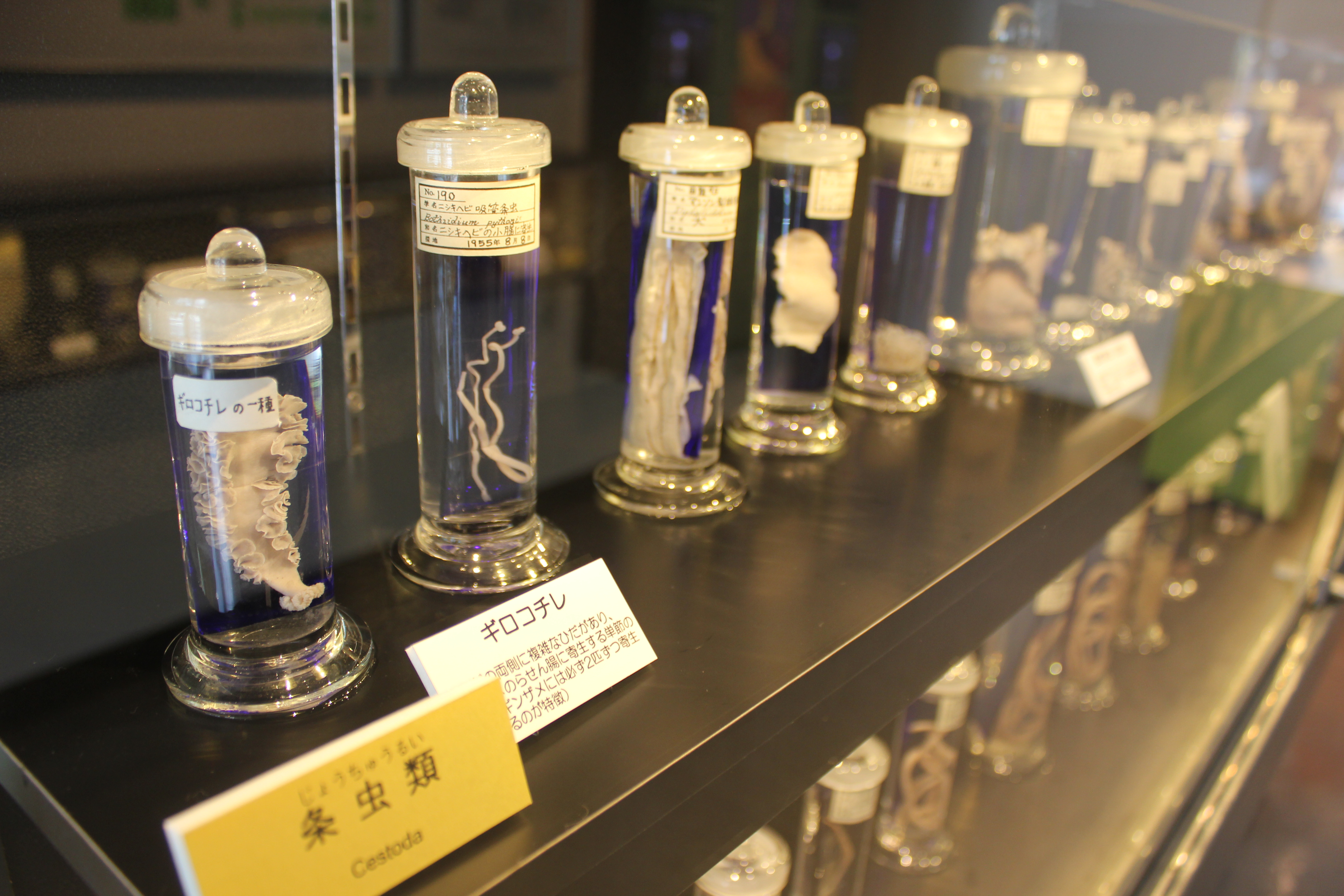
For reasons that mystify even the staff, young couples in Tokyo choose to spend their dates staring at a 29-foot tapeworm. The Meguro Parasitological Museum sits on a quiet residential street in Meguro Ward, a modest two-story building that could pass for a dental clinic. Inside, 300 preserved specimens float in jars of formalin, documenting every variety of organism that has ever made a home inside another living thing. The museum is free. It survives on donations. And it has become one of the most unexpectedly popular attractions in a city that has no shortage of them.
One Doctor's Obsession
Dr. Satoru Kamegai founded the Meguro Parasitological Museum in 1953, funding it entirely from his own pocket. Kamegai ran an internal medicine clinic, but his true passion was parasitology -- the study of organisms that live on or inside other creatures. Postwar Japan was still rebuilding, and parasitic infections remained a serious public health concern. Kamegai believed that education was the best medicine. He began collecting specimens, amassing research papers, and opening his doors to anyone curious enough to walk in. The collection grew over decades: 60,000 parasite specimens filed away in the research library, alongside 50,000 academic papers and 5,000 books on parasitology. When Kamegai died in 2002, Professor Akihiko Uchida took over operations, adding a gift shop to help keep the lights on. The museum has never received government funding.
The Star of the Collection
The ground floor introduces visitors to the diversity of parasitic life -- organisms that have evolved to exploit every ecological niche imaginable. But the real draw waits upstairs. The second floor focuses on parasites in humans: nematodes, trematodes, and tapeworms, displayed alongside detailed explanations of their life cycles and the havoc they cause inside the body. The centerpiece is an 8.8-meter-long Diphyllobothrium nihonkaiense tapeworm, extracted from a patient who had eaten infected raw salmon three months earlier. Stretched out along the wall in its full 29-foot glory, the specimen comes with a rope of the same length so visitors can hold it and grasp just how much parasitic worm was coiled inside a single human being. The effect is visceral. Some visitors recoil. Others laugh nervously. Couples squeeze each other's hands a little tighter.
Parasites You Can Take Home
The gift counter on the second floor is where the museum's quirky reputation truly crystalizes. Alongside the expected museum guidebooks and postcards, visitors can purchase T-shirts printed with parasite illustrations and, most memorably, mobile phone straps containing actual parasites embedded in clear acrylic. The choices are either Nybelinia surmenicola, a tapeworm found in squid, or Oncomelania nosophora, a tiny snail that serves as an intermediate host for schistosomiasis. These miniature specimens-turned-accessories have become collector's items, the kind of souvenir that starts conversations and slightly horrifies friends back home. The gift shop was Professor Uchida's innovation after taking over from Dr. Kamegai, a practical solution to the museum's perpetual funding challenge.
A Fifteen-Minute Walk from Meguro Station
The museum sits in the residential heart of Meguro Ward, a fifteen-minute walk from JR Meguro Station. There is no grand entrance, no flashy signage -- just a small building on a quiet street that happens to contain one of the world's most comprehensive collections of parasitic organisms. The building dates to 1993, when the museum relocated to its current site. It remains a private institution, entirely independent of government support, sustained by donations and gift shop sales. That independence is part of its character. The Meguro Parasitological Museum exists because one doctor believed parasites deserved to be understood, not just feared. Seven decades later, the couples filing through the door -- clutching each other and laughing at the tapeworm -- prove him right in ways he probably never imagined.
From the Air
Located at 35.63°N, 139.71°E in the Meguro Ward of central Tokyo. The museum is not visible from altitude -- it occupies a small building in a dense residential neighborhood -- but Meguro Ward sits between the Meguro River corridor and the elevated terrain of Shirokanedai. Tokyo Haneda International Airport (RJTT) lies approximately 8 nautical miles to the south. Narita International Airport (RJAA) is roughly 35 nautical miles to the east-northeast. The dense urban fabric of central Tokyo dominates the view at any altitude.