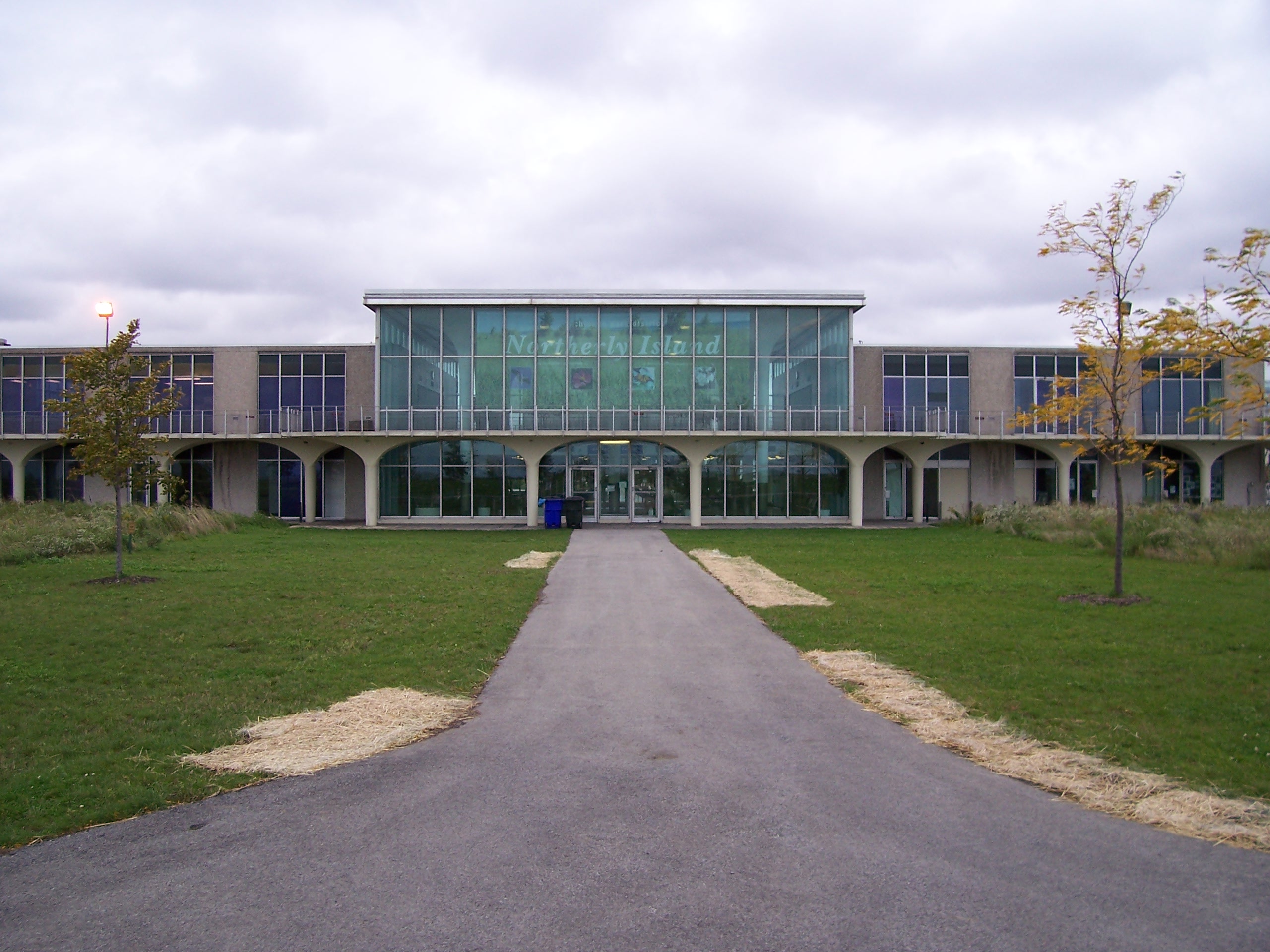
Meigs Field
Millions of virtual pilots learned to fly at Meigs Field. For years, it was the default starting airport in Microsoft Flight Simulator -- the little lakefront strip where you first lifted off the runway, banked over Lake Michigan, and saw the Chicago skyline fill your screen. But on the night of March 30, 2003, the real Meigs Field ceased to exist. Mayor Richard M. Daley ordered city crews onto Northerly Island under cover of darkness to bulldoze large X-shaped gouges into the runway surface. By morning, several aircraft sat stranded on the ground with no way to take off. 'To do this any other way would have been needlessly contentious,' Daley said at a news conference the next day. Chicago Tribune columnist Eric Zorn called it 'the signature act of Richard Daley's 22 years in office.' The busiest single-strip airport in the United States had been killed in a single night.
Built on Burnham's Island
Northerly Island, where Meigs Field stood, is the only lakefront structure actually built from Daniel Burnham's 1909 Plan of Chicago. Burnham's plan envisioned trees and grass for public enjoyment -- it said nothing about airplanes. Construction of the artificial peninsula began in 1922 after Chicagoans approved a bond referendum to pay for the landfill. The island hosted the Century of Progress World's Fair in 1933-34. Meanwhile, aviation was pressing its case: Chicago's first airplane flight had taken place in adjacent Grant Park in 1910, an international aeronautical exhibition followed in 1911, and regular airmail service to Grant Park began in 1918. By 1916, Edward H. Bennett -- Burnham's co-author on the Plan -- had concluded that a lakefront airport serving downtown was inevitable. Named for newspaper publisher and aviation enthusiast Merrill C. Meigs, the airport opened in 1948 and quickly became indispensable.
The Busiest Single Strip
Meigs Field added an air traffic control tower in 1952 and a terminal in 1961. Its proximity to downtown made it the busiest single-runway airport in the country. Commuter airlines connected it to Springfield, Carbondale, Detroit, Indianapolis, Minneapolis, and other cities across the Midwest. In the 1970s, Air Illinois flew 44-seat Hawker Siddeley HS 748 turboprops into Meigs -- the largest aircraft to operate regular scheduled service there. Chicago Helicopter Airways ran 12-seat Sikorsky S-58 helicopters on shuttle routes to O'Hare and Midway from the late 1950s through the late 1960s. President John F. Kennedy used the field: Air Force One would land at a larger airport, and Marine One would ferry him to Meigs to avoid Secret Service motorcades through Chicago's expressways. In October 1992, a Boeing 727 donated by United Airlines made its final landing at Meigs on its way to the Museum of Science and Industry -- notable because the runway was considerably shorter than what a 727 normally required.
The Night of the Bulldozers
The battle over Meigs had been simmering for nearly a decade. In 1994, Daley announced plans to close the airport and build a park. The Chicago Park District, which owned Northerly Island, refused to renew the airport's lease in 1996. The city closed Meigs briefly, but pressure from the state legislature forced it to reopen in February 1997. Then came the night of March 30, 2003. City crews carved the runway into rubble while planes sat parked nearby. Daley cited post-September 11 security concerns, claiming the lakefront airport posed a terrorism risk. Columnists were less charitable: 'He ruined Meigs because he wanted to, because he could,' wrote John Kass in the Tribune. The FAA fined Chicago $33,000 -- the maximum penalty allowed at the time -- for closing a charted instrument-approach airport without the required 30-day notice.
Aftershocks and Legacy
The fallout lingered for years. On July 28, 2003, a pilot flying from Maine to the Experimental Aircraft Association convention in Oshkosh made an emergency landing on the grass beside the demolished runway. Daley accused the pilot of trying to 'embarrass' him; the FAA said the pilot 'did the correct thing.' The Friends of Meigs Field fought in court to reopen the airport, but because Chicago owned the facility and had repaid its federal aviation grants, the courts ruled the city had the right to close it. In the aftermath, Congress passed the 'Meigs Legacy provision,' increasing the maximum daily fine for unauthorized airport closures from $1,100 to $10,000. In September 2006, Chicago dropped its appeals and agreed to pay the $33,000 fine plus repay $1 million in FAA Airport Improvement Program funds it had used to demolish the airfield. Starting in the early 1990s, the local Tuskegee Airmen chapter had been giving free monthly airplane rides and aviation education to Chicago youth at Meigs -- thousands of children took their first flights there before the bulldozers came.
Prairie Grass Where Runways Were
Northerly Island is now a park. Prairie grasses wave where the runway once ran. Strolling paths wind past a pond. The 7,500-seat Huntington Bank Pavilion, a summer concert venue, opened on the site in 2005. A modest beach called 12th Street Beach occupies part of the shoreline. Burnham's vision of trees and grass for public enjoyment finally prevailed -- more than ninety years late. The Friends of Meigs Field proposed a compromise called 'Parks and Planes' that envisioned an aviation museum, a small operating runway, and parkland coexisting on the property, but the idea never gained traction. In Microsoft Flight Simulator, Meigs Field lived on for years after its physical destruction, a ghost airport where virtual pilots still practiced touch-and-goes above a runway that no longer existed on the ground below.
From the Air
Located at 41.860°N, 87.609°W on Northerly Island, an artificial peninsula in Lake Michigan. The former airport site (ICAO: KCGX) is now Northerly Island Park, clearly visible as a green peninsula extending into the lake just south of the Adler Planetarium. No runway remains. McCormick Place sits immediately to the south. Nearest airports: Chicago Midway (KMDW, 8 miles southwest) and Chicago O'Hare (KORD, 16 miles northwest). The Huntington Bank Pavilion concert shell is visible on the former runway site. Best viewed at 1,500-3,000 feet AGL where the full peninsula and lakefront context are visible.