Meiji Jingu Stadium: Where Babe Ruth Nearly Started a War
On the morning of February 22, 1935, a man named Katsusuke Nagasaki waited outside the offices of newspaper magnate Matsutaro Shoriki. When Shoriki arrived for work, Nagasaki pulled a short samurai sword from beneath his coat and swung for his neck. The blade missed the killing blow but carved a deep gash across Shoriki's head. His crime, in the eyes of the ultra-nationalist War Gods Society: he had allowed Babe Ruth and a team of American baseball players to set foot on the sacred grounds of Meiji Jingu Stadium, defiling the memory of Emperor Meiji. Shoriki survived. Baseball survived. And the stadium where Ruth knocked fly balls into the Tokyo sky still stands today, nearly a century later, its bleachers full of fans waving miniature umbrellas.
Sacred Ground, Secular Game
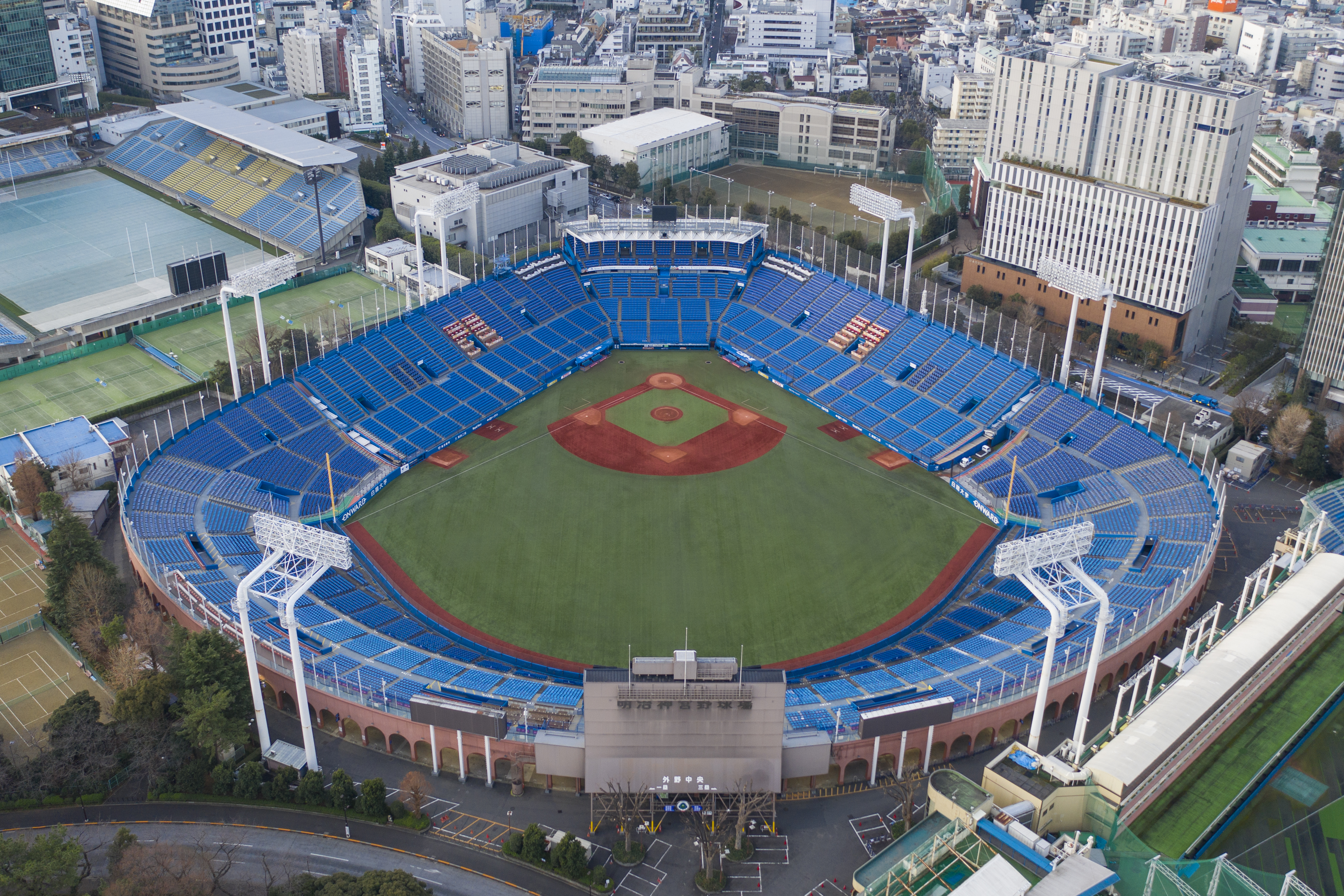
Meiji Jingu Stadium opened in 1926 on land belonging to the Meiji Shrine, the Shinto complex dedicated to the deified Emperor Meiji and his consort, Empress Shoken. The stadium was built to host amateur athletics, but baseball quickly claimed it. By the early 1930s, the facility had become a centerpiece of Japanese college baseball, hosting the prestigious Tokyo Big6 Baseball League and the Tohto University Baseball League. The stadium's connection to the shrine gave it a particular gravity. This was not just any sports venue -- it sat on consecrated ground, and the games played there carried an unspoken reverence. That reverence made what happened next all the more explosive.
The Sultan of Swat in Tokyo
In 1934, Matsutaro Shoriki -- newspaper owner, media mogul, and the man history calls the father of Japanese professional baseball -- organized a 22-game exhibition tour of Japan featuring a roster of American legends. Babe Ruth, Lou Gehrig, Jimmie Foxx, and other stars barnstormed across the country, playing before enormous crowds. They played at Meiji Jingu Stadium, on the shrine's sacred land. Ultra-nationalists were outraged. To them, allowing foreign athletes to compete on grounds honoring the emperor was a desecration. The assassination attempt on Shoriki three months later left him with a 16-inch wound but did nothing to slow the spread of professional baseball in Japan. Shoriki went on to found the Yomiuri Giants, and the sport he nearly died for became the national pastime. Today, Meiji Jingu Stadium is one of only four professional stadiums in the world where Ruth played that are still standing, alongside Wrigley Field, Fenway Park, and Koshien Stadium.
Umbrellas in the Bleachers
The Tokyo Yakult Swallows moved into Meiji Jingu Stadium in 1964, leaving overcrowded Korakuen Stadium where they competed for space with the Yomiuri Giants and the Toei Flyers. The Swallows brought with them one of the most distinctive fan traditions in all of professional sports. Every time the Swallows score a run, thousands of fans in the bleachers pull out miniature plastic umbrellas -- green, blue, yellow, every color imaginable -- and wave them overhead while singing Tokyo Ondo and shouting "Banzai!" The tradition reportedly started when a fan suggested that everyone bring something from home to cheer with, and the umbrella stuck. The ritual repeats heading into the home half of the seventh inning, filling the aging open-air stadium with a sea of bobbing color. The stadium holds 37,933 spectators, and on a good night, every last umbrella is in the air.
A Century's Twilight
The stadium also served as a venue during the 1964 Summer Olympics, hosting an exhibition baseball game in which an American college team defeated a Japanese amateur squad 6-2. Beyond sports, Meiji Jingu Stadium has embedded itself in Japanese culture. Haruki Murakami featured it in his 2020 short story collection First Person Singular, and the pop group Nogizaka46 considers it their home field, performing there every summer since 2014. It appears regularly in baseball manga and anime, from Ace of Diamond to Gurazeni. But the stadium's days in its current form are numbered. In 2019, developers agreed to demolish Meiji Jingu Stadium and rebuild it on the adjacent site of the Chichibunomiya Rugby Stadium, which will itself be relocated. The new stadium will have a roof over the field and stands. Nearly a century after it opened on shrine land, the second-oldest baseball stadium in Japan is preparing for its final innings -- though the umbrellas, one suspects, will follow wherever the Swallows go.
From the Air
Located at 35.67°N, 139.72°E in the Meiji Jingu Gaien district of Shinjuku, Tokyo. The stadium sits in a cluster of sports facilities adjacent to the wooded expanse of Meiji Shrine's inner gardens and near the new Japan National Stadium. From altitude, the open-air oval of the stadium is visible among the surrounding tree canopy and urban development. Tokyo Haneda International Airport (RJTT) lies approximately 10 nautical miles to the south-southwest. Narita International Airport (RJAA) is roughly 37 nautical miles east-northeast. The green belt of Meiji Shrine and surrounding parkland provides a distinctive visual break in Tokyo's dense urban landscape.