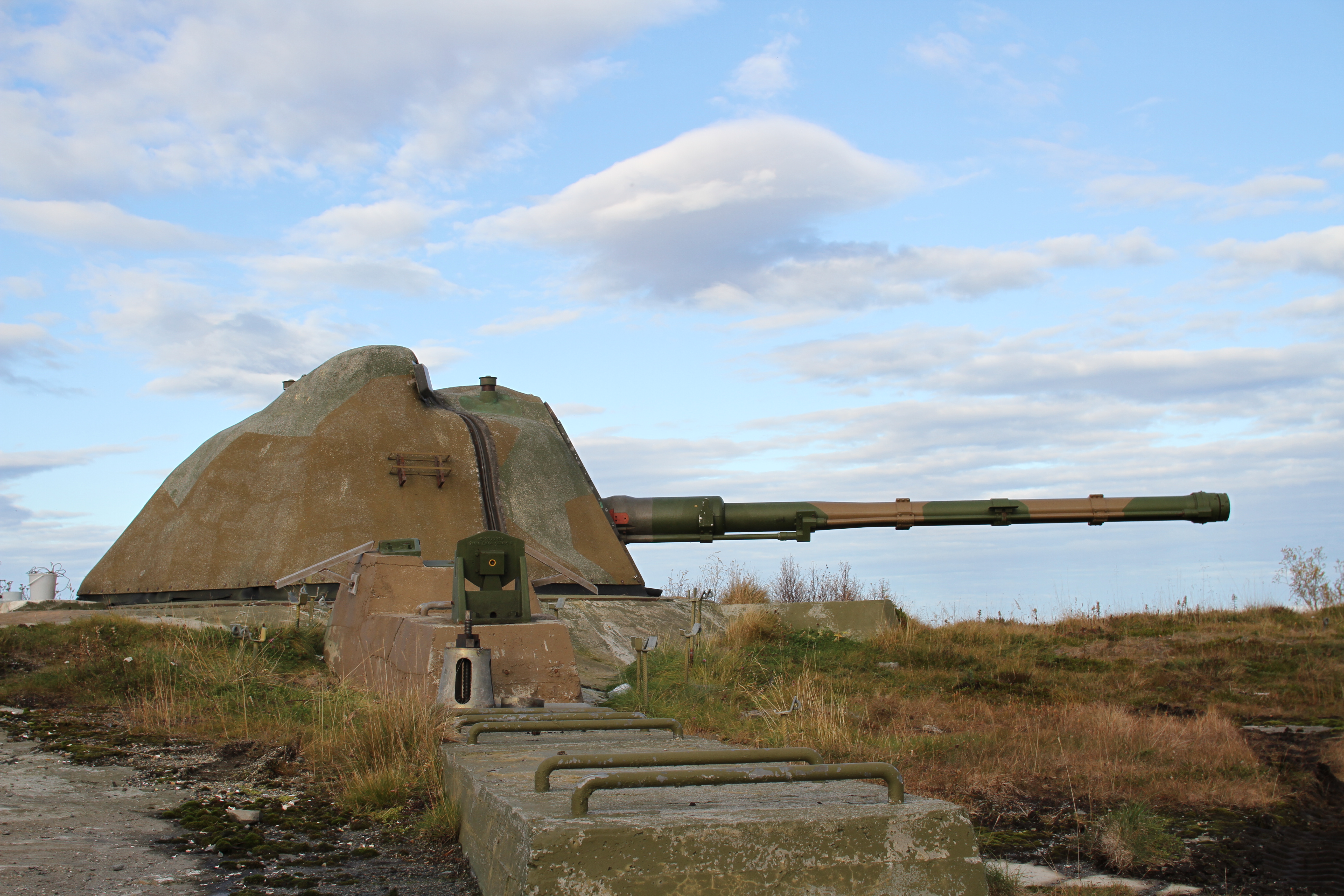
Meløyvær Fortress
There are still cups in the kitchen cabinets. Bedlinen remains folded on the bunks. Deep inside the rock of Krøttøya, a small island in Arctic Norway's Troms region, a fortress built to stop a Soviet naval assault sits exactly as its garrison left it in 2002 -- as if the Cold War merely paused rather than ended. Meløyvær Fortress was the last of Norway's 120mm Bofors gun installations, completed in the late 1980s just as the geopolitical order it was designed to defend began unraveling. That timing makes it both a military relic and a time capsule, perfectly preserved because it was so new when it was abandoned.
Guardian of the Andfjorden
The fortress exists because of geography. The Andfjorden, the wide channel separating the islands of Andøya and Senja from the Norwegian mainland, was one of the key maritime approaches to northern Norway. Any Soviet naval force pushing south along the Norwegian coast would have had to pass through it. Meløyvær replaced three older coastal fortresses that had guarded this passage, consolidating their mission into a single, modern installation on Krøttøya. Corresponding coastal artillery positions were maintained at Nes fortress in Lødingen Municipality and at Kråkvåg in the Trondheimsfjord, creating a chain of defensive positions along Norway's coastline. The fortress was part of NATO's northern flank strategy, a reminder that the Cold War's front lines extended far beyond the Iron Curtain into the Arctic waters above the 69th parallel.
Built for a War That Never Came
Construction began at the end of the 1980s, producing a facility carved 20 meters deep into solid rock. The engineers designed it to be entirely self-contained: its own water supply, its own electrical generators, its own diesel fuel reserves. In the event of war, the garrison could seal the blast doors and operate independently while Soviet warships attempted to force the Andfjorden. Three 120mm Bofors guns -- designated A, B, and C -- formed the fortress's teeth. Each could fire 25 rounds per minute at targets up to 27 kilometers away, a rate and range that would have made any surface vessel's passage through the fjord extremely hazardous. Gun A, mounted on Krøttøya itself, remains completely intact alongside its control centre, designated D. Guns B and C survive only as external emplacements, their inner workings stripped away.
A Time Capsule in Rock
What makes Meløyvær remarkable is not the military hardware but the human details. Because the fortress was so recently built when it was decommissioned, everything inside remains operational. Walk through the entrance corridor and the fluorescent lights still work. The main operations room, where controllers would have directed fire against incoming vessels, still has its consoles in place. The kitchen still has its utensils. The bunk rooms still have their bedding. A military-issue 1990s card telephone hangs on the wall, waiting for a call that will never come. Even the climate is monitored to prevent deterioration of the equipment, as though someone still expects the garrison to return. In 2014, the fortress was designated a protected monument, the first Norwegian Cold War fortification to receive such recognition. Today, Sør-Troms Museum offers guided tours through this underground world, letting visitors step into a perfectly preserved slice of late Cold War military life.
The Last of Its Kind
Meløyvær was the final chapter in a long tradition of Norwegian coastal fortresses. For centuries, Norway defended its sprawling coastline with gun emplacements positioned at strategic narrows and harbor approaches. The 120mm Bofors gun represented the ultimate evolution of this concept: rapid-firing, long-range, capable of engaging fast-moving modern warships. But by the time Meløyvær's guns were ready to fire, the threat they were designed to counter was dissolving. The Berlin Wall fell in 1989. The Soviet Union collapsed in 1991. The fortress soldiered on for another decade, but its closure in 2002 acknowledged a reality that had been obvious for years. No Soviet fleet would ever attempt the Andfjorden. The guns that could have shredded a destroyer at 27 kilometers never fired in anger. Meløyvær stands as both a monument to vigilance and a testament to the strange luck of preparedness that goes unused.
From the Air
Located at 69.06°N, 16.54°E on the island of Krøttøya in Troms, northern Norway. The fortress is embedded in rock and not visible from altitude, but Krøttøya itself is identifiable in the Andfjorden between Andøya and Senja. Fly at 2,000-5,000 feet for the best view of the island and surrounding fjord geography. Nearest airports include Harstad/Narvik Airport, Evenes (ENEV) approximately 50 km south, and Bardufoss (ENDU) further inland. Weather in this Arctic region is highly variable, with frequent low clouds and precipitation.