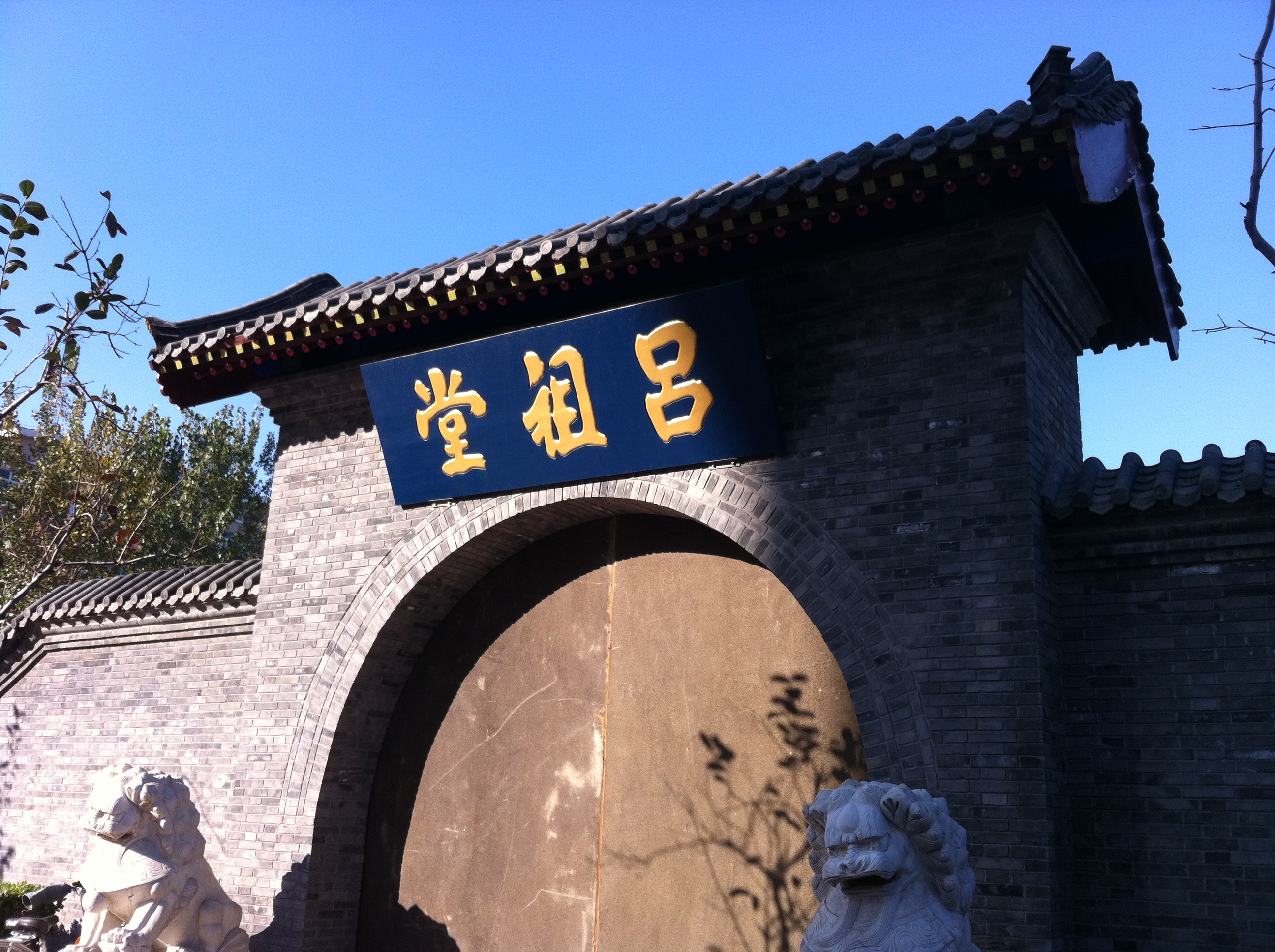
Memorial Hall of the Boxer Uprising
They burned charms at the altar, mixed the ashes into strong wine, and drank. The Boxer fighters who gathered at this Taoist temple on Ruyi'an Street believed the ritual could summon gods and ancient heroes into their bodies, making them immune to the bullets of the Eight-Nation Alliance. The women of the Red Lanterns supposedly stared at the setting sun to gain the power to invoke lightning. These were acts of desperation dressed as mysticism, performed by people who had watched foreign powers carve their country into concessions. The Memorial Hall of the Boxer Uprising, the only museum in China dedicated to the 1900 Boxer Rebellion, preserves this story in the very building where some of it unfolded.
The Temple Before the Uprising
Long before the Boxers arrived, this building served a quieter spiritual purpose. Constructed in 1719 as a Taoist temple, it was dedicated to the immortal Lu Dongbin, one of the Eight Immortals of Chinese mythology. During the Kangxi period of the Qing dynasty, the temple was rebuilt and given the name Luzutang. For nearly two centuries, it was a place of orthodox Taoist worship -- incense, offerings, and prayers directed at a celestial figure associated with alchemy, swordsmanship, and scholarly wisdom. Nothing about the temple's early history suggested it would become the stage for one of the most violent anti-foreign movements in Chinese history.
When the Boxers Came
In 1900, the Boxer movement swept through Tianjin with a fury born of decades of foreign encroachment. The Luzutang became a gathering point for Boxer leaders in the city. The altar that had been used for Taoist rituals was repurposed for the Boxers' own ceremonies, which blended folk religion, martial arts, and anti-foreign rage into something the Qing court initially tolerated and then fatally encouraged. The rituals performed here were part theater, part prayer, and part recruitment tool -- convincing followers that spiritual possession could overcome technological superiority. The belief was tested against Maxim guns and modern artillery, and it failed catastrophically, leading to the siege of the foreign legations in Beijing and the military intervention of eight nations.
The Red Lanterns at Sunset
Among the most striking details preserved in the museum's narrative is the story of the Red Lanterns, a group of young women and girls associated with the Boxer movement. They were said to stare directly at the setting sun as a spiritual practice, believing it would grant them the ability to summon lightning against the foreign armies. The Red Lanterns represented something unusual in the patriarchal structure of late Qing China: women organized into a visible, active role within a mass movement. Their story is complex, sitting at the intersection of genuine resistance, folk belief, and the exploitation of young people's idealism in a cause that was already doomed.
A Museum of Difficult Memory
In 1985, the Luzutang was restored and reopened as the Tianjin Boxer Rebellion Memorial Hall. Today, it stands at No. 18 Hejia Lane in Tianjin's Hongqiao District, displaying exhibitions on the rebellion's history, its leaders, and its organizational structure. The museum occupies an awkward but honest space in Chinese historical memory. The Boxer Rebellion was simultaneously an expression of legitimate grievance against foreign imperialism and a catastrophe that invited devastating military retaliation, resulted in the punitive Boxer Protocol, and accelerated the Qing dynasty's collapse. The temple-turned-museum holds both truths without trying to reconcile them, offering visitors the artifacts and the questions in equal measure.
From the Air
Located at 39.15°N, 117.15°E in Tianjin's Hongqiao District, west of the Hai River. The memorial hall occupies a traditional Taoist temple compound not easily distinguished from altitude. The surrounding area is dense urban Tianjin. Nearest airport: Tianjin Binhai International (ZBTJ), approximately 18 km east. Beijing Capital International (ZBAA) is about 120 km northwest. The temple compound is modest in scale; look for traditional Chinese roof forms amid the modern urban grid west of the old city center.