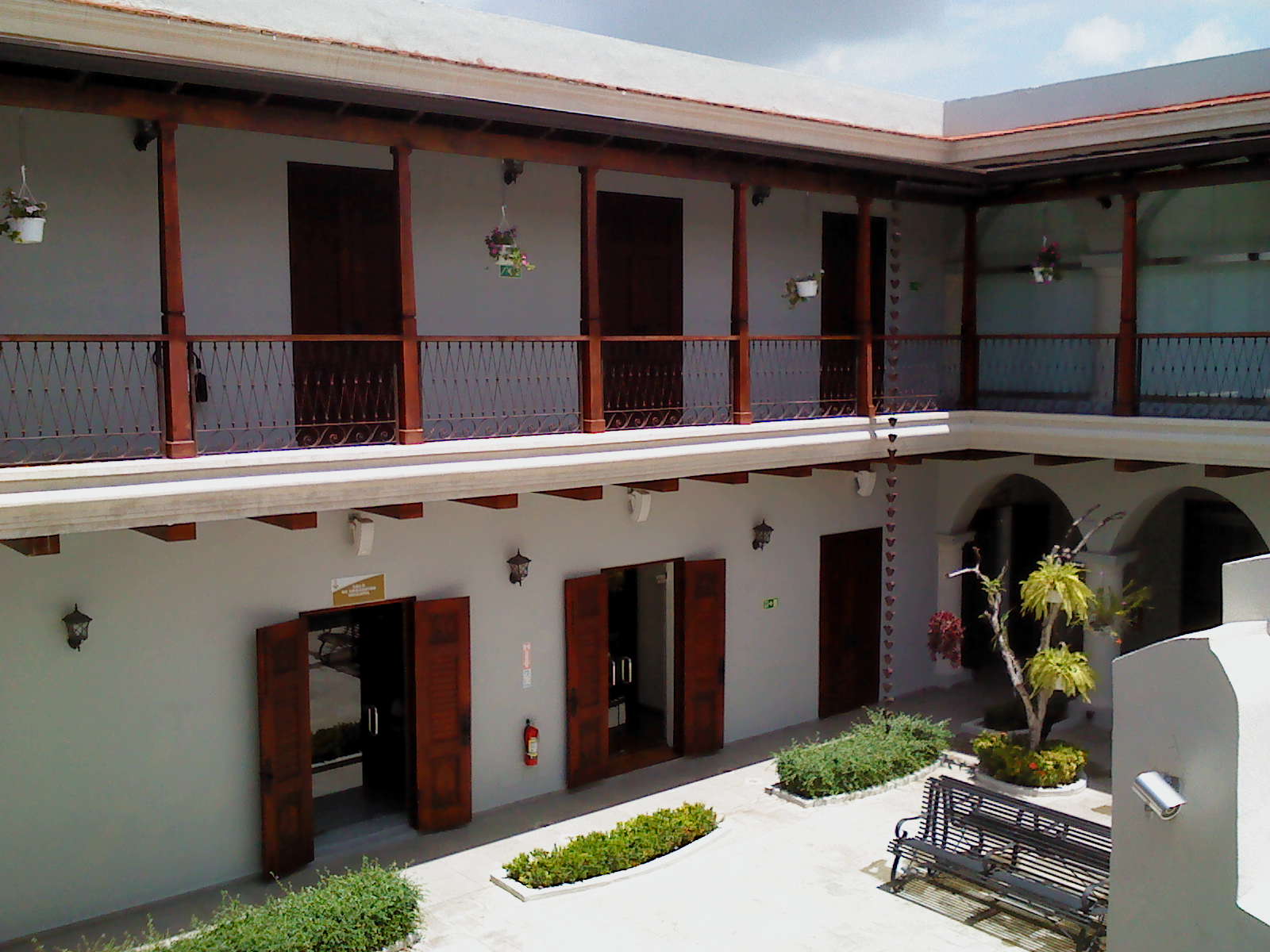
Memorial Museum of Dominican Resistance
Angela Ricart had a question no mother should have to ask: who would look after her son's things after she was gone? Her son, Tony Mota Ricart, had been a freedom fighter during some of the darkest years of Dominican history, and the objects he left behind - the tangible evidence of his patriotism and sacrifice - sat in her home with no guarantee they would survive her. In 1995, she shared this worry with a friend, Cristina Gautier, who carried it to her granddaughter Luisa De Pena, then director of the Columbus Lighthouse. That conversation between a grieving mother and a concerned friend became the seed of the Memorial Museum of Dominican Resistance, a museum that would take sixteen years to open and would eventually earn recognition from UNESCO as part of the Memory of the World Programme.
Thirty-One Years in the Dark
The museum's permanent exhibition traces Dominican repression back to 1916, when United States Marines occupied the country. That occupation created the conditions for Rafael Trujillo's rise to power in 1930 - a dictatorship that would last thirty-one years and reshape every corner of Dominican life. Trujillo's regime built an elaborate propaganda machine, embedding myths about the dictator's benevolence so deeply into the national consciousness that the museum's exhibition begins by dismantling them one by one. After Trujillo's assassination in 1961, the country did not find immediate relief. Joaquin Balaguer, who had served under Trujillo, assumed power and maintained authoritarian control through much of the following two decades. The Balaguer era did not end until 1978. The museum covers both dictatorships, making clear that the resistance was not a single heroic moment but a sustained struggle spanning generations.
Sixteen Years of Knocking on Doors
Luisa De Pena heard the same objection repeatedly: the Museum of History and Geography already existed, and commemorative monuments dotted the country. Why build another museum? She was not deterred. With Angela Ricart's support, she approached the Manolo Tavarez Justo Foundation, named for the guerrilla leader killed in 1963, and found a warm reception. The Mirabal Sisters Foundation joined through Noris Gonzalez Mirabal, connecting the project to the legacy of the three sisters whose murder by Trujillo's agents in 1960 became an international symbol of resistance. In the summer of 2000, President Leonel Fernandez provided a building on Isabel La Catolica street. Then came setbacks - litigation over the property, a fractured partnership with the Testimony Foundation, the loss of the original premises. A new location on Calle Arzobispo Nouel, donated by the VICINI Group, finally gave the project a permanent home. The museum opened in 2011.
What the Walls Hold
The Memorial Museum does not rely on glass cases and plaques alone. Its permanent exhibition uses holograms and animatronics alongside traditional displays, deploying technology to make the past visceral rather than distant. Audiovisual material supplements physical objects - the personal belongings of resistance fighters, documents from the era, photographs that capture both the machinery of repression and the faces of those who defied it. The chronological journey through the exhibition moves from the US occupation through the Trujillo years and into the Balaguer period, inviting visitors to understand the resistance not as an abstraction but as a series of choices made by real people at enormous personal cost. For four years before the museum opened, its founders collected information, interviewed survivors, and tracked down eyewitnesses. Historians including Roberto Cassa, president of the Dominican Academy of History, contributed their expertise. In 2005, a grant from the Ambassador's Fund for Cultural Preservation funded the digitization of the collection.
Memory as a Living Thing
In July 2009, UNESCO inscribed the museum's collection into the Memory of the World Programme, a designation that places it alongside the Gutenberg Bible and the Bayeux Tapestry as cultural heritage worth protecting for all humanity. The recognition was not automatic - the 2005 digitization grant had opened the door by making the collection accessible in formats UNESCO could evaluate. The museum sits at 210 Arzobispo Nouel Street in Santo Domingo's Colonial City, a UNESCO World Heritage Site in its own right, surrounded by architecture from the first decades of European colonization. There is something pointed about this location: a museum dedicated to the victims of 20th-century dictatorships housed within the oldest colonial city in the Americas, where the roots of power and resistance run five centuries deep. The museum's mission is not only to honor the dead but to educate the living. It exists so that new generations understand what it cost to win the freedoms they now exercise without thinking.
From the Air
Located at 18.472°N, 69.888°W in the Colonial City (Ciudad Colonial) of Santo Domingo, Dominican Republic. The museum sits on Arzobispo Nouel Street within the dense colonial grid, a UNESCO World Heritage Site bounded by the Ozama River to the east and old city walls. Not individually identifiable from altitude, but the Colonial City's tight street grid and historic fortifications are visible at 2,000-3,000 feet AGL. Nearest major airport is Las Americas International Airport (MDSD/SDQ), approximately 25 km east. La Isabela International Airport (MDJB/JBQ) is roughly 15 km north. Tropical maritime climate with frequent afternoon convective activity.