Memorial Museum Passchendaele 1917
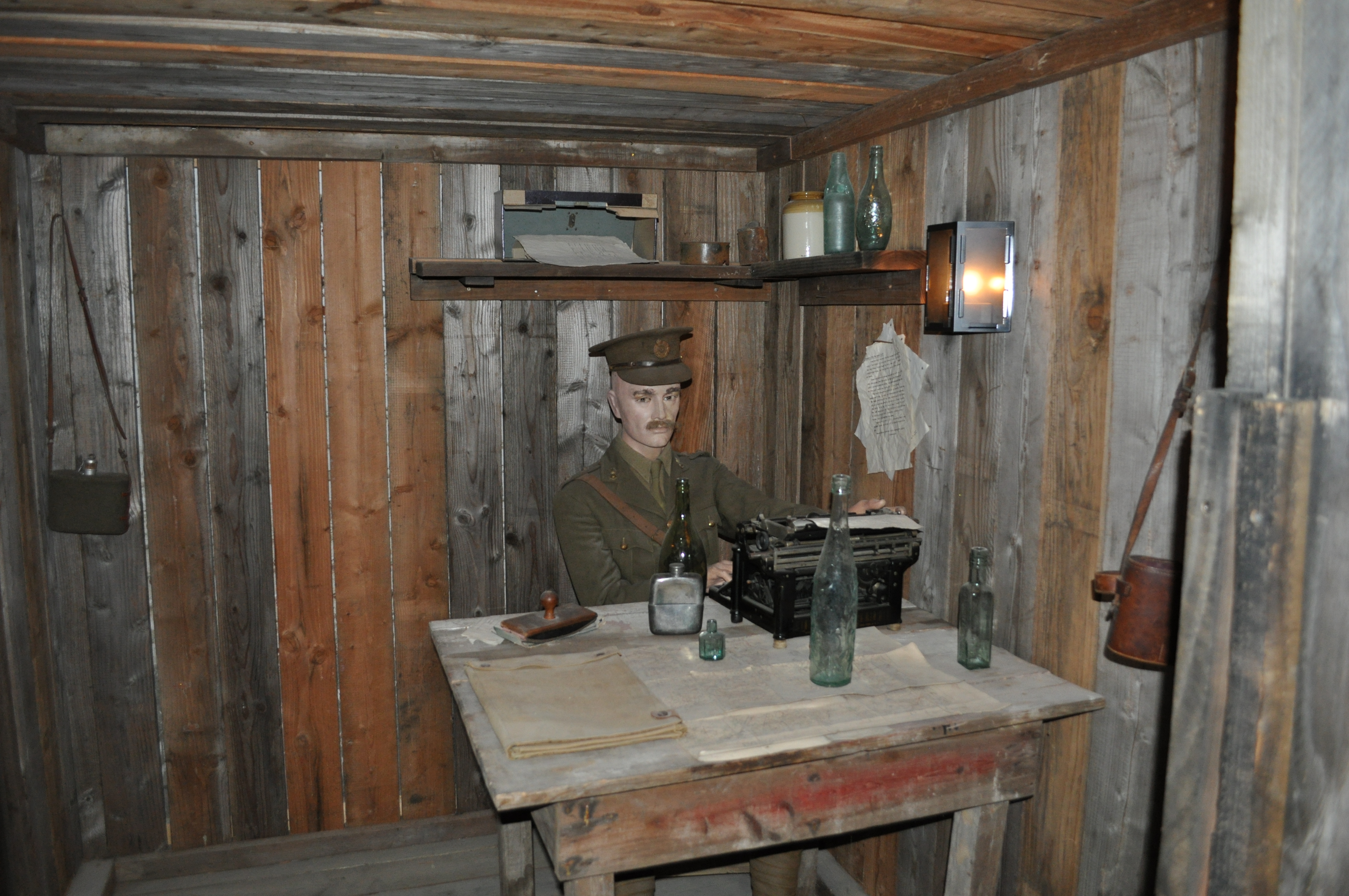
You enter the museum at ground level, walk through the upstairs rooms of a small Flemish château with its lawn and pond, and then you go down. The reconstructed dugout beneath the Passchendaele Museum is built to the dimensions of the real ones the British 171st Tunnelling Company hacked under the ruined church at Zonnebeke in 1917: a communication centre, a first-aid post, a brigade headquarters, beds for soldiers. The wood is rough. The ceiling is low. The air, by design, is close. Inside a hundred days of fighting in this small corner of West Flanders, almost half a million men were killed or wounded for the gain of about eight kilometres of ground. The museum sits on that ground. It is the simplest argument the building can make.
The Château That Was Not There
There was a château at Zonnebeke before the war, with an Augustinian abbey alongside it, and a village of farmers between. By 1918 there was none of it. The current building, on the edge of the old park, dates from the 1920s and houses the museum in three storeys of restored rooms. The first exhibition opened here in 1987, a single show about the Third Battle of Ypres put together with visual material loaned from the Imperial War Museum in London. It drew 9,000 visitors, and a permanent museum followed in 1989. In 2002 it was rebuilt and expanded; the new museum opened on Anzac Day 2004. Until 2022 it carried the longer name Memorial Museum Passchendaele 1917. Today it is simply the Passchendaele Museum, but the dates have not changed.
Going Under
Most of what is left of the Western Front is invisible from the surface. The trench systems were filled in and ploughed back into pasture after 1918; the pillboxes were broken up; the dugouts collapsed or were sealed. The museum's underground galleries are a deliberate reconstruction of what survives only as engineers' diagrams and survivor sketches. You move through tunnels timbered exactly as the 171st Tunnelling Company timbered them. There are bunks where men slept while shells worked overhead. There is a brigade signaller's bench with field telephones, a stretcher-bearer's first-aid post, an officer's desk with documents. None of the original dugouts in this sector survived intact. The reconstruction is the way through to them.
Objects, Not Statistics
Upstairs, the collections work the same way. The Hill 60 collection. The Vieux-Berquin collection. The Fierens collection. The personal collection. These are donations from local farmers who turned up British helmets, German bayonets, and unexploded shells in their fields year after year, and from families on three continents who sent in a grandfather's pay-book, a sister's letters, a young man's photograph. The curators have built the displays around the specific rather than the general. The number 450,000 is in the room, in writing on the wall, but the eye lands on a single shaving mirror, a single rosary, a single notebook in German with the pages stuck together. Helen Pollock's sculpture Falls the Shadow stands among them: spectral figures of mud-coloured clay.
A Walking Museum
The trail through the château grounds runs about 600 metres, and the museum is built on the idea that you should not stop there. From the front door it is less than three kilometres to Polygon Wood, where the Australians fought in September 1917, and less than three kilometres in another direction to Tyne Cot, the largest Commonwealth war cemetery in the world. The Passchendaele Research Centre, opened in 2014 in the restored vicarage next door, houses the Names List Project: an ongoing attempt to record every individual who died in the Westhoek as a result of the war, on either side. Researchers and visiting families work in the reading room. The museum's view is that no monument is finished while a name is still missing.
What the Ground Remembers
The château grounds were a German strongpoint in 1917, then a Canadian one, then a ploughed wreckage. The pond reflects sky now and herons stand in it. Children run on the lawn. The 171st Tunnelling Company's Zonnebeke Church Dugout, somewhere under the village a few hundred metres away, still exists, sealed and below the modern water table. Local archaeologists have surveyed it but not opened it. The reconstructed dugout in the museum is as close as anyone is meant to get. After you climb the wooden steps back into daylight, the lawn looks different. That is the museum's point.
From the Air
Located at 50.87 degrees north, 2.99 degrees east, in the village of Zonnebeke in West Flanders, Belgium. The museum sits on the edge of the old château park, three kilometres east of Ypres and roughly equidistant from Polygon Wood and Tyne Cot Cemetery. Recommended viewing altitude 1,500 to 2,500 feet to see the entire ridge between Ypres and Passchendaele. Nearest airports are Ostend-Bruges (EBOS) about 35 nautical miles northwest, Kortrijk-Wevelgem (EBKT) about 15 nautical miles south, and Lille (LFQQ) across the French border. The countryside here is flat farmland with woodlots; only the very low ridge running through Passchendaele lifts above 50 metres elevation.