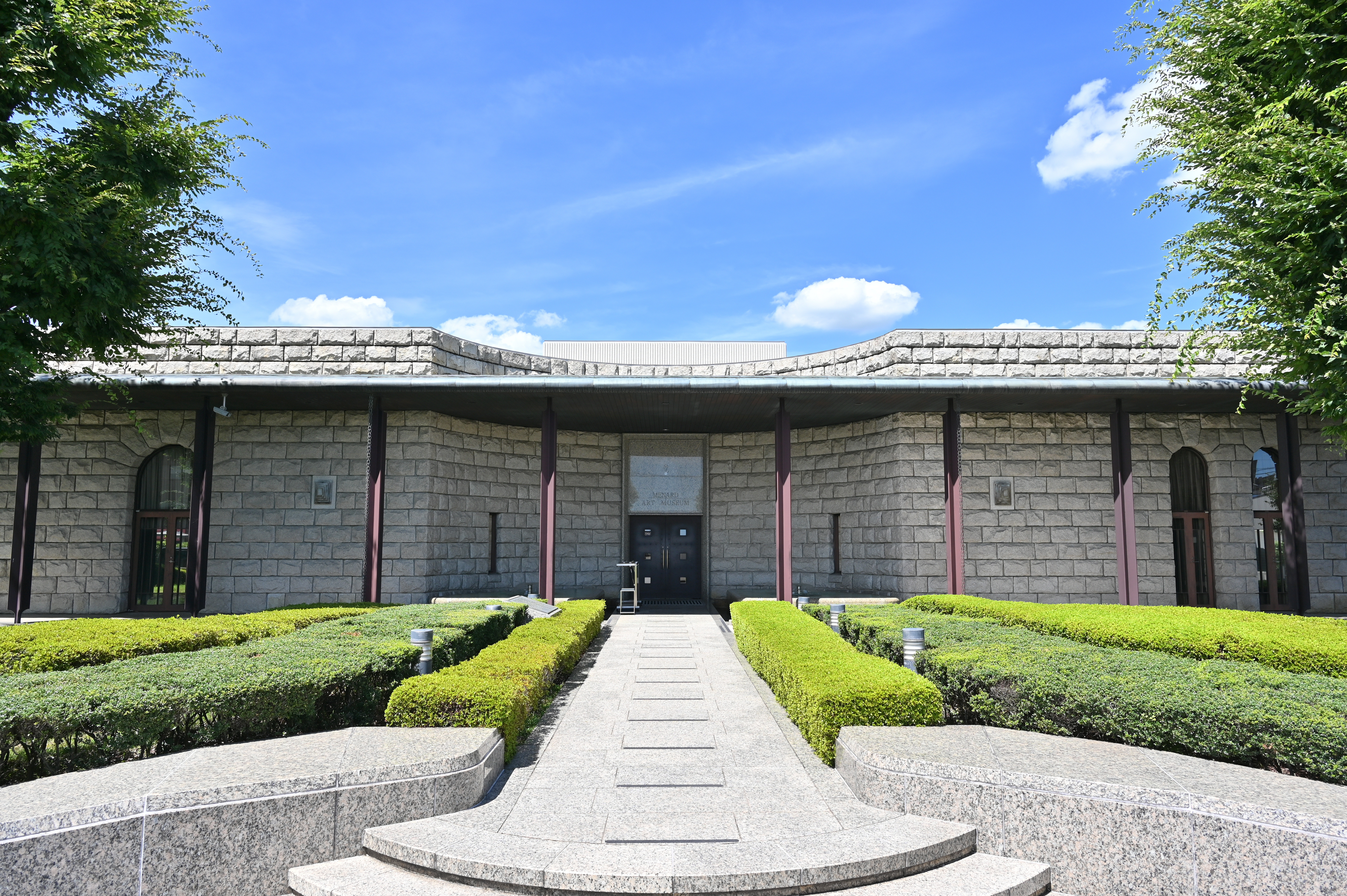
Menard Art Museum
A Van Gogh hangs in a small city best known for its factories and a nearby Buddhist temple shaped like a breast. The Menard Art Museum in Komaki, Aichi Prefecture, opened in 1987, funded by the founders of Nippon Menard Cosmetic Co., one of Japan's major beauty companies. The juxtaposition is jarring on paper but perfectly natural in practice: Japan has a long tradition of corporate art patronage, and the Menard collection ranks among the most surprising private museums in the country, tucking masterworks of European and Japanese painting into an industrial suburb north of Nagoya.
From Face Cream to Fine Art
Nippon Menard Cosmetic Co. built its fortune on skincare products, establishing itself as a household name across Japan. The company's founders channeled that wealth into art acquisition with a collector's eye that ranged across centuries and continents. The centerpiece of the Western collection is Edouard Manet's 'Portrait of Jeanne Martin in Hat Adorned with Rose,' painted in 1881, two years before the artist's death. Beside it hangs Vincent van Gogh's 'Man in a Field, or Evening, the End of the Day,' an 1889 work completed during his stay at the asylum in Saint-Remy-de-Provence, based on a composition by Jean-Francois Millet. These are not minor works by major names; they are significant canvases that would anchor galleries in any world capital. Instead, they reside in Komaki, a city of roughly 150,000 people on the Nobi Plain.
Two Currents of Japanese Painting
The museum's deeper strength lies in its Japanese holdings, which span the 17th through 20th centuries and trace the two great currents of modern Japanese art. The Nihonga collection, works in the traditional Japanese style, includes paintings by Tawaraya Sotatsu and Ogata Korin, masters of the Rinpa school whose decorative brilliance influenced generations. The collection moves forward through Yokoyama Taikan, Uemura Shoen, and Higashiyama Kaii, artists who carried Nihonga into the modern era while preserving its distinctive materials and sensibility. Alongside them, the Yoga collection documents Japanese artists who absorbed and transformed Western painting techniques. Kishida Ryusei's intense realism, Saeki Yuzo's Parisian street scenes, and Umehara Ryuzaburo's bold color all testify to the creative tension between Japanese tradition and European influence that defined Japanese art from the Meiji period onward.
Unexpected Treasures in Unlikely Places
Japan is studded with corporate art museums, but few match the Menard's range. The decision to locate the collection in Komaki rather than in central Nagoya or Tokyo was deliberate: the cosmetics company is headquartered nearby, and the museum serves as a cultural anchor for the local community as much as a destination for art tourists. The building itself is understated, letting the collection speak. Rotating exhibitions draw from the permanent holdings, meaning each visit surfaces different combinations of European Impressionism, Rinpa-school gold leaf, and 20th-century Japanese abstraction. For a visitor arriving from the bustle of Nagoya, barely twenty minutes away by train, the experience of standing before a Van Gogh in this quiet suburban setting carries a particular charge, a reminder that great art does not always cluster in expected places.
A Collection That Bridges Worlds
What makes the Menard Art Museum more than a curiosity is the dialogue it stages between its holdings. A viewer can walk from Manet's light-drenched portrait to Uemura Shoen's luminous depictions of women in kimono and feel the shared obsession with capturing how light falls on fabric, skin, and the human face. The Yoga painters in the collection were themselves navigating exactly this bridge, studying in Paris and returning to Japan to forge something new. Katsushika Oi, the daughter of Hokusai, appears in the Nihonga galleries, a rare acknowledgment of a woman artist long overshadowed by her famous father. In gathering these works under one roof, the Menard's founders created something more than a trophy collection. They built a quiet argument that the conversation between Japanese and Western art has always run in both directions.
From the Air
Located at 35.289N, 136.920E in Komaki, Aichi Prefecture, on the Nobi Plain north of Nagoya. Nagoya Airfield (RJNG) is approximately 4 km to the south-southwest. Chubu Centrair International Airport (RJGG) lies about 40 km to the south. The museum building is low-profile and situated in a residential-commercial area, difficult to distinguish from the air. Mount Komaki (86 meters) just to the west provides a useful visual reference. Best identified at lower altitudes by proximity to the nearby rail lines and the distinctive shape of Komaki's urban core.