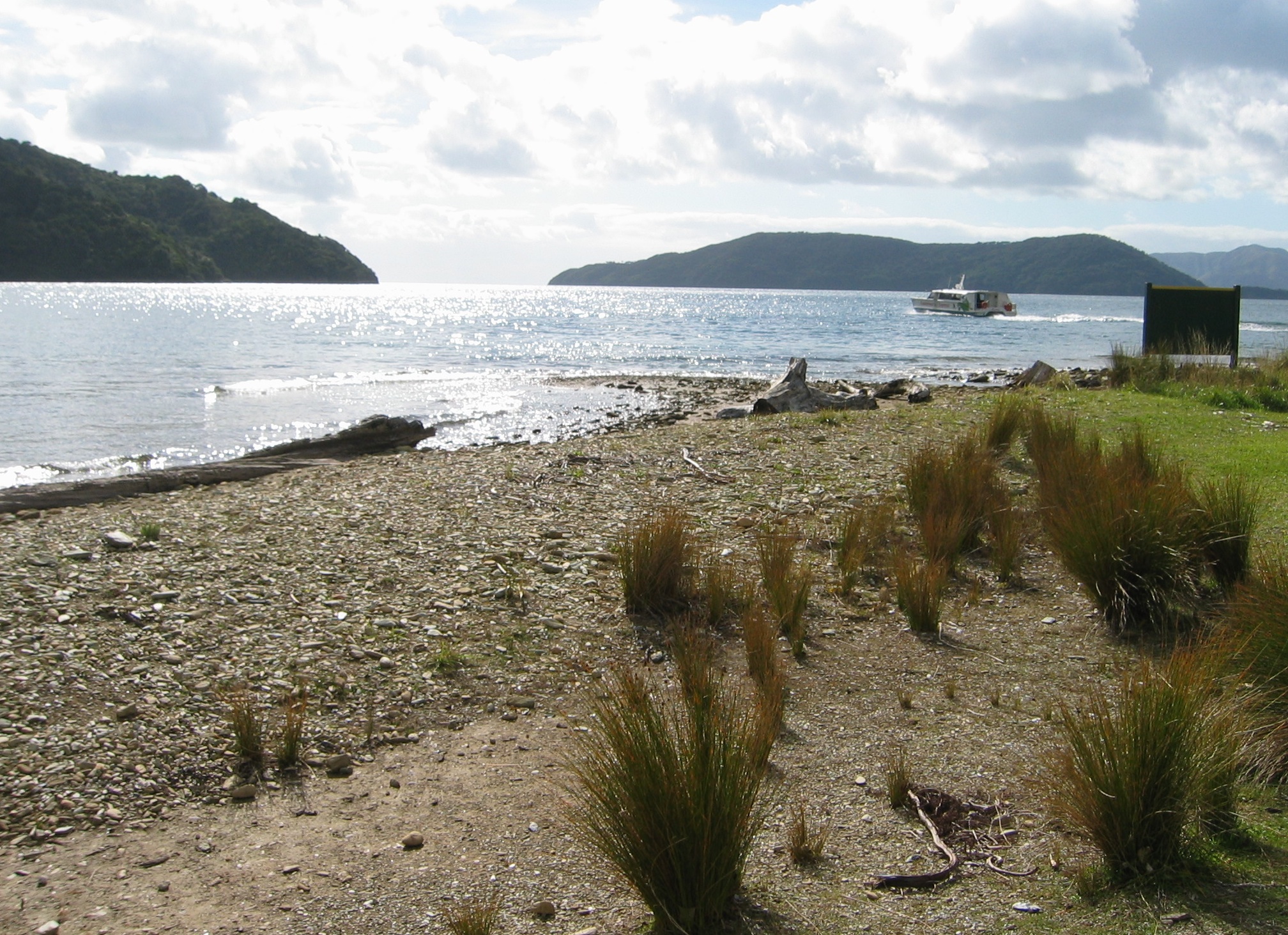
Meretoto / Ship Cove
Captain James Cook kept coming back. Of all the harbors and anchorages he charted across three voyages to the Pacific, this small bay near the entrance of Queen Charlotte Sound drew him six times. He named it Ship Cove for the obvious reason: it was where he brought his ships. But the Maori name, Meretoto, predates Cook by centuries, and in 2014 New Zealand officially recognized both, renaming the site Meretoto / Ship Cove. Today it is a Category 1 listed historic place, managed by the Department of Conservation, and the northern starting point of the Queen Charlotte Track.
Before the Sails
Maori oral tradition holds that the legendary Polynesian navigator Kupe was the first person to visit Totaranui, the broader area encompassing Queen Charlotte Sound. Long before any European vessel entered these waters, the cove and its surrounding bays served as seasonal gathering grounds. In the late 1770s, when Cook arrived, Maori did not live permanently at the cove. They came in summer to fish and gather seasonal foods, a pattern shaped by the bay's sheltered position near the entrance of the sound, close to the open waters of Cook Strait where marine life concentrated. The cove's value was practical: deep enough for anchoring, protected from prevailing winds, and rich in the resources that sustained seasonal occupation.
Cook's Headquarters
When Cook first anchored at Ship Cove, he did more than resupply. He established a shore headquarters, ordered the planting of vegetable gardens, and built an enclosure for pigs, attempting to introduce European food sources to the New Zealand bush. The gardens were an experiment in transplantation, an effort to see whether European crops could take root in South Pacific soil. Cook returned to the cove across his first, second, and third voyages to the Pacific Ocean, making it his most-visited anchorage in New Zealand. Each visit involved careening and overhauling his vessels while the crew rested ashore. The publication of Cook's account of his First Voyage put Ship Cove on the world map, and the bay's reputation as a safe harbor spread through maritime networks.
Whalers and the Written Word
By 1810, whalers had begun calling at Ship Cove, drawn by Cook's published descriptions and the sheltered anchorage. The contact between Maori and these visiting crews produced unexpected consequences. People from Anaho, a bay just to the north of Ship Cove, developed close relationships with the whaling crews and, through those relationships, learned to read and write. It was an early and remarkable instance of literacy transfer in New Zealand, driven not by missionaries but by the practical exchanges between indigenous communities and foreign sailors sharing the same stretch of coast.
The Monument on the Shore
The story of Ship Cove's memorial to Captain Cook begins with a summer picnic. In 1906, the Blenheim Rifle Company held an outing at the cove that drew more than 500 people. At that picnic, plans for a monument were first discussed. Seven years of planning and fundraising followed. On 11 February 1913, some 2,000 people gathered at the remote bay for the unveiling, performed by Governor Arthur Foljambe. Getting 2,000 people to a cove accessible only by water in 1913 was itself a feat of logistical enthusiasm, a measure of how deeply Cook's visits had embedded themselves in the regional identity. In 1970, a re-enactment of Cook's original landing was staged at the cove for Queen Elizabeth II's visit to New Zealand.
Trailhead at the Edge of the Sound
Today, Meretoto / Ship Cove is best known as the northern terminus of the Queen Charlotte Track, the 70-kilometer walking and cycling trail that follows the ridgeline between Queen Charlotte Sound and Kenepuru Sound to Anakiwa. Water taxis from Picton deliver trampers to the cove each morning, and they step ashore near the Cook monument before shouldering their packs and climbing into the bush. The cove itself remains quiet between drop-offs. The historic reserve preserves the shoreline Cook knew, though the vegetable gardens and pig enclosure are long gone. What remains is the shape of the bay, the bush pressing down to the waterline, and the sense that this particular bend of coast has been drawing people in for a very long time.
From the Air
Meretoto / Ship Cove is located at 41.09S, 174.24E near the entrance of Queen Charlotte Sound, west of Motuara Island and Long Island. From the air, the cove appears as a small indentation on the western shore of the outer sound. The Queen Charlotte Track begins here and runs south along the ridgeline. Nearest airport is Picton (NZPN), with water taxi access from Picton harbor. Blenheim/Woodbourne (NZWB) is the nearest major airfield. Best viewed at 3,000-5,000 ft to identify the cove among the many bays of the outer sound. Motuara Island, a predator-free bird sanctuary, is visible just to the east.