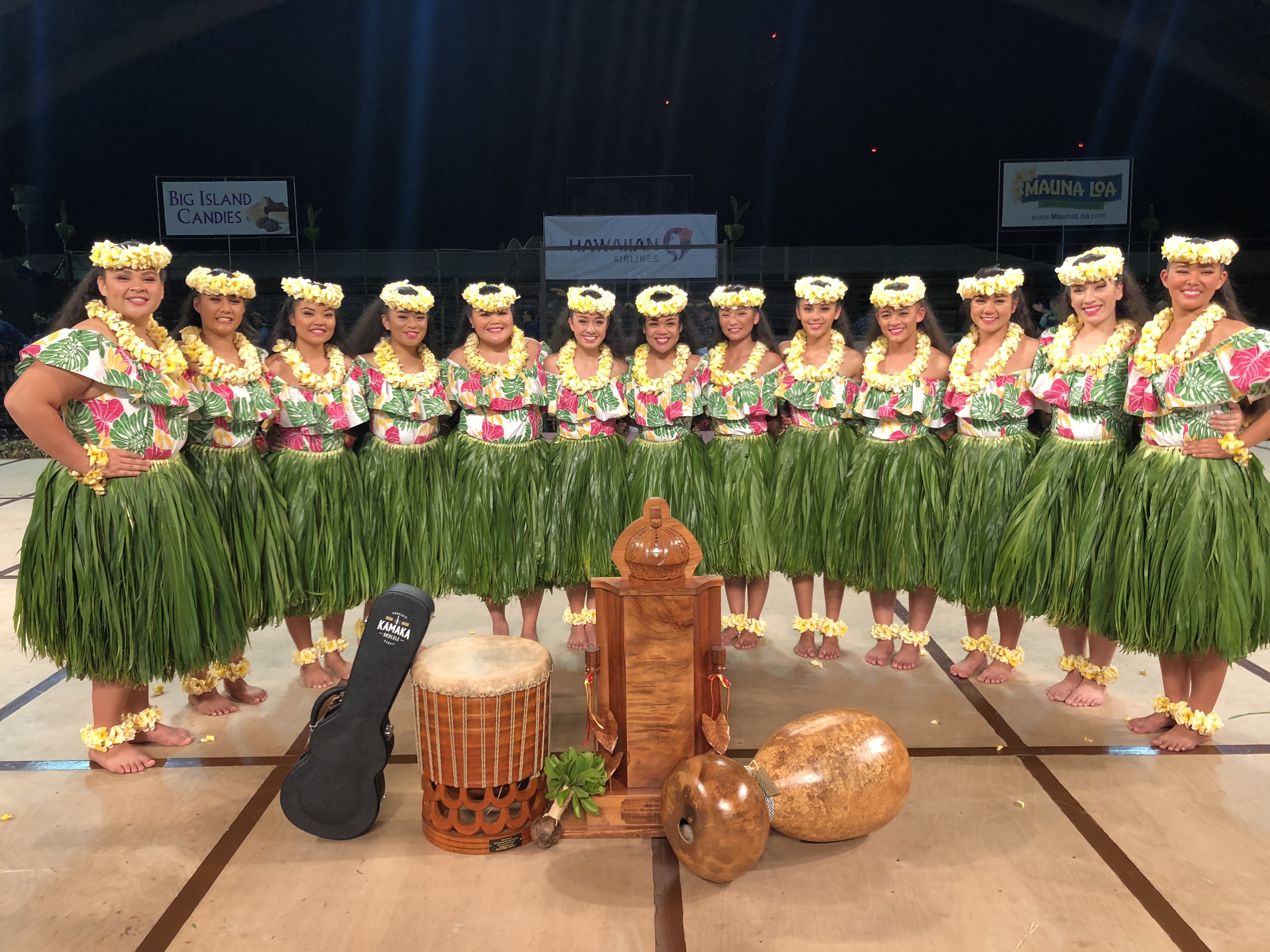
Merrie Monarch Festival
In 1830, Queen Ka'ahumanu banned public hula performances across the Hawaiian Kingdom. The dance that had served for centuries as prayer, history, and art was driven underground, practiced in private and rural spaces but stripped of royal sanction. It took another king to reverse the damage. David Kalakaua, who reigned from 1874 to 1891, made hula a centerpiece of his 1883 coronation ceremony - the first time in decades that chanters and dancers performed publicly with the blessing of the crown. They called him the Merrie Monarch for his love of music, celebration, and the arts. The festival that bears his nickname has become the single most important event in Hawaiian cultural life.
Born from Hardship
The Merrie Monarch Festival did not begin as a cultural institution. It began as an economic rescue mission. By the early 1960s, the Big Island was struggling with the collapse of the sugar industry, and Hilo's economy was in decline. In 1963, Helene Hale, then Executive Officer of Hawaii County, conceived a festival to draw visitors to the island. The early years were modest, and by 1968, the event had waned in popularity. What revived it was a shift in focus - from tourism promotion to cultural preservation. The hula competition became the festival's heart, and the quality of the performances drew participants and audiences from across the Hawaiian Islands and beyond. What started as a bid to fill hotel rooms became a pilgrimage.
The Week After Easter
Merrie Monarch week begins every Easter Sunday with four days of free, non-competition events: performances by local and international halau at venues throughout Hilo, an arts and crafts fair, and exhibitions of indigenous dance traditions from places as far-flung as Alaska and New Zealand. The competitive events occupy Thursday, Friday, and Saturday evenings. Each night opens with the procession of the Royal Court, who sit in state during the performances - a direct echo of the royal patronage that Kalakaua championed. Thursday night belongs to Miss Aloha Hula, where individual female dancers between eighteen and twenty-five compete with performances of both hula kahiko, the ancient form, and hula 'auana, the modern style. For kahiko, contestants must perform an oli, ka'i, mele, and ho'i within a seven-minute limit, with no microphones and minimal makeup. The judging is exacting.
Ancient and Modern, Side by Side
Friday night features group hula kahiko - the ancient style, performed with traditional chant and movement. Saturday brings hula 'auana, the contemporary form that incorporates Western instruments and melodies. Both male and female divisions compete, and judges evaluate interpretation, expression, posture, precision of hand gestures and footwork, grooming, and the authenticity of costumes and adornments. The distinction between kahiko and 'auana is not merely stylistic. Kahiko connects directly to the pre-contact Hawaiian world: the chants carry genealogies, creation stories, and prayers that predate written Hawaiian history. 'Auana, by contrast, reflects the culture's evolution after Western contact - absorbing new musical forms while maintaining the movement vocabulary that makes hula unmistakable. The festival insists on excellence in both, treating tradition and adaptation as equally rigorous disciplines.
From Hilo to Tokyo
The Merrie Monarch Festival is now considered the most prestigious hula competition in the world, livestreamed free each year so viewers outside Hawaii can watch. Its influence reaches far beyond the islands. Halau that place in the competition are invited to the Na Hiwahiwa O Hawaii festival in Tokyo, where they perform alongside winners of the Na Hoku Hanohano music awards. Japan has become one of the world's most devoted supporters of hula culture - Japanese hula schools do not compete in the Merrie Monarch, but most travel to Hilo every year to support the competing halau and absorb the atmosphere. The festival's cultural gravity has also inspired literature: Jasmin Iolani Hakes' 2023 novel "Hula" revolves around the Merrie Monarch competition and won Honolulu magazine's Book of the Year About Hawaii award. A Saturday morning parade closes the week, winding through a Hilo that looks nothing like the economically depressed town Helene Hale was trying to rescue sixty years ago.
From the Air
Located at 19.719°N, 155.068°W in Hilo, on the windward coast of Hawaii Island. The festival takes place at the Edith Kanaka'ole Multi-Purpose Stadium and various venues throughout downtown Hilo. Best viewed at 2,000-3,000 feet AGL. Nearest airport: PHTO (Hilo International Airport), approximately 2 miles south. The crescent of Hilo Bay is a prominent landmark from the air, with the town nestled along its western shore.