Merv: The Silk Road City That Died Twice
Five cities lie stacked in the desert, each built on the bones of the last. Merv is not one ruin but many - a palimpsest of civilizations written across the Karakum Desert east of modern Mary, Turkmenistan. Bronze Age settlements from 2500 BC. An Achaemenid fortress that Darius the Great mentioned by name on his famous inscription at Behistun. A Hellenistic city that Pliny claimed Alexander himself founded. And then the Seljuk capital that may have been, for a brief and brilliant century, the largest city on Earth. Each version of Merv rose, thrived, and fell. The desert preserved what the conquerors left behind.
Four Thousand Years of Walls
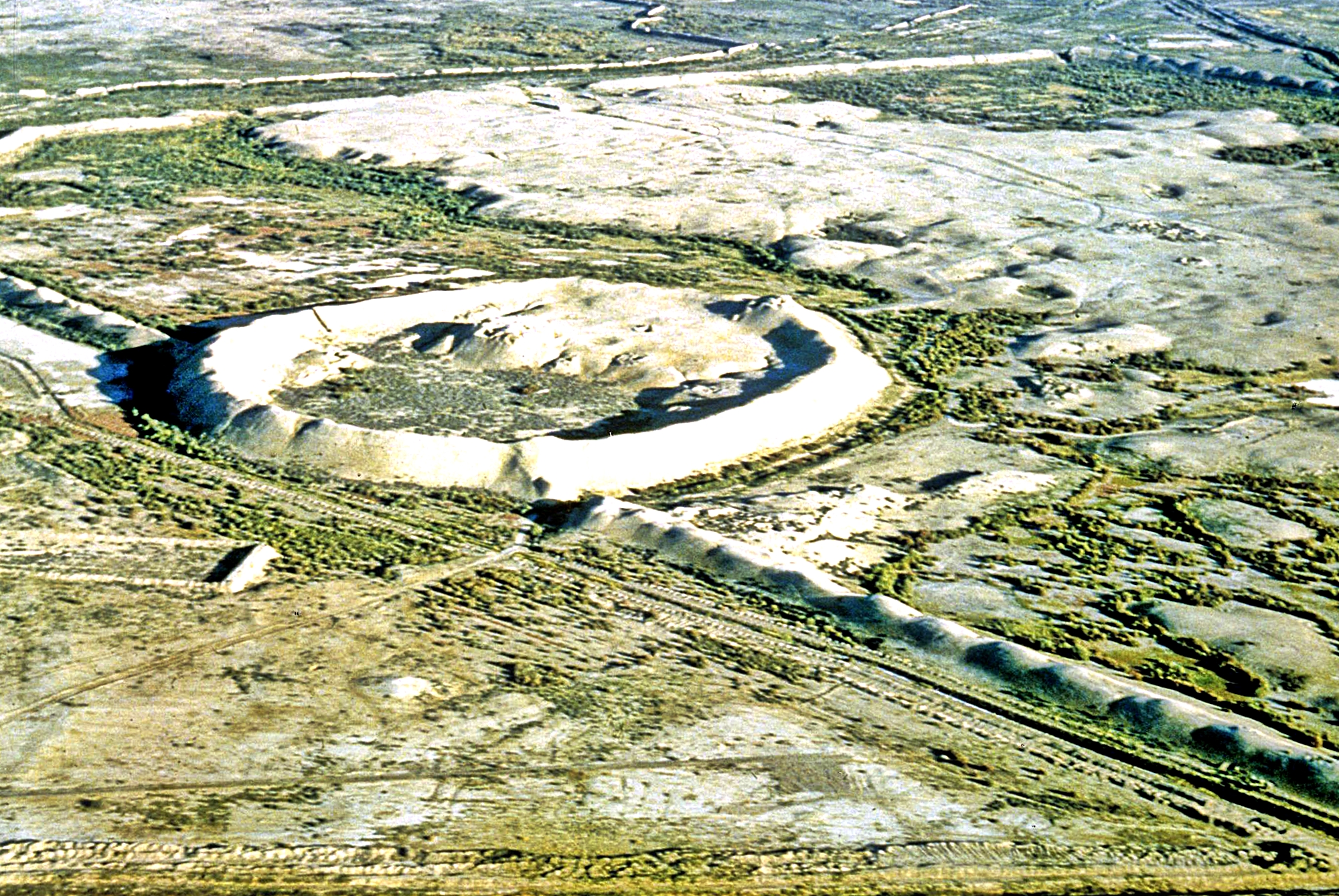
The oldest layer is Erk Kala, a citadel dating to the Achaemenid period around 500 BC. Around it grew Giaur Kala, expanded under the Seleucid king Antiochus I Soter in the third century BC and renamed Margiana Antiochia. Roman prisoners of war from the catastrophic defeat at Carrhae in 53 BC may have settled here - Greeks and Romans living at the edge of the known world. The oasis passed through Parthian and Sasanian hands before Islam arrived with the death of the last Sasanian king, Yazdigird III, in 651 AD. Each empire left walls, pottery, temples. The Bronze Age site of Gonur Depe alone covers 55 hectares, its excavations revealing a palace, a fire temple, and a necropolis from the late Bronze Age. This is archaeology measured not in centuries but in millennia.
The Seljuk Zenith
Under the Seljuk sultans Malikshah and Sanjar in the 11th and 12th centuries, Merv became something extraordinary. The medieval city, Sultan Kala, spread over more than 600 hectares west of Giaur Kala, enclosed by new walls and filled with mosques, madrasas, and libraries. The geographer Yaqut al-Hamawi counted at least ten major libraries in the city. Omar Khayyam, the Persian mathematician, astronomer, and poet, worked at the observatory here while compiling astronomical tables. Scholars arrived from across the Islamic world, drawn by Seljuk patronage and Merv's reputation as a center of learning. At its peak in the 12th century, some historians consider it to have been the most populous city in the world - a desert metropolis sustained by the Murghab River's irrigation channels and the Silk Road's ceaseless commerce.
The Day the Mongols Came
In April 1221, Tolui, son of Genghis Khan, arrived at the gates with an army. Merv's defenders, awed by the force arrayed against them, surrendered within days. Tolui accepted terms - then broke them. The population was marched onto the plain outside the walls. Four hundred artisans and some children were taken as enslaved captives. The rest were killed. Medieval chroniclers reported death tolls ranging from 700,000 to over a million, numbers that modern historians consider exaggerated but that convey the scale of annihilation. The city's irrigation systems were destroyed. Merv, which had thrived for nearly three thousand years, never fully recovered. A successor city, Abdullah Khan Kala, was built to the south by Shah Rukh in the 15th century, but it too was destroyed by the Emir of Bukhara in the 18th century. The desert reclaimed what empires could no longer defend.
What the Sand Preserved
Today the ruins sprawl across an area of more than 1,000 hectares in the Mary Province of Turkmenistan, protected as a UNESCO World Heritage Site since 1999. UNESCO recognized Merv as the oldest and most completely preserved of the oasis cities along the Silk Roads in Central Asia. The earthen ramparts that once defended against steppe invasions stretch 30 kilometers. The fortress walls of Erk Kala still stand above the plain. Sultan Sanjar's mausoleum, its dome once visible for a day's ride in every direction, remains the most recognizable landmark. The ruins are not picturesque in the way of Greek temples or Roman forums. They are mud-brick and packed earth, the color of the desert itself. Their power lies in their scale and their silence - the remnants of a city that once rivaled Baghdad and Constantinople, returned to dust.
Reaching the Oasis
Merv sits 35 kilometers east of modern Mary, accessible by hired car. The ruins require imagination - these are not restored monuments but the authentic remains of cities that rose and fell across four millennia. Visitors walk the circuits of walls, stand inside the citadel of Erk Kala, and trace the outline of Sultan Kala's vanished streets. Nearby Gonur Depe offers Bronze Age ruins of extraordinary ambition. The landscape is flat, dry, and enormous. The Karakum Desert dominates the horizon in every direction. This is one of the most remote UNESCO sites in the world, visited by few but carrying the weight of more continuous human history than almost anywhere else on the Silk Road.
From the Air
Located at 37.66°N, 62.19°E in the Karakum Desert, Mary Province, Turkmenistan. From altitude, the site appears as irregular earthwork patterns in an otherwise featureless desert landscape east of modern Mary. The circular walls of Erk Kala and the larger rectangular outlines of Giaur Kala and Sultan Kala are distinguishable from above. The Murghab River valley provides the only green corridor through the surrounding desert. Nearest airport is Mary Airport (MYP). The Trans-Caspian Railway passes through the modern city of Mary. Ashgabat International Airport (ASB) is approximately 350 km to the west.